Strandgården
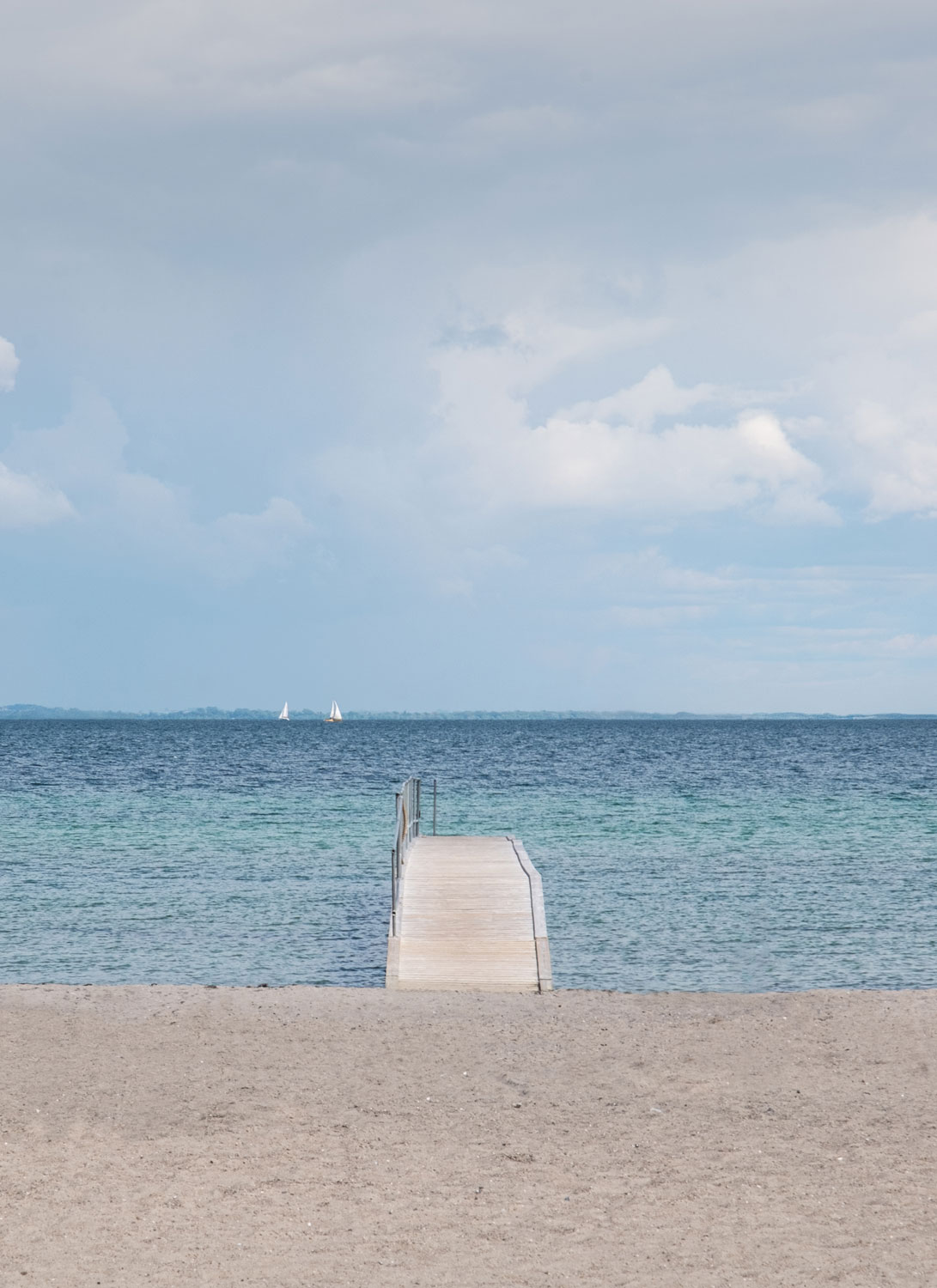
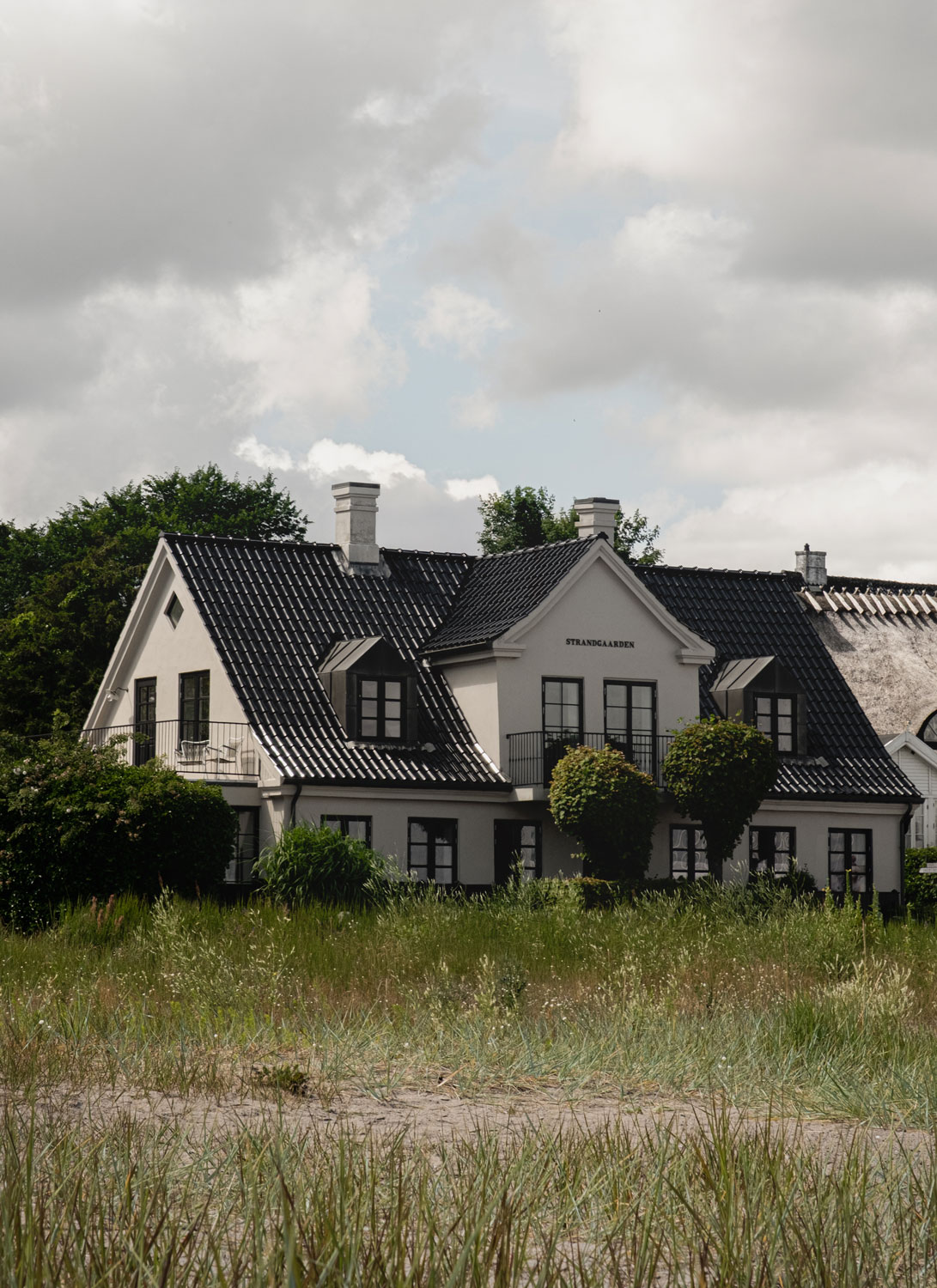
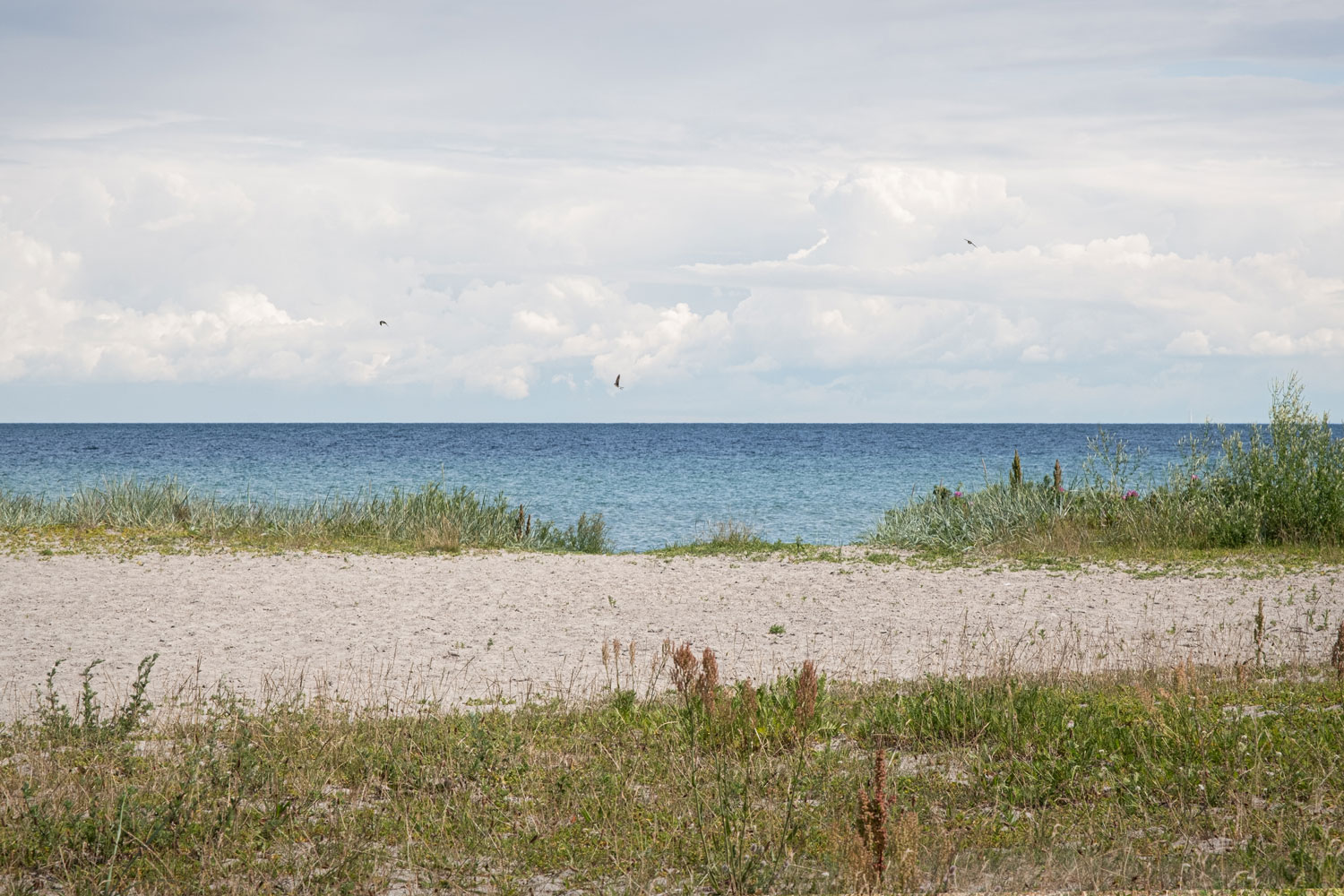
On the shore of Øresund in Denmark, Strandgården stands as a quiet witness to nearly two centuries of life by the sea. Built in 1842 and carrying the traces of generations within its walls, the house has been gently transformed, uniting two dwellings into one cohesive home.
Location
Vedbæk, Denmark
Photography
Jonas Bjerre-Poulsen
Karl Tranberg Knudsen
Sandie Lykke Nolsøe
Category
Residential
Year
2025
Located on the edge of the Danish coastline in the small fishing village of Vedbæk, Strandgården is a historic property whose story spans centuries yet feels wholly attuned to contemporary life. Built in 1842, the house has undergone a sensitive transformation by Norm Architects, uniting two separate dwellings into a single harmonious home for a family of four. The result is not a reinvention but a quiet unveiling – an architecture that allows history and modernity to coexist, with each enhancing the other.
Bathed in shifting light from the sea and sky, the space evokes a sense of timeless calm – at once rooted in tradition and attuned to contemporary life. Strandgården is both a sanctuary for a family and a reflection of its surroundings. Here, the patina of history meets the clarity of modern design.
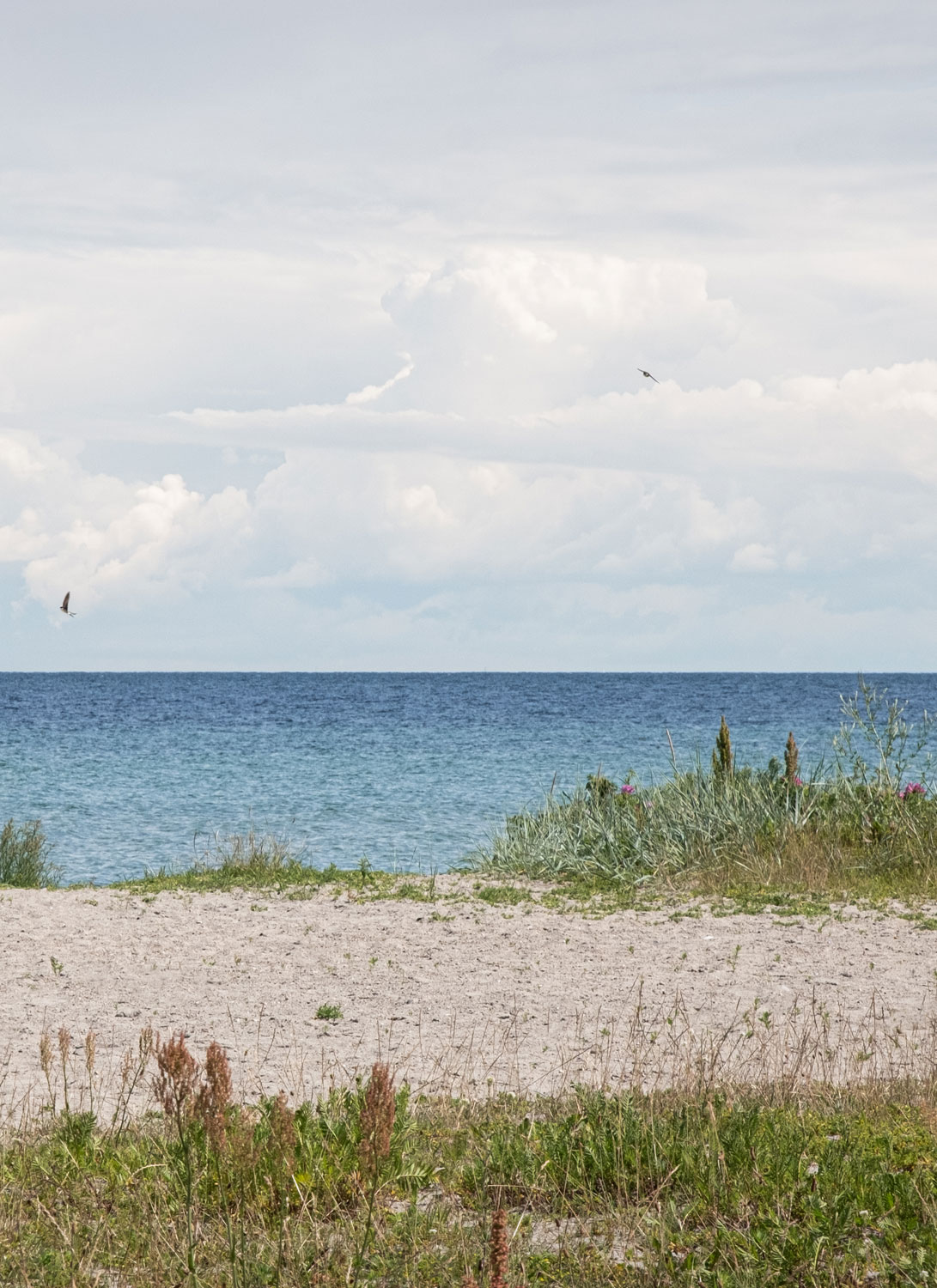
Strandgården is both a sanctuary for a family and a reflection of its surroundings. Here, the patina of history meets the clarity of modern design.
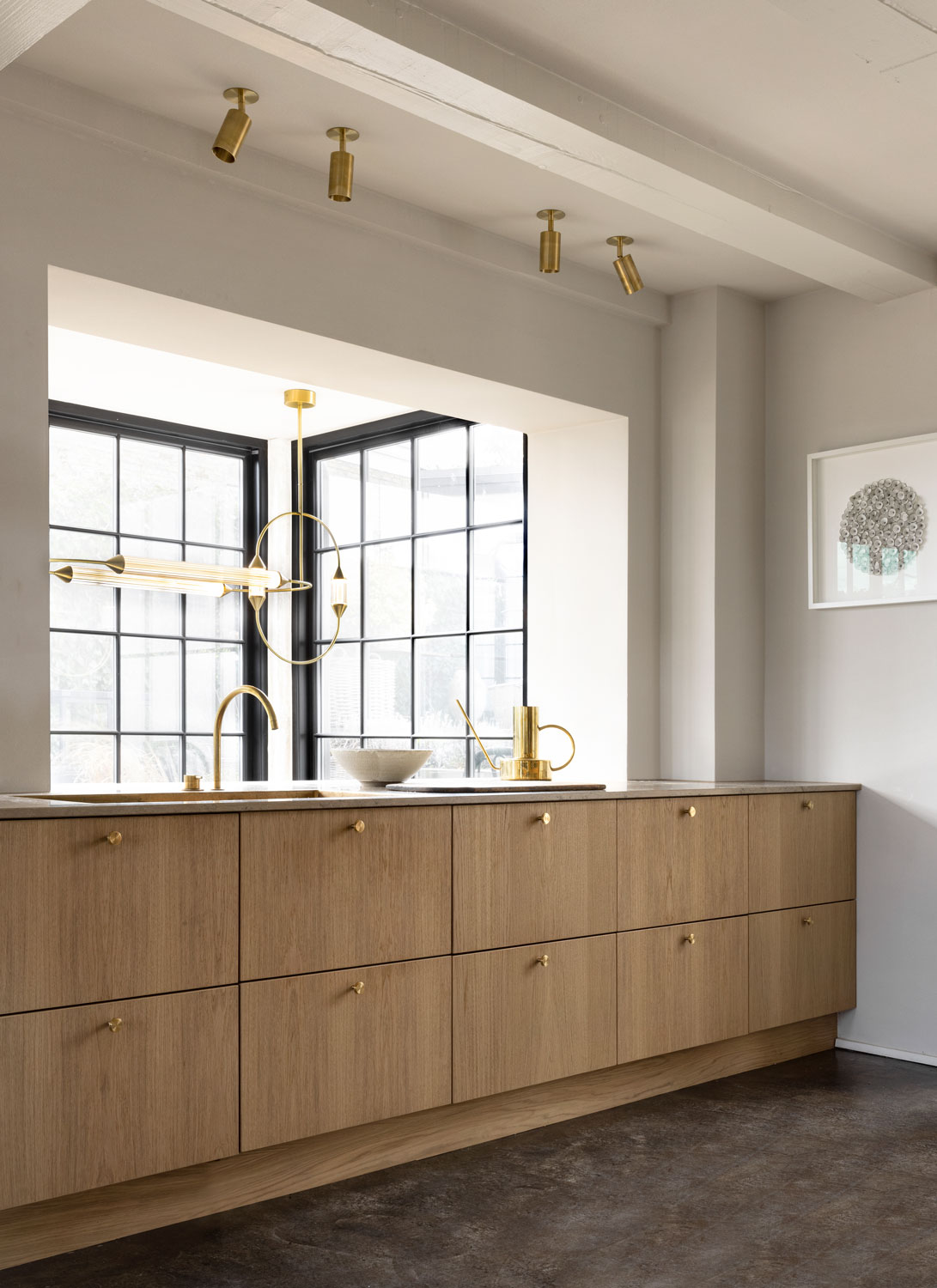
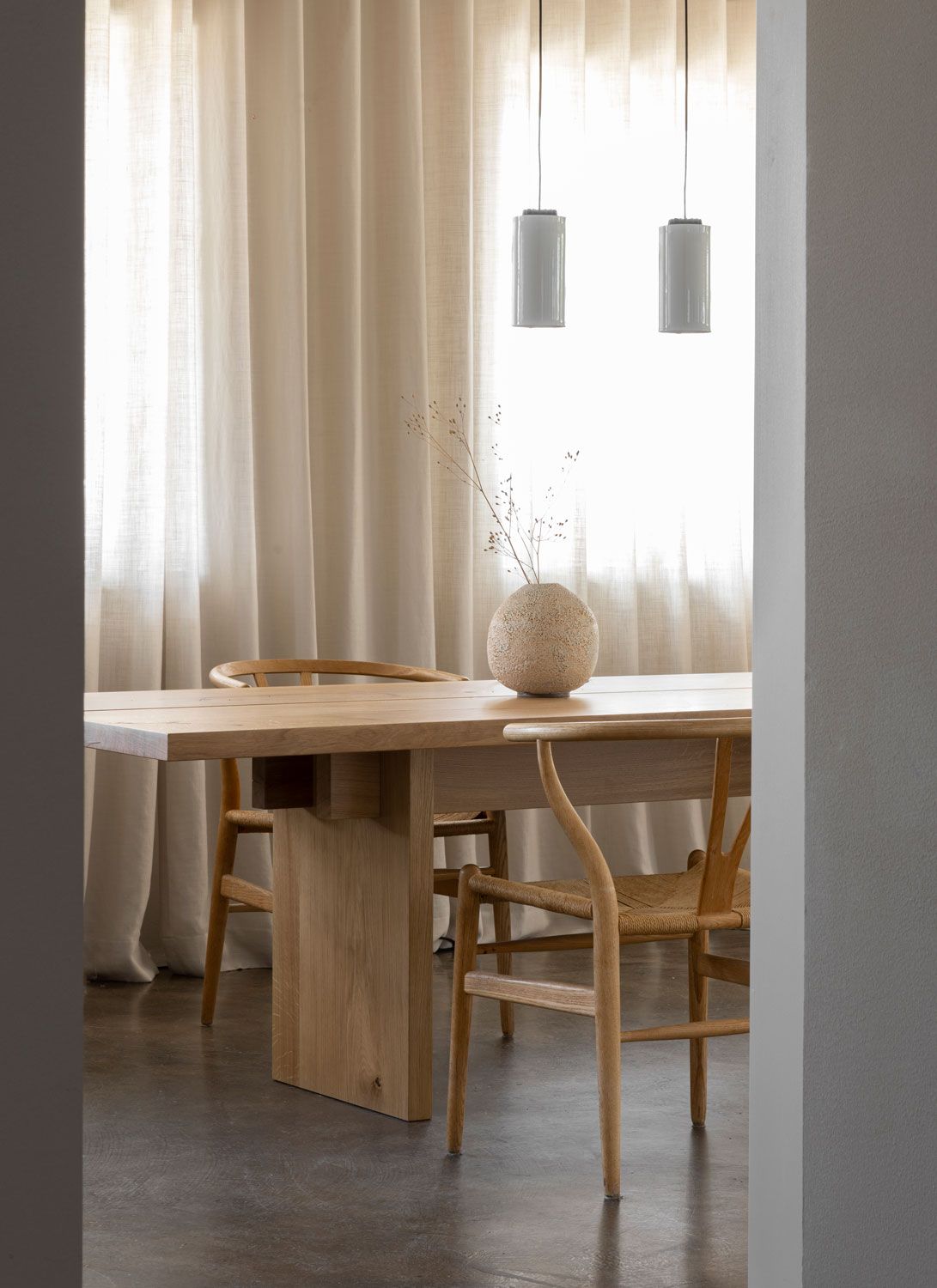
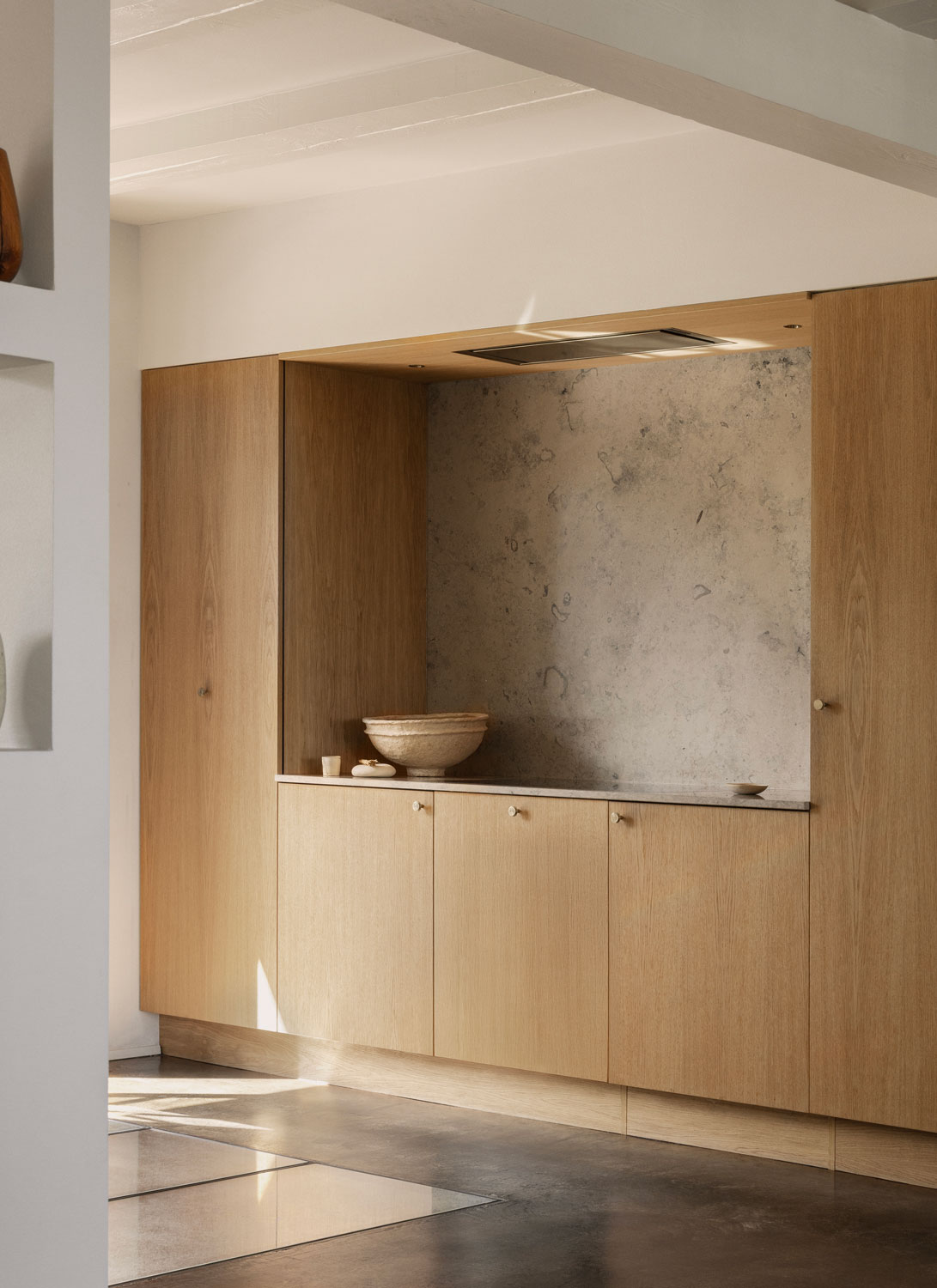
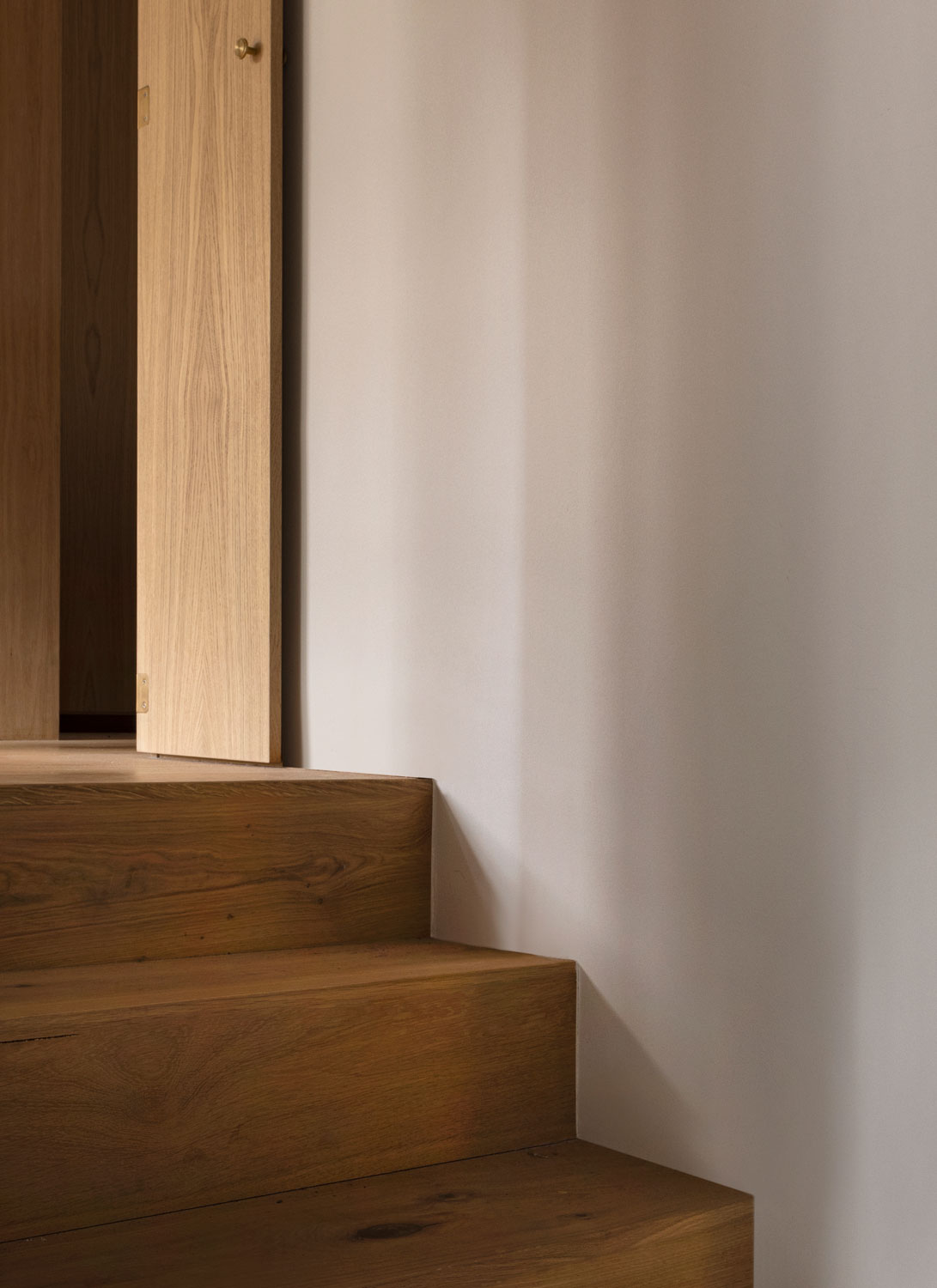
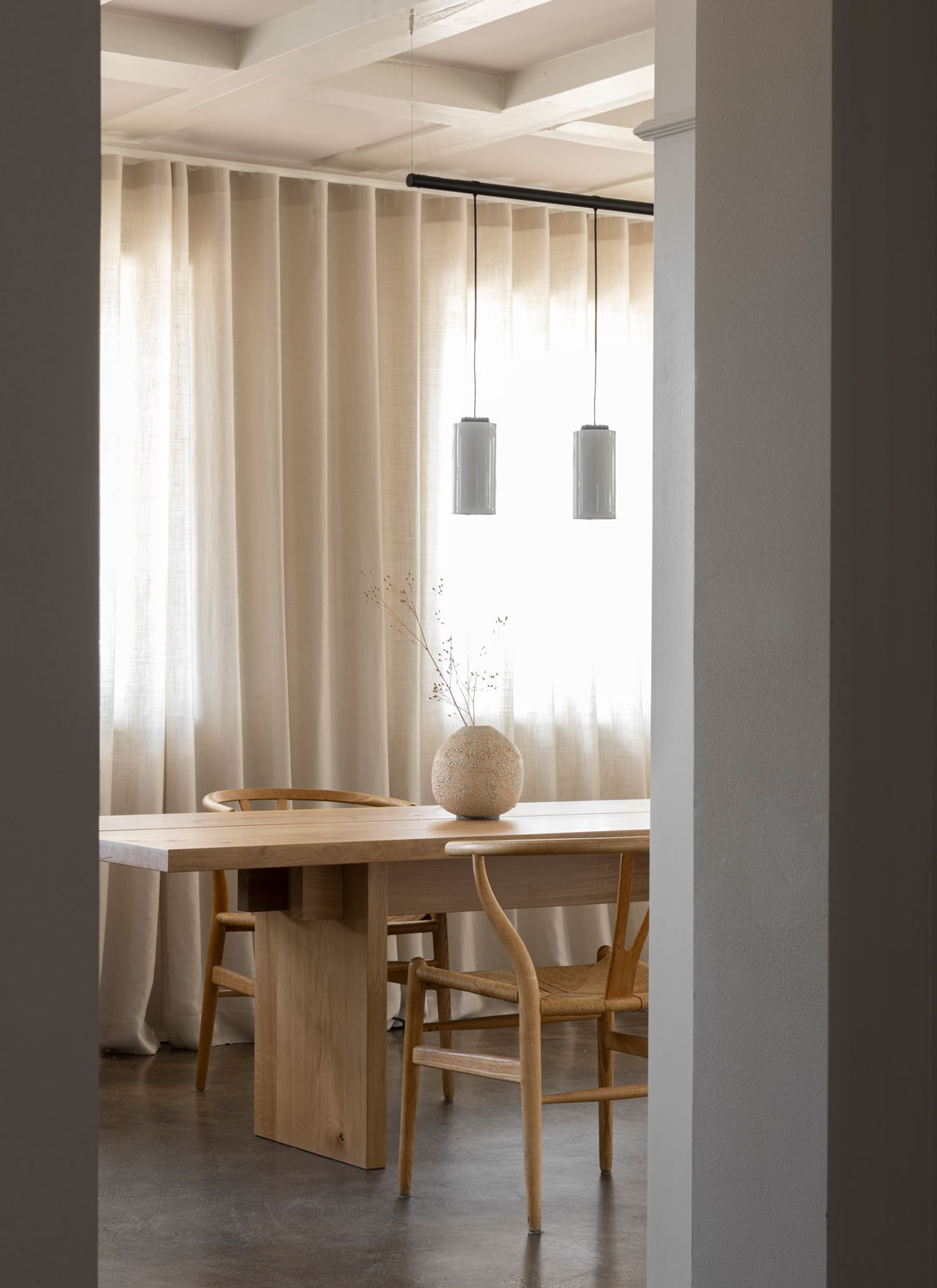
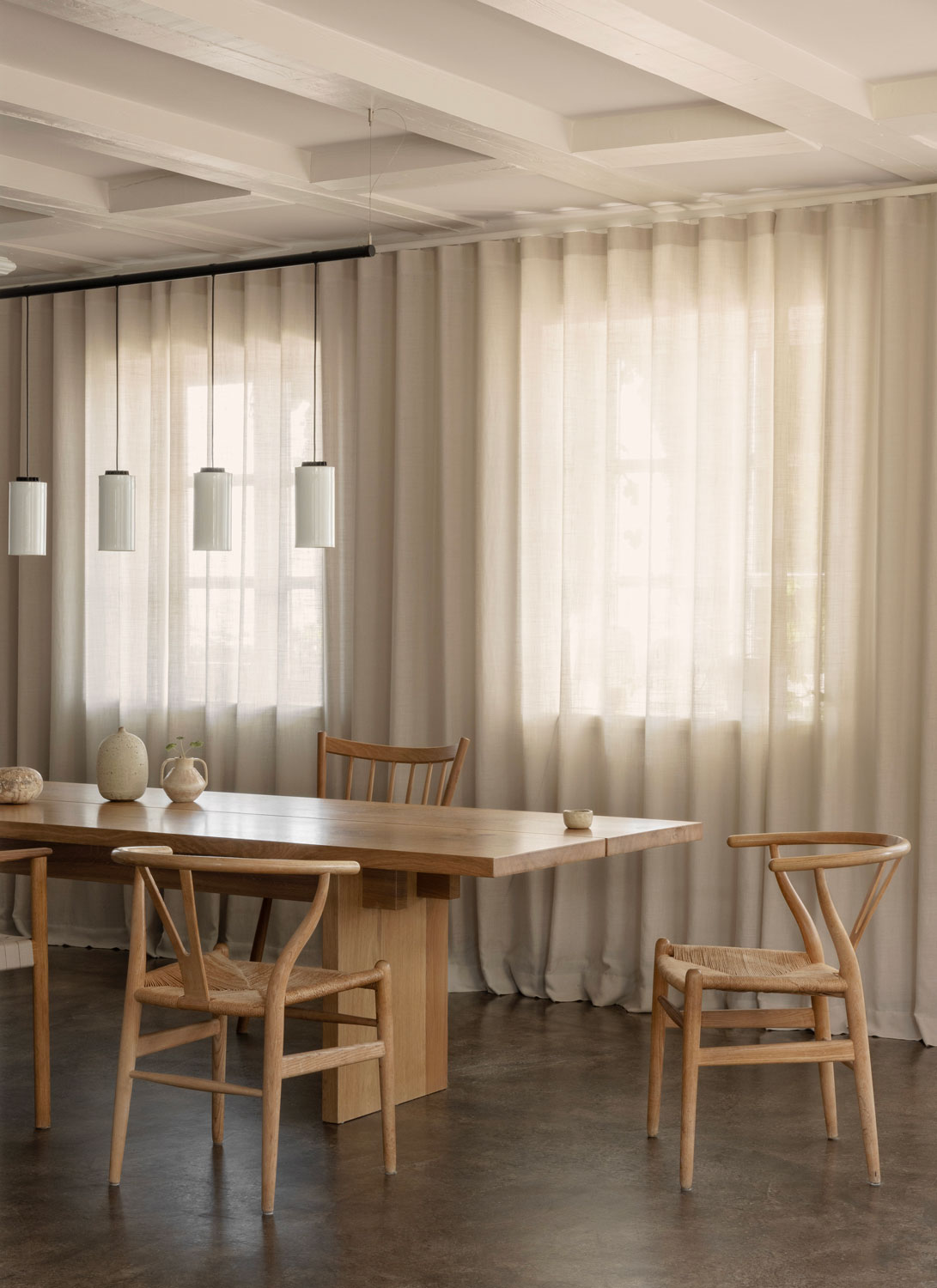
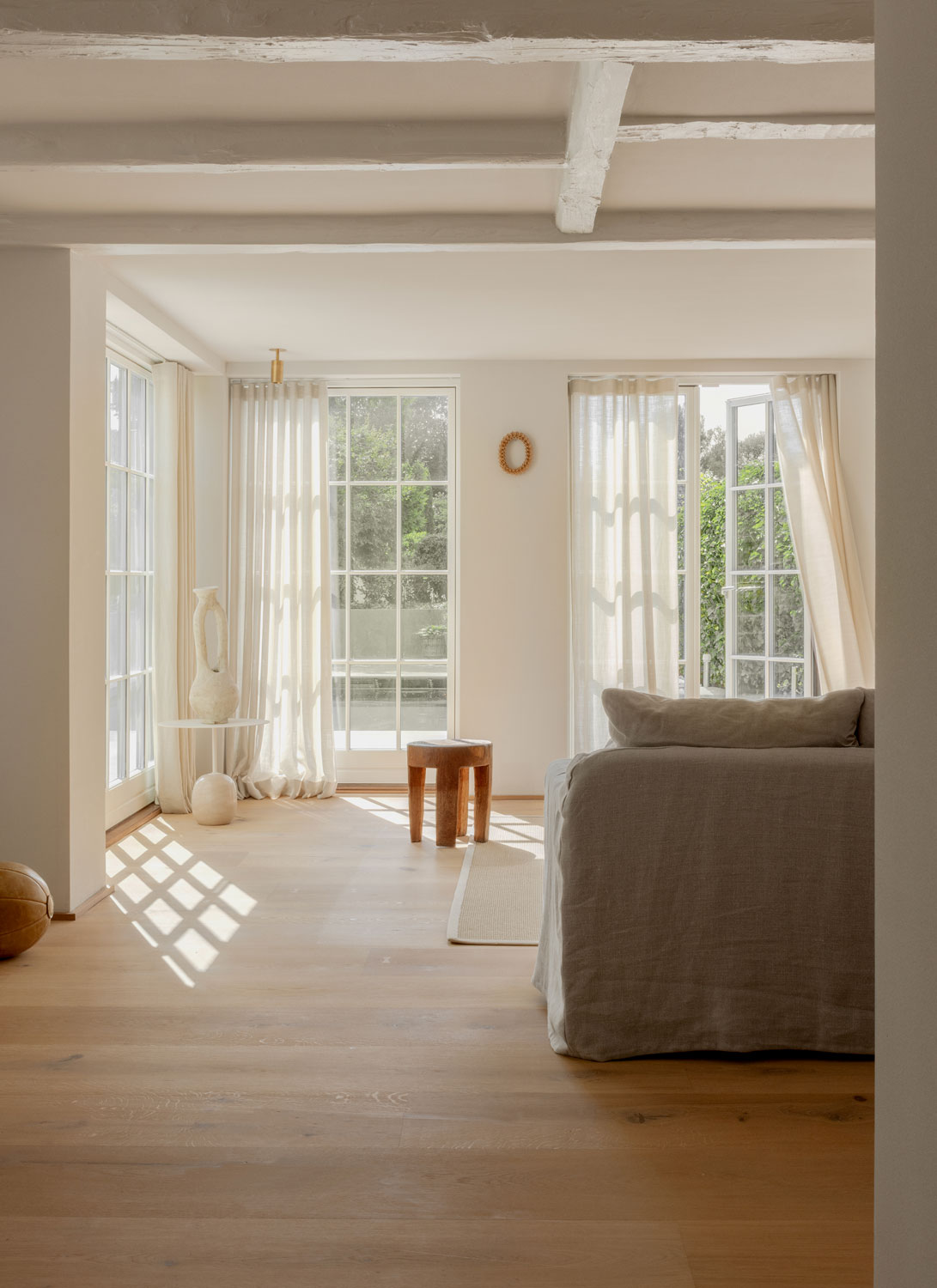
Soft whites and warm beiges create a serene backdrop, while oak, stone, and textured plaster bring depth and warmth. These natural elements blur the threshold between indoors and out, allowing the house to reflect the quiet poetry of its coastal setting.
Strandgården is a lived sanctuary where a family can gather, share meals in the kitchen, retreat to tranquil bedrooms, or simply watch the rhythms of the sea. Every detail, from bespoke shelving by Danish craftsmen to the curation of furniture and objects, is designed with the human scale in mind – encouraging touch, movement, and connection. By preserving the soul of the historic structure while gently refining it with the principles of Soft Minimalism, Strandgården becomes a home that feels timeless yet deeply personal. It stands as a testament to the enduring value of thoughtful design.
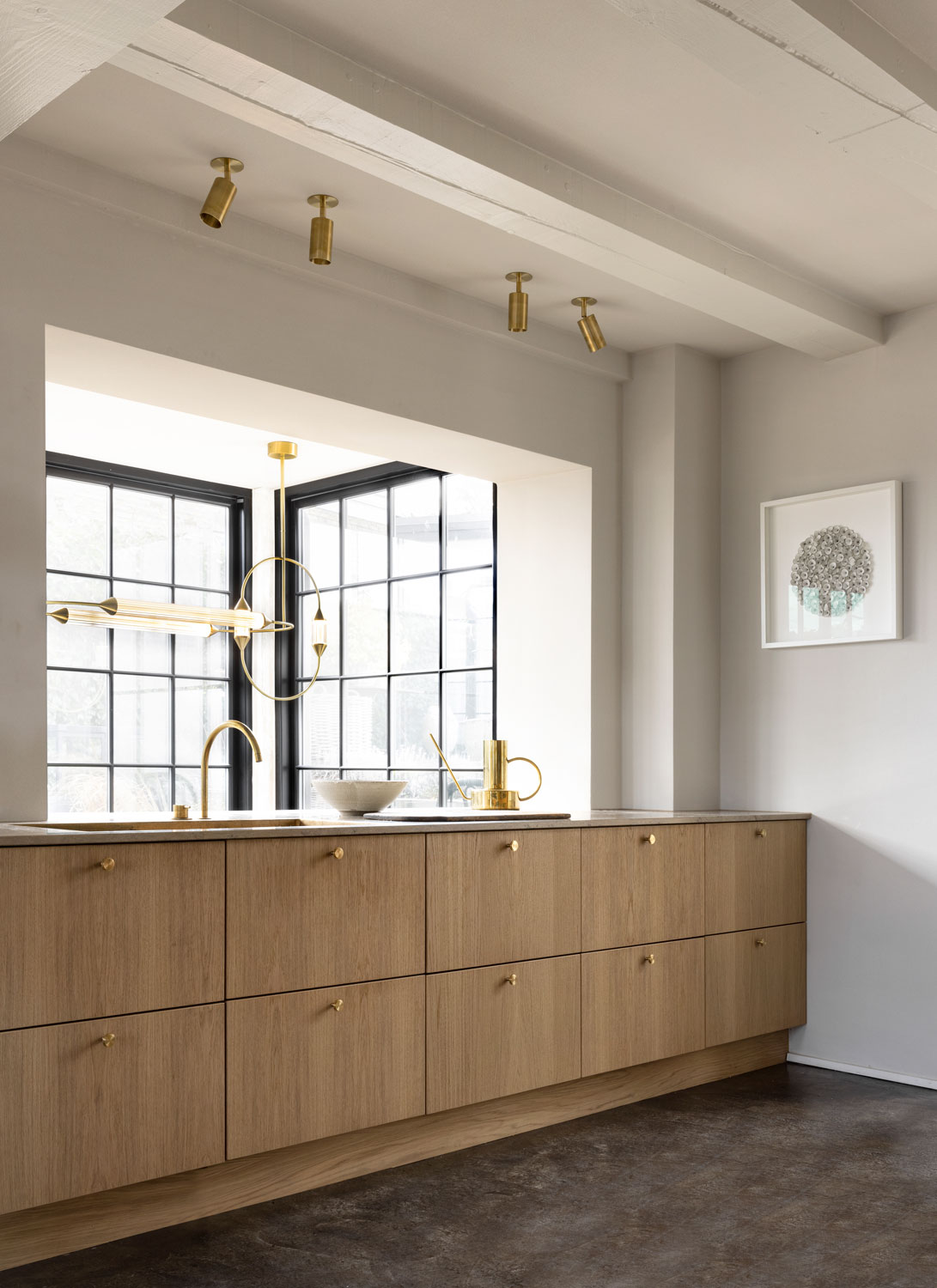
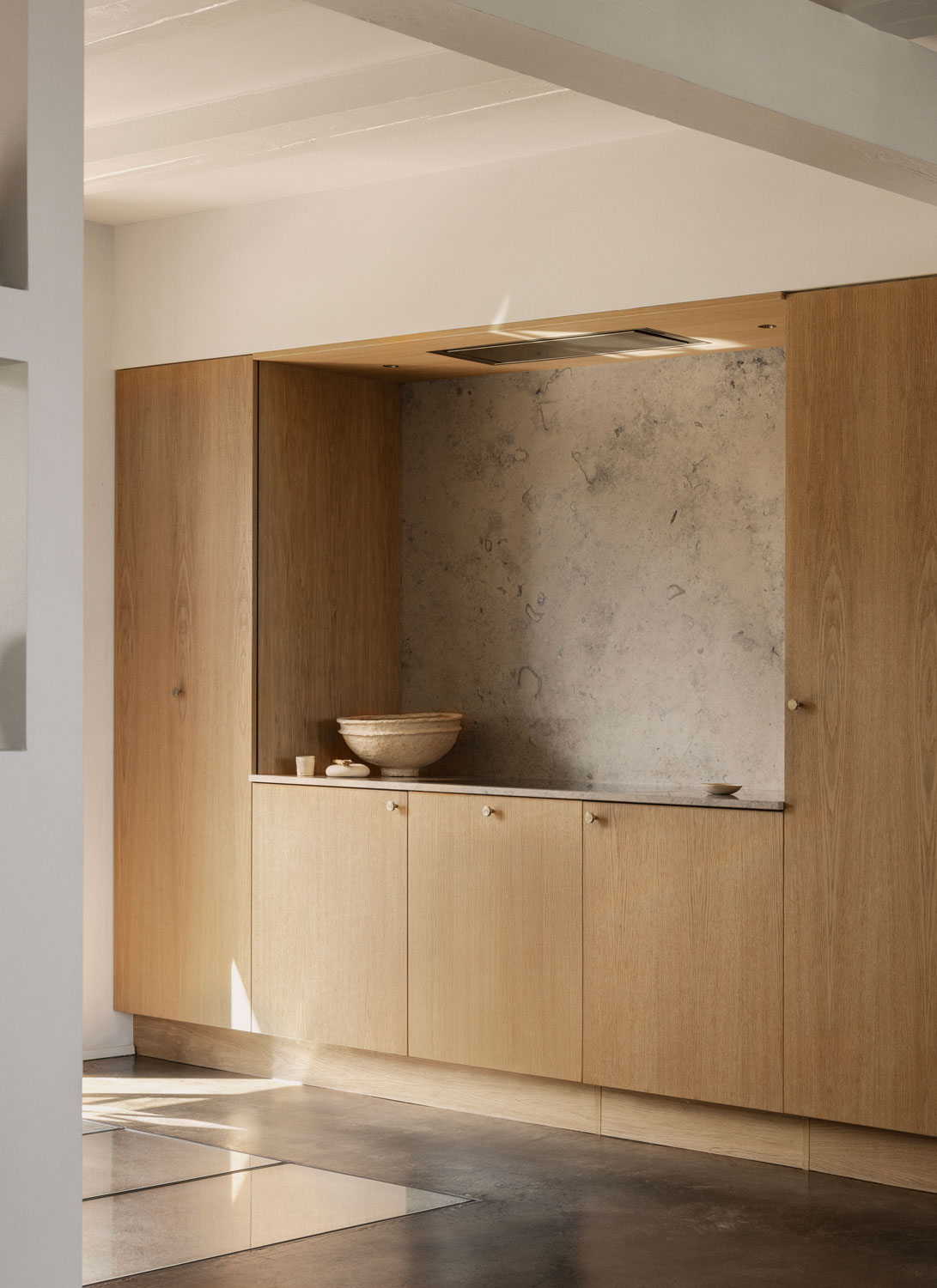
The spatial organization emphasizes functionality, with each room serving its purpose while remaining flexible over time. At the centre lies the kitchen — the heart of the house and a social hub where the family gathers to cook, eat, and connect. Defined by a minimalist aesthetic with handcrafted cabinetry and concealed storage, it balances practicality with quiet elegance, offering both utility and a sense of calm.
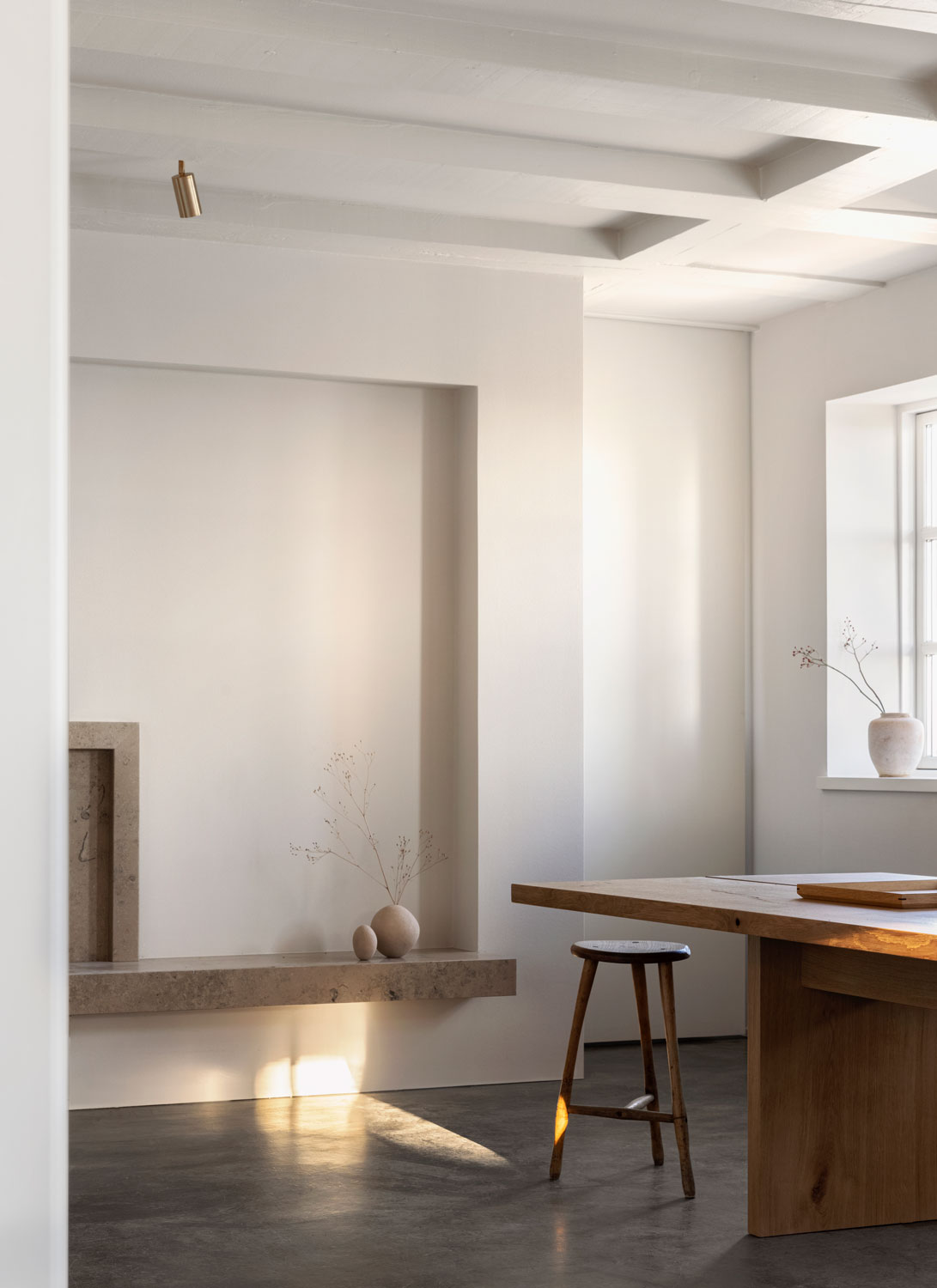
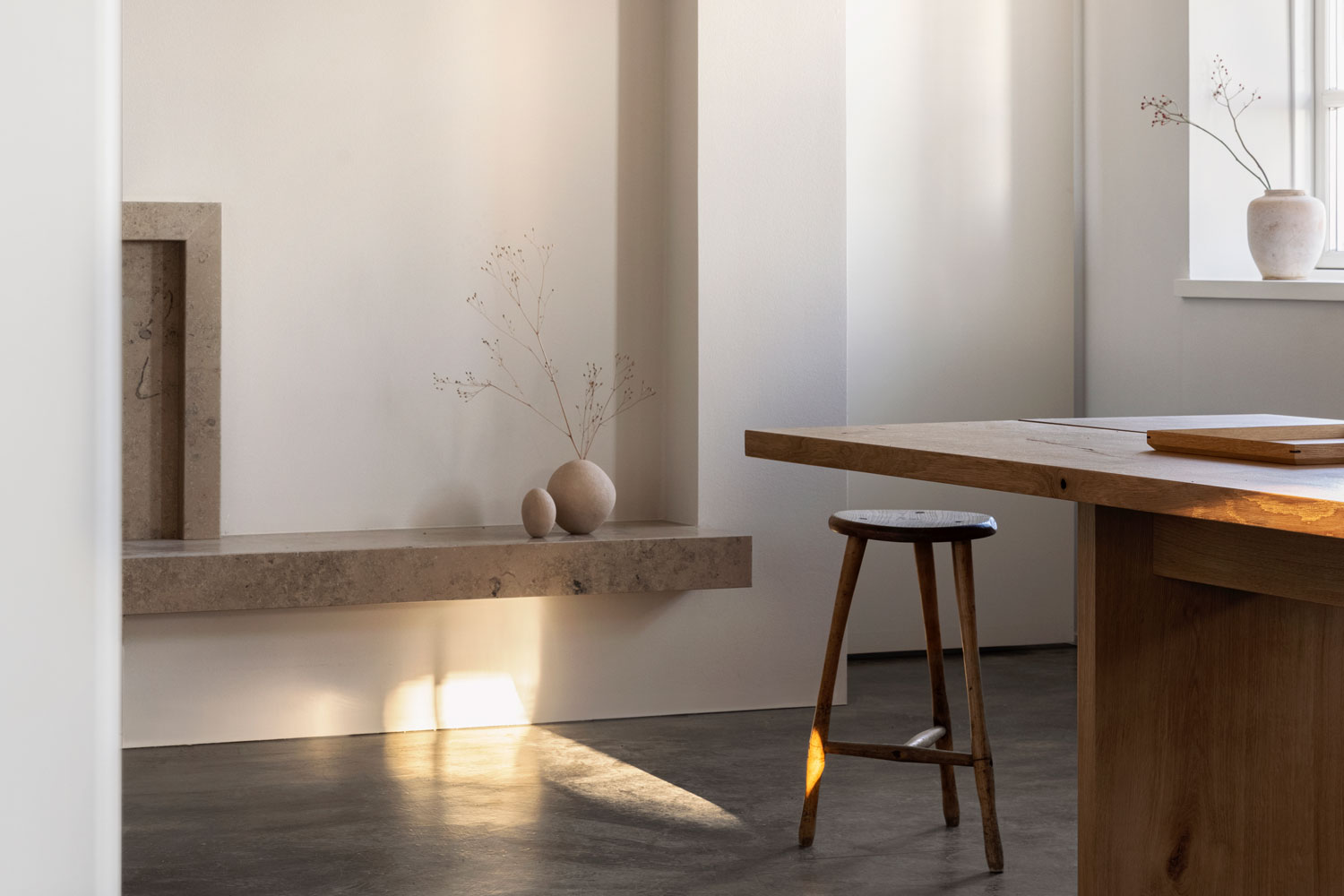
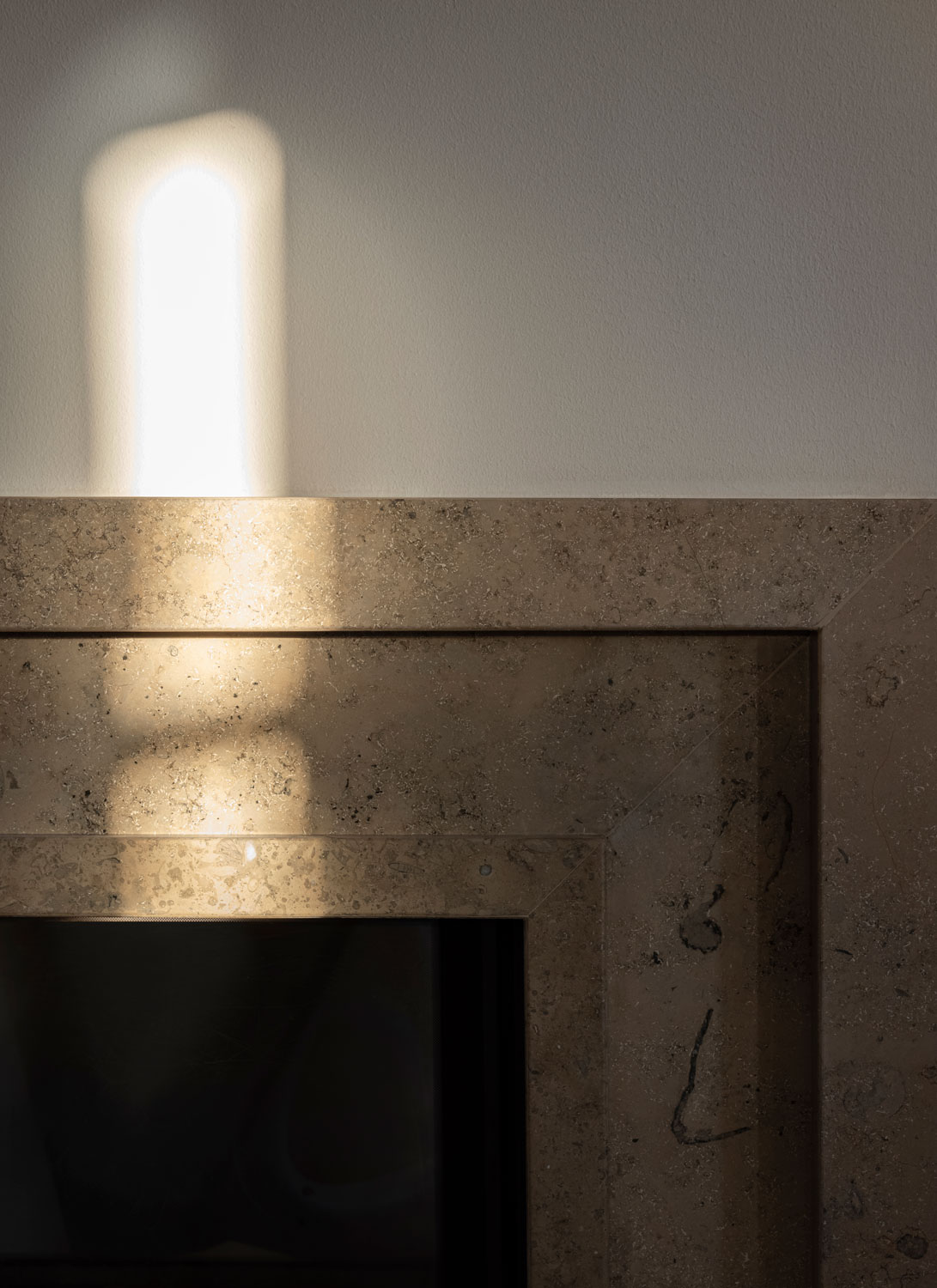
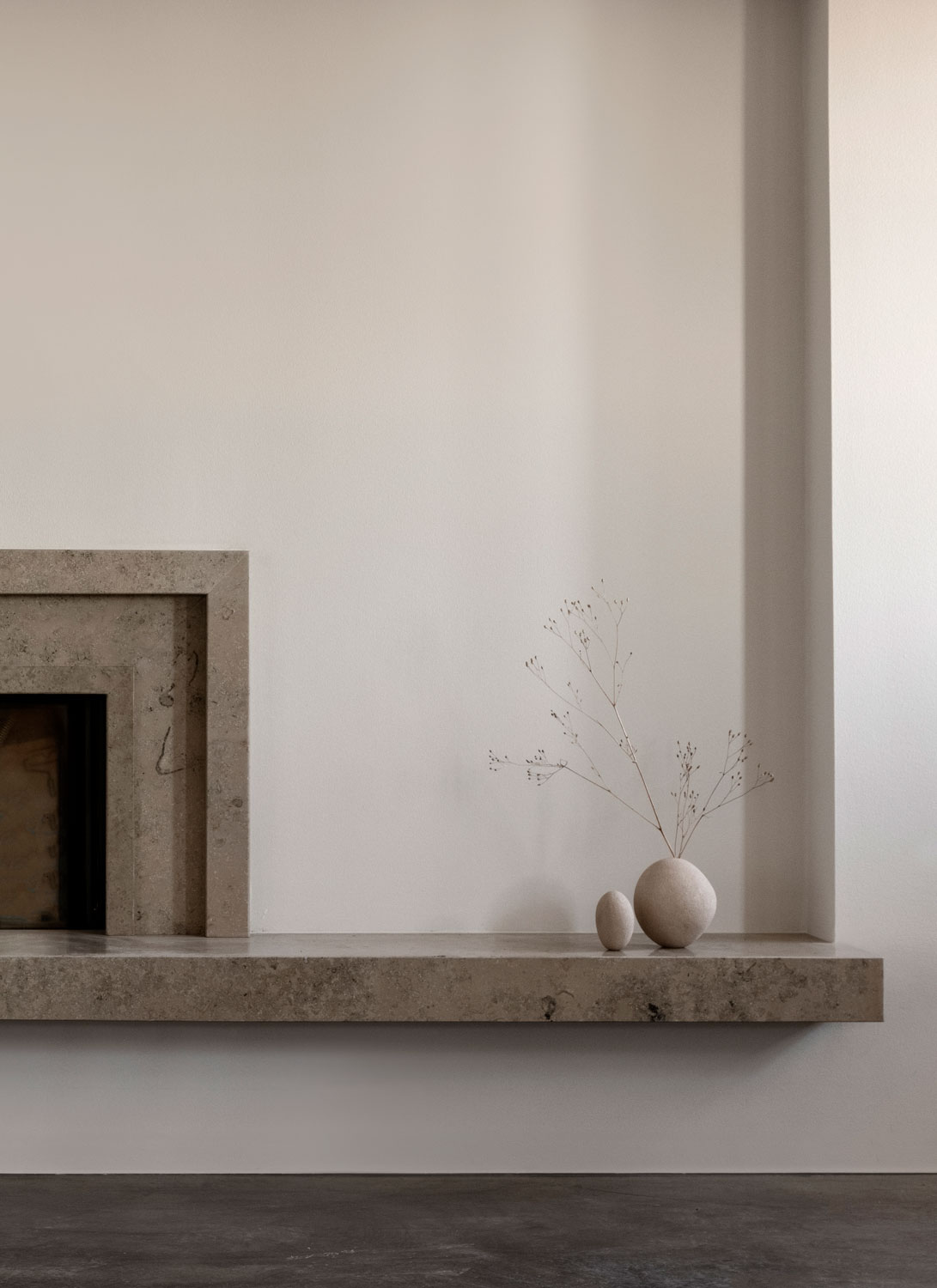
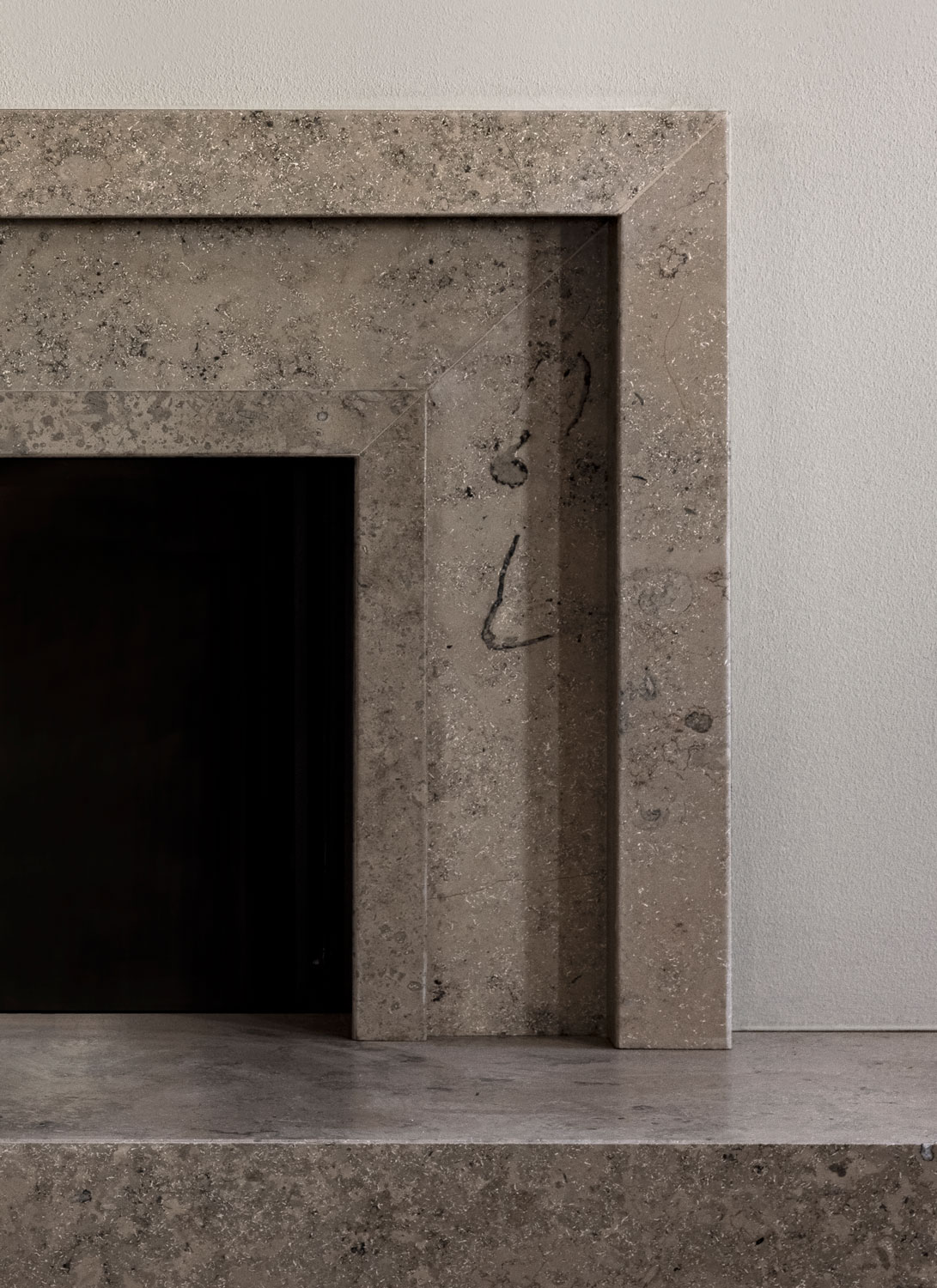
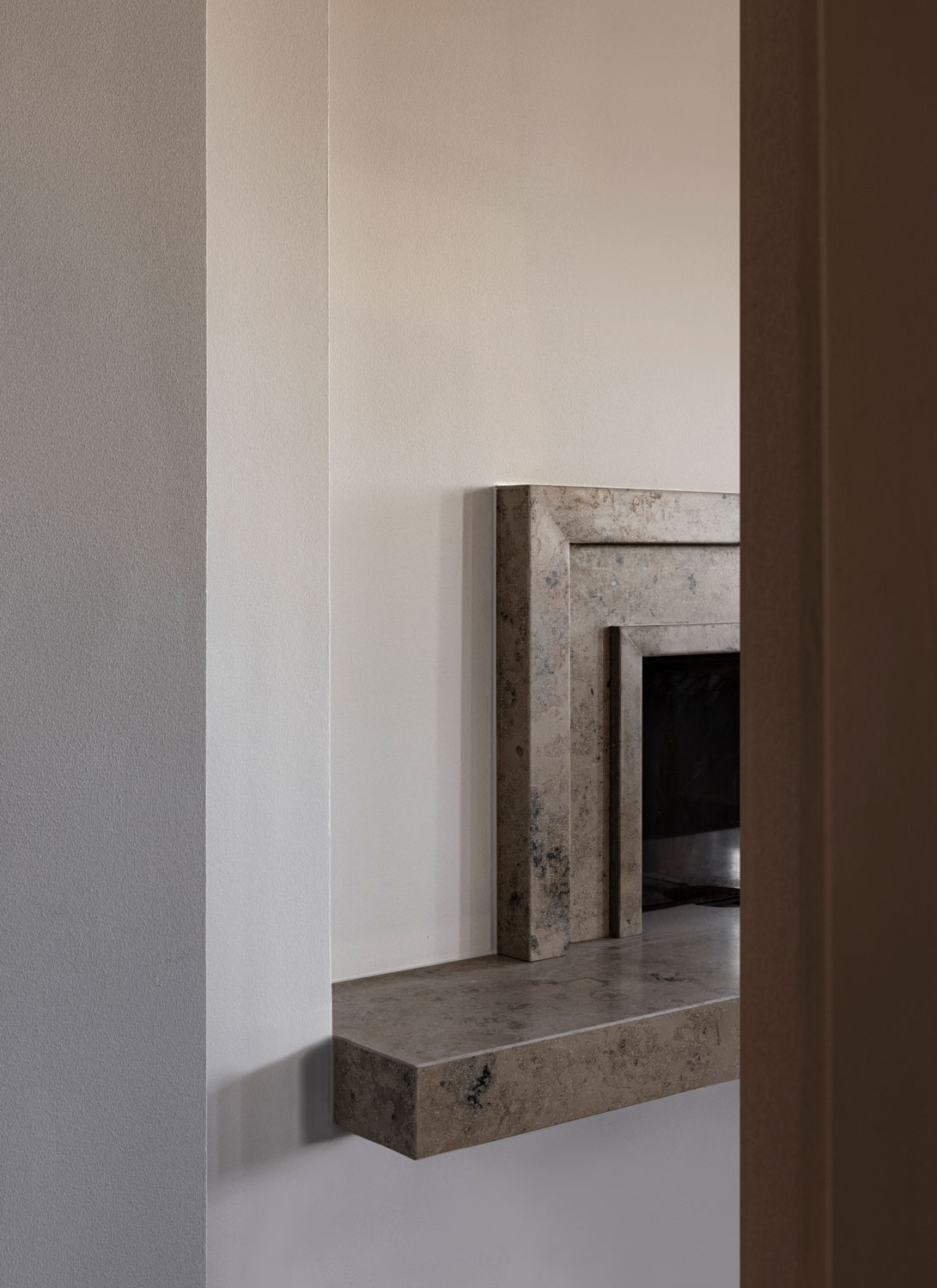
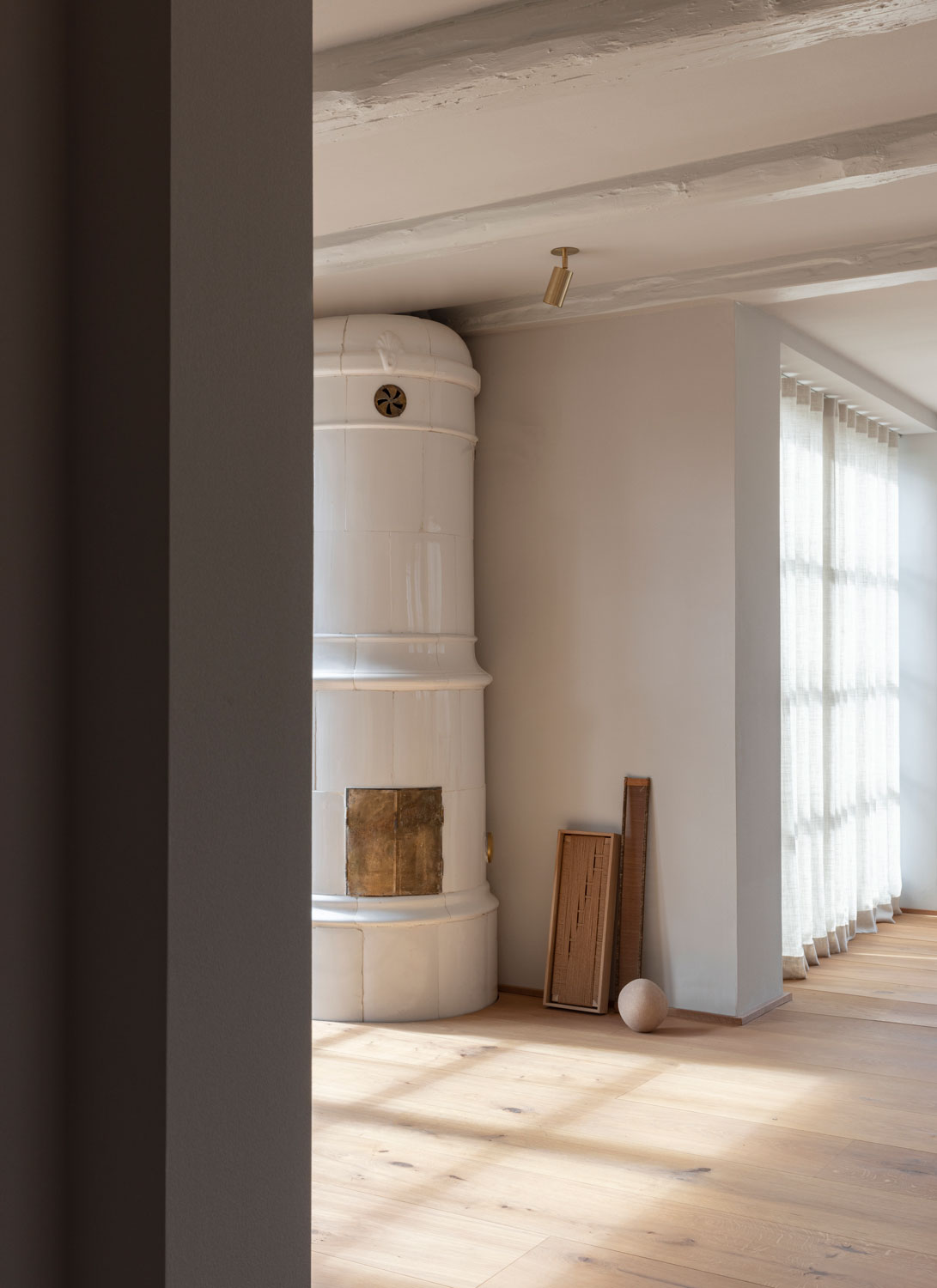
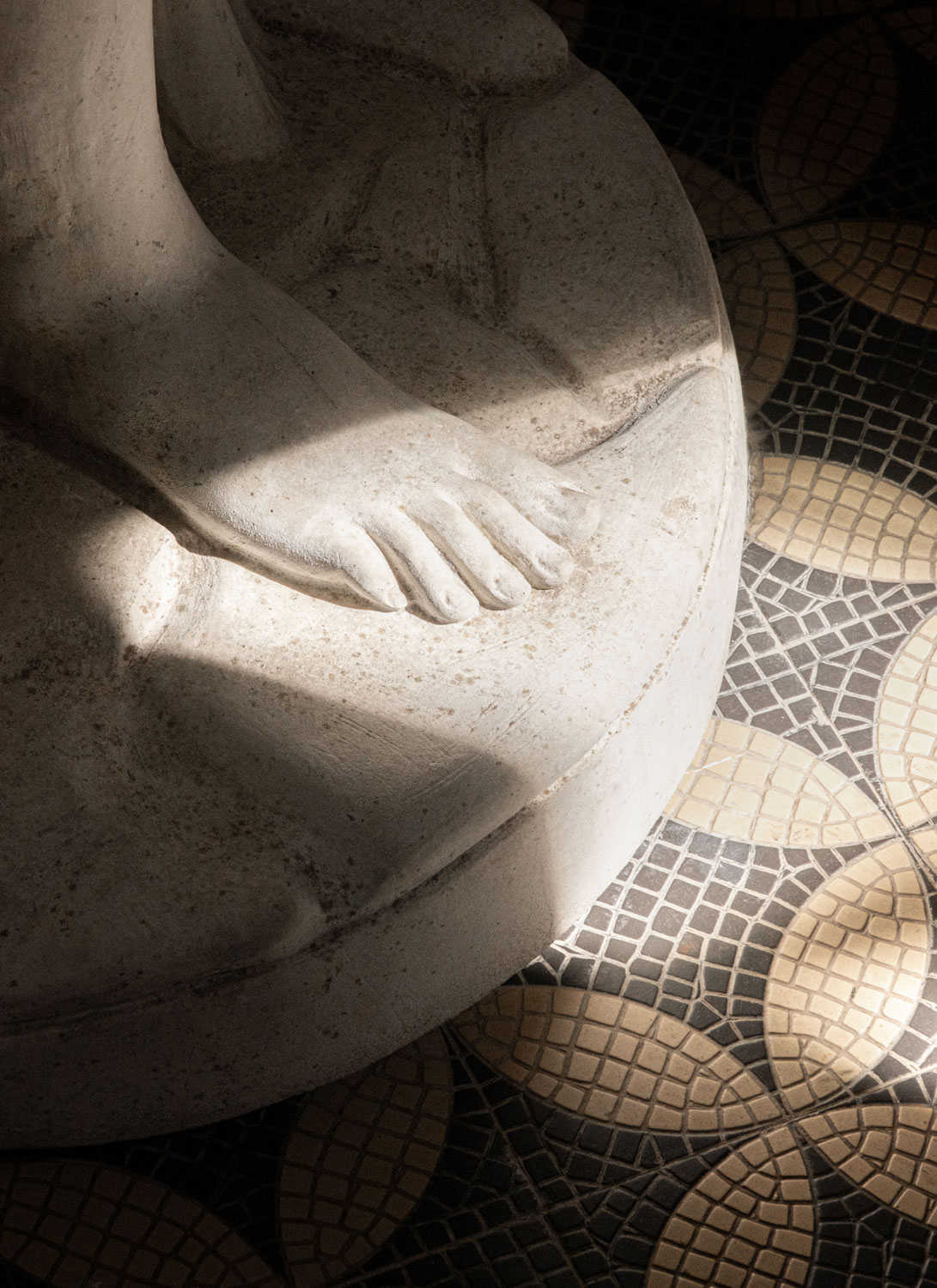
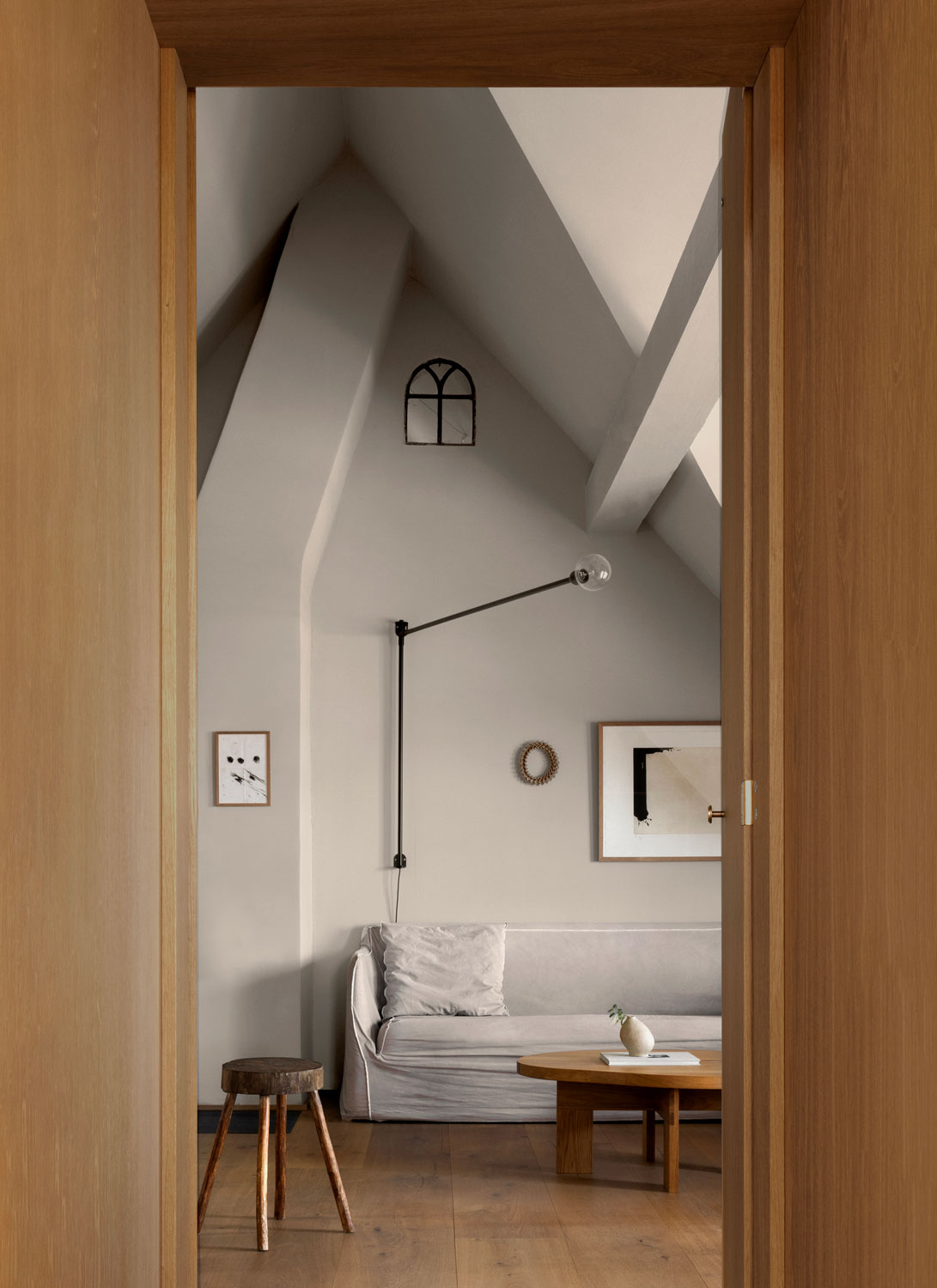
Inherited elements like tile floors and pitched roof structures remain as defining features, now placed in dialogue with new interventions such as a connecting structure that unites the two houses, a sculptural fireplace in Jura Grau, a kitchen that acts as the social heart of the home, and a clay-covered bathroom where light grazes textured walls. In this threshold between past and present, Strandgården finds its form.
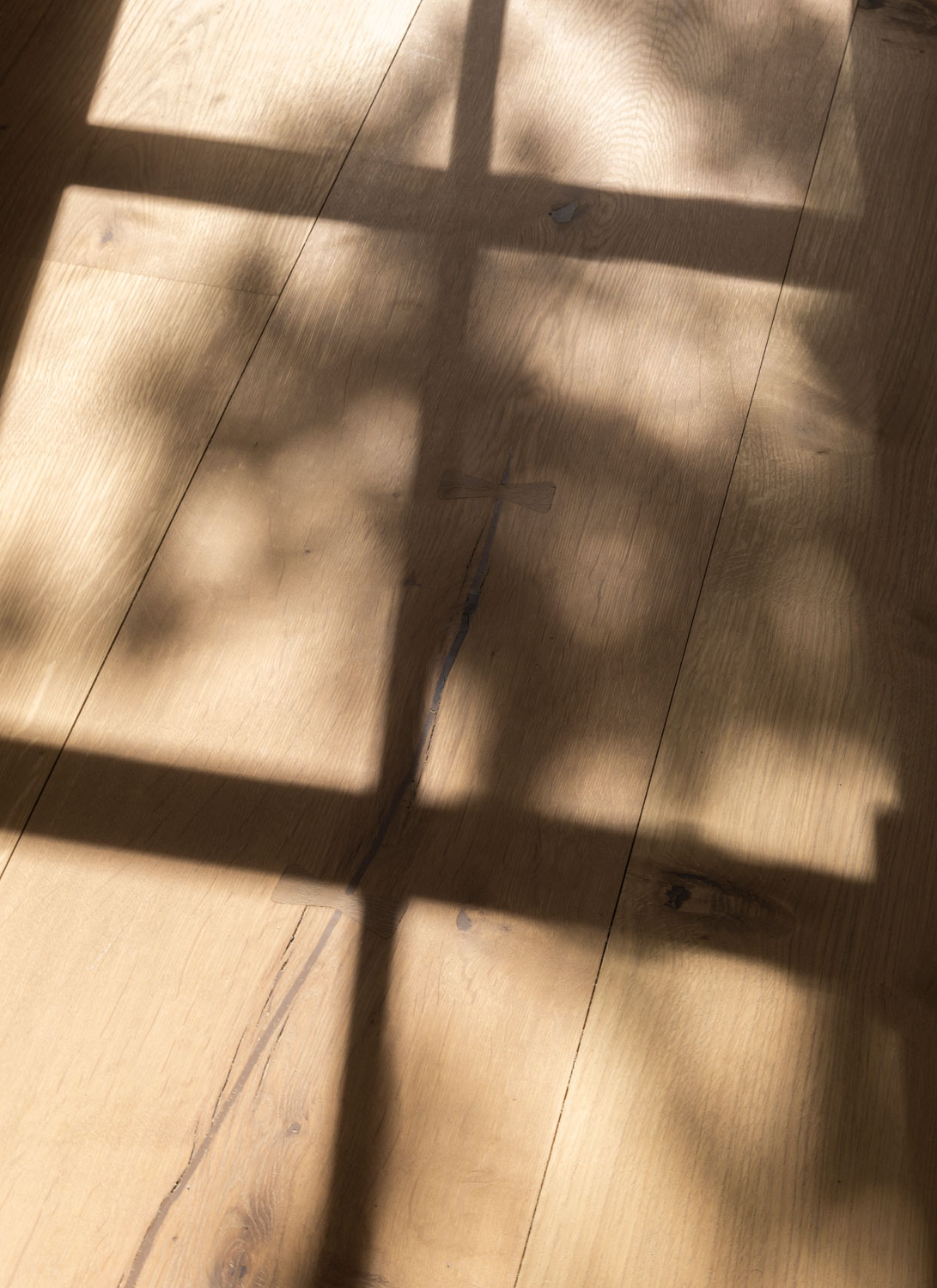
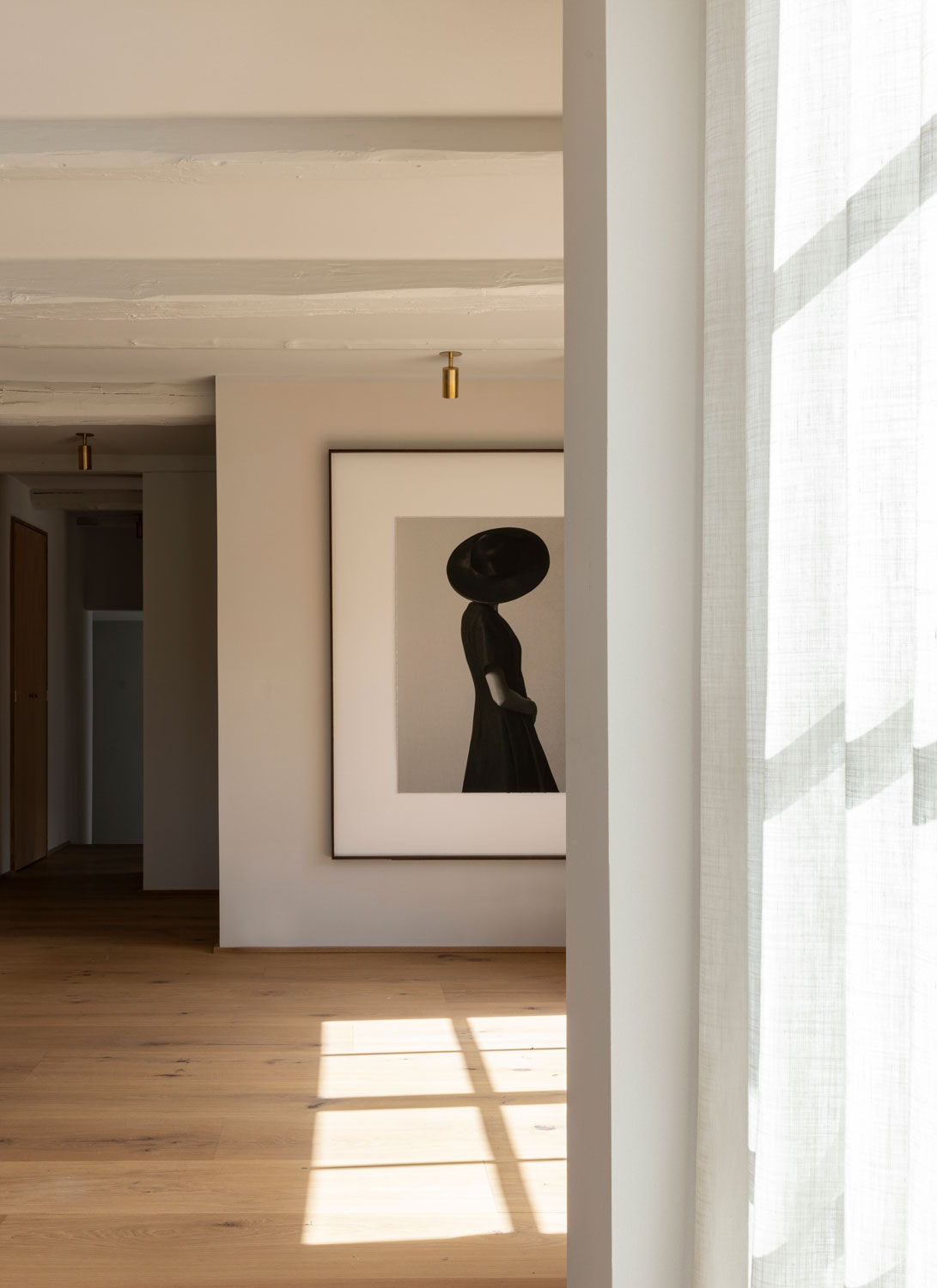
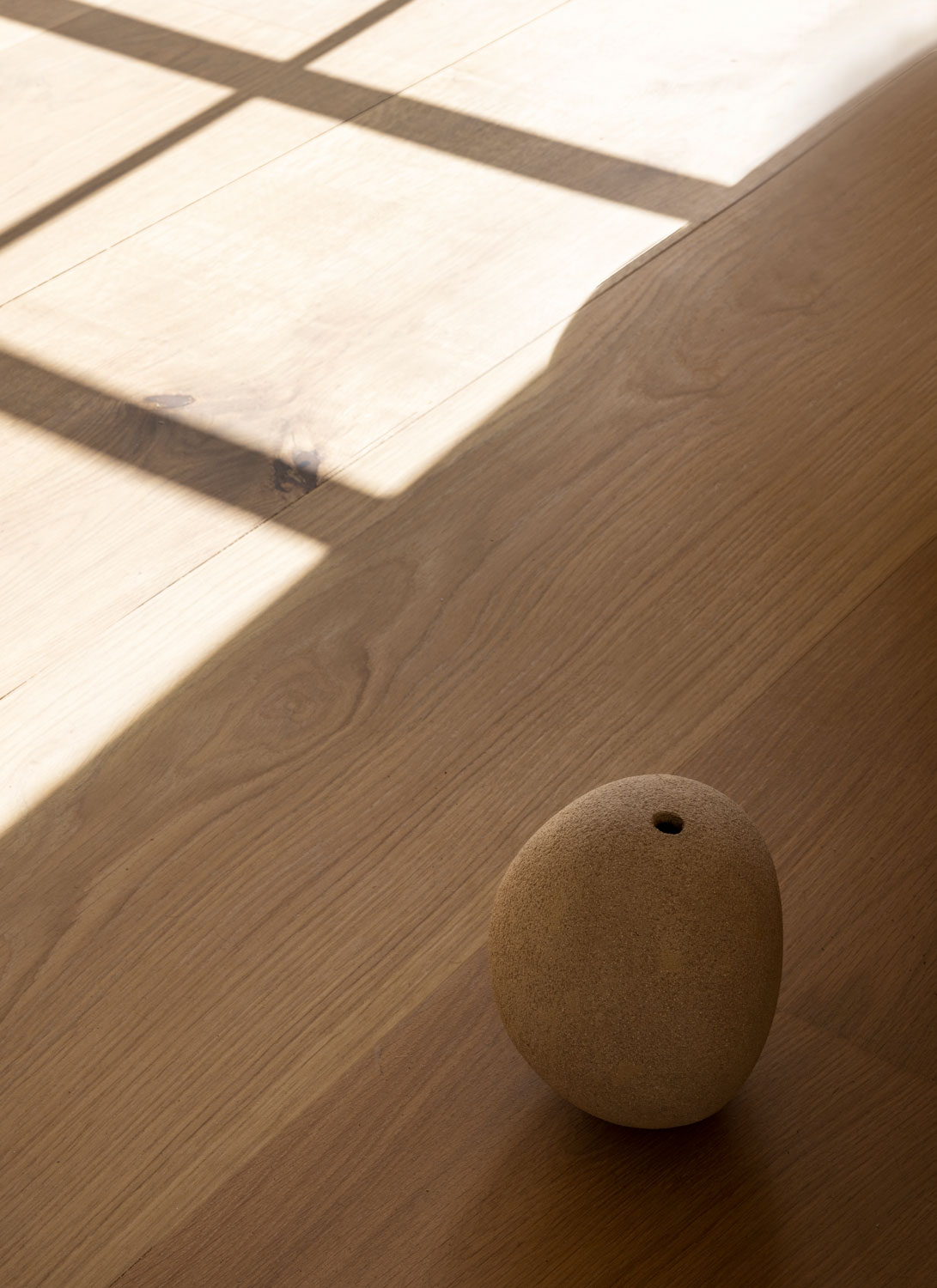
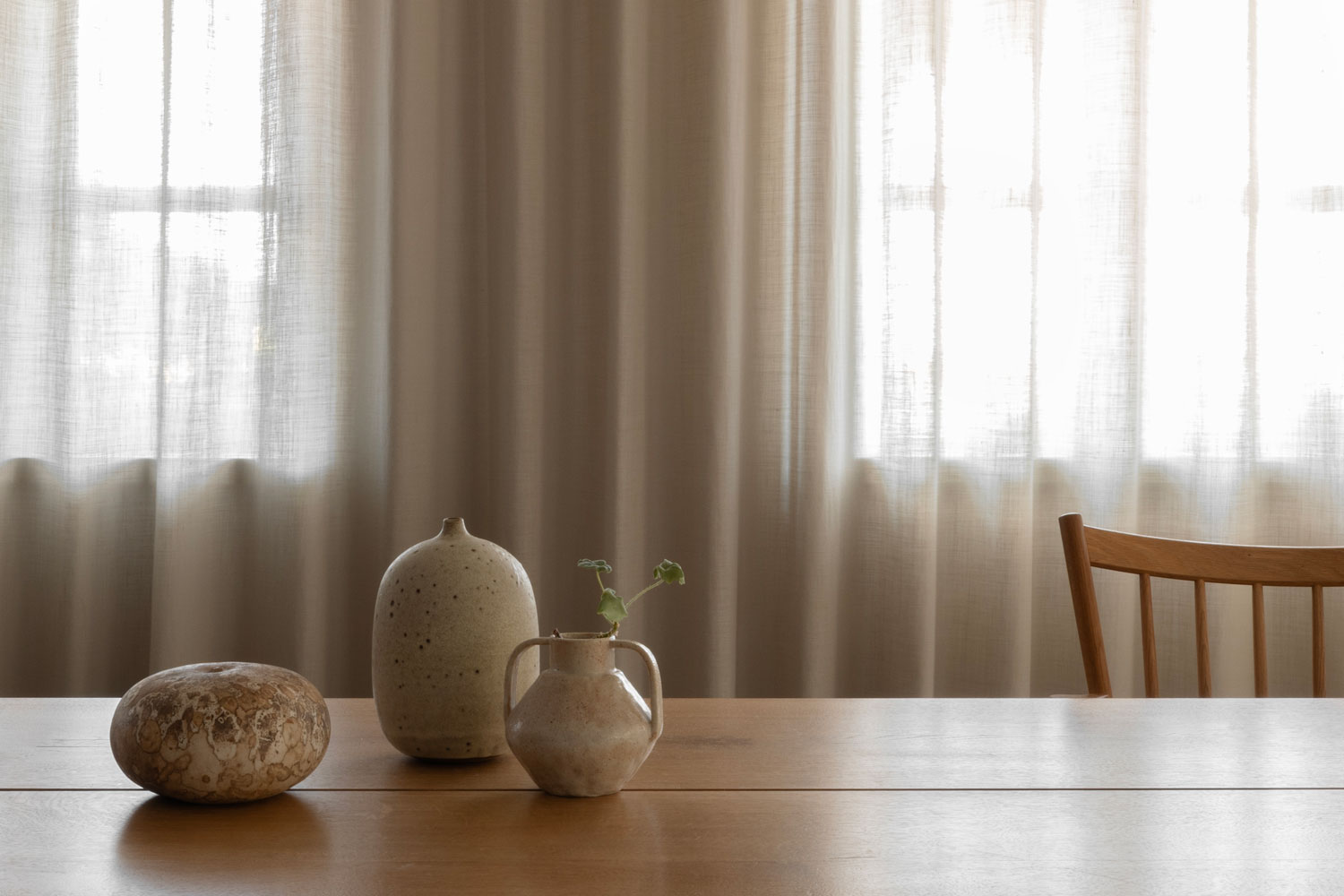
The material palette is drawn directly from the landscape outside the door – sandy beiges, soft greys, and muted whites paired with materials such as oak and limestone. Windows frame views of the shore, blurring the boundary between indoors and out, while natural light moves gently through the spaces, shifting in character with the seasons. This interplay of light, shadow, and materiality imbues the home with a quiet poetry that invites both contemplation and togetherness.
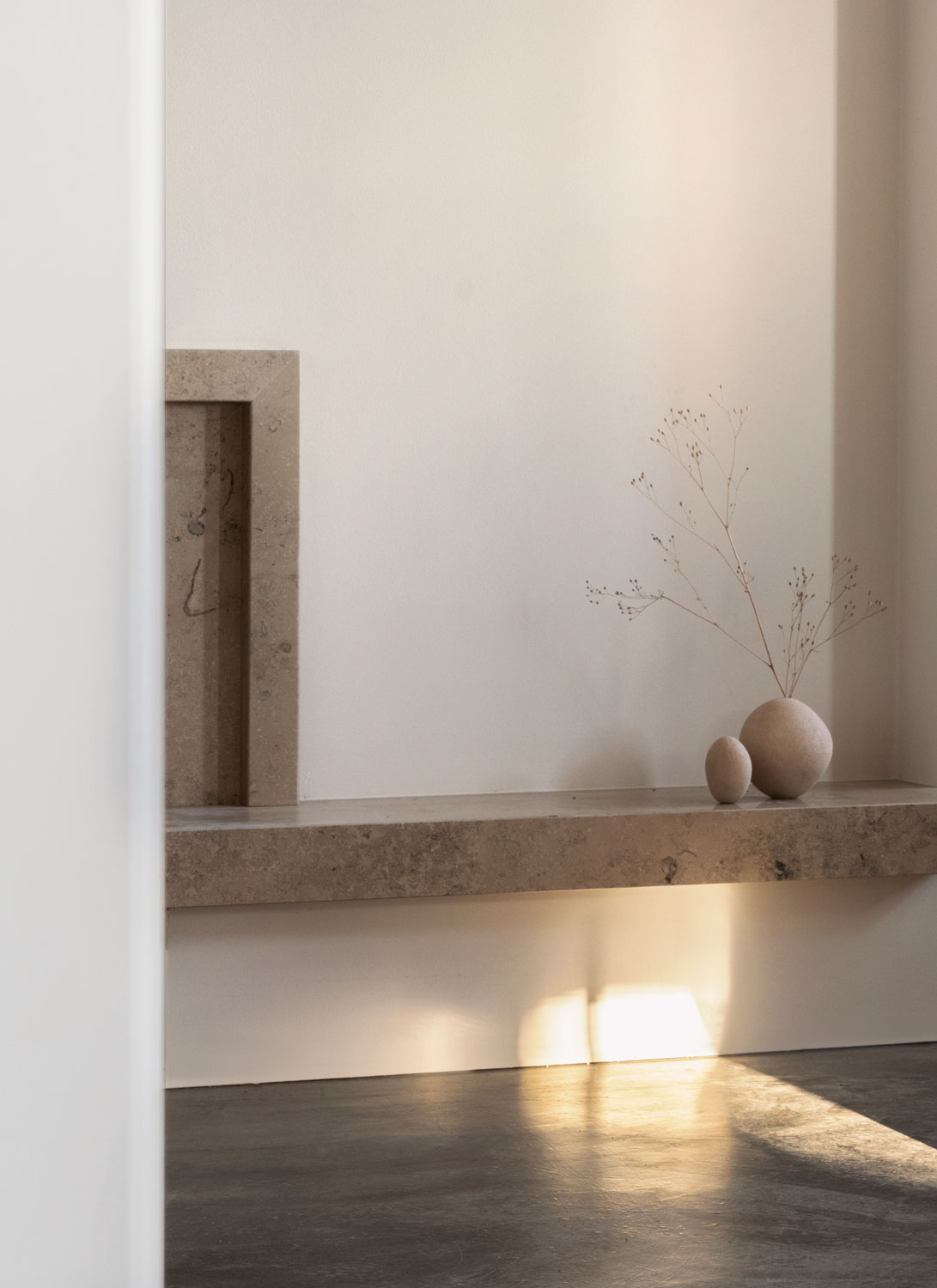
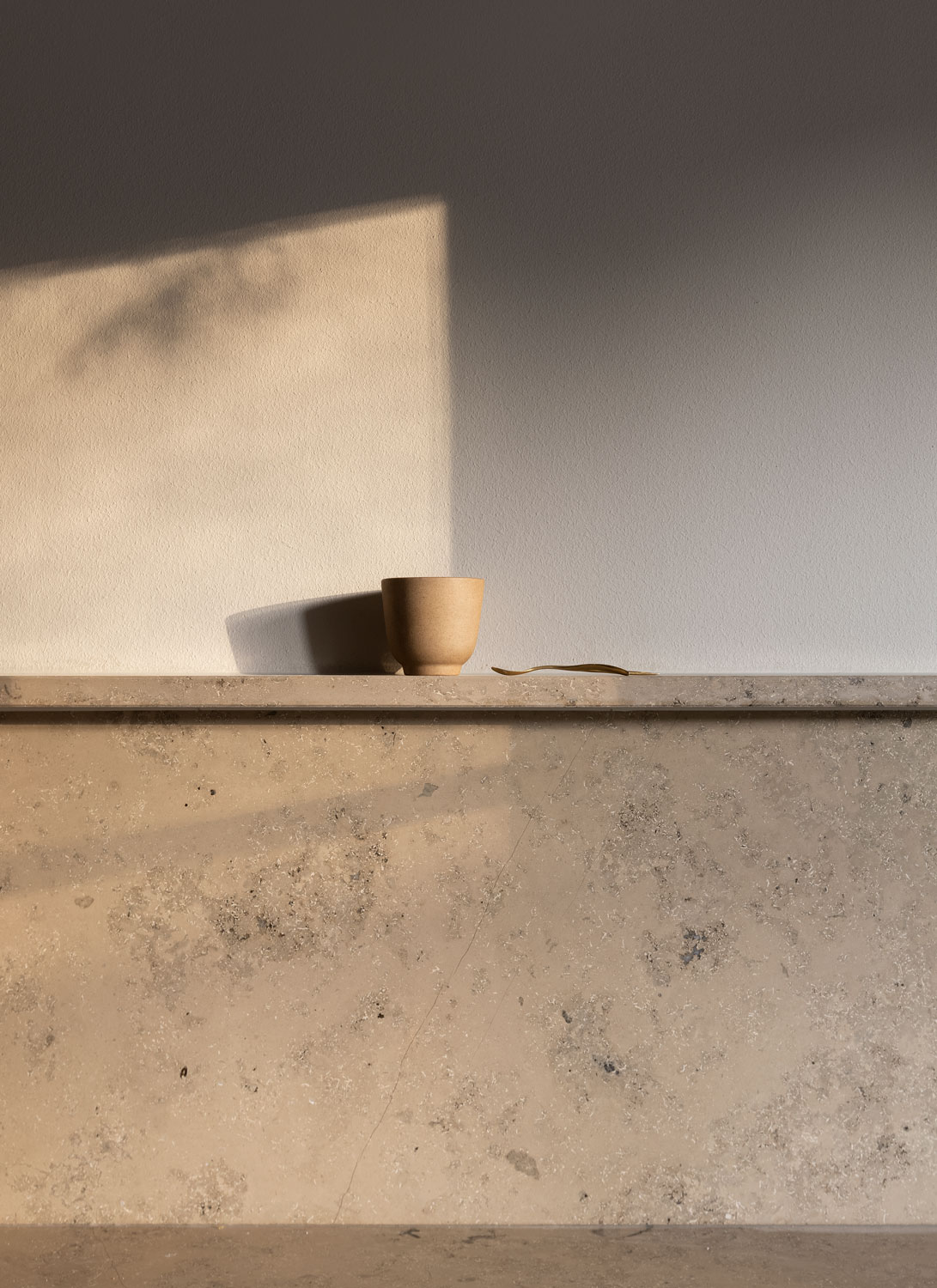
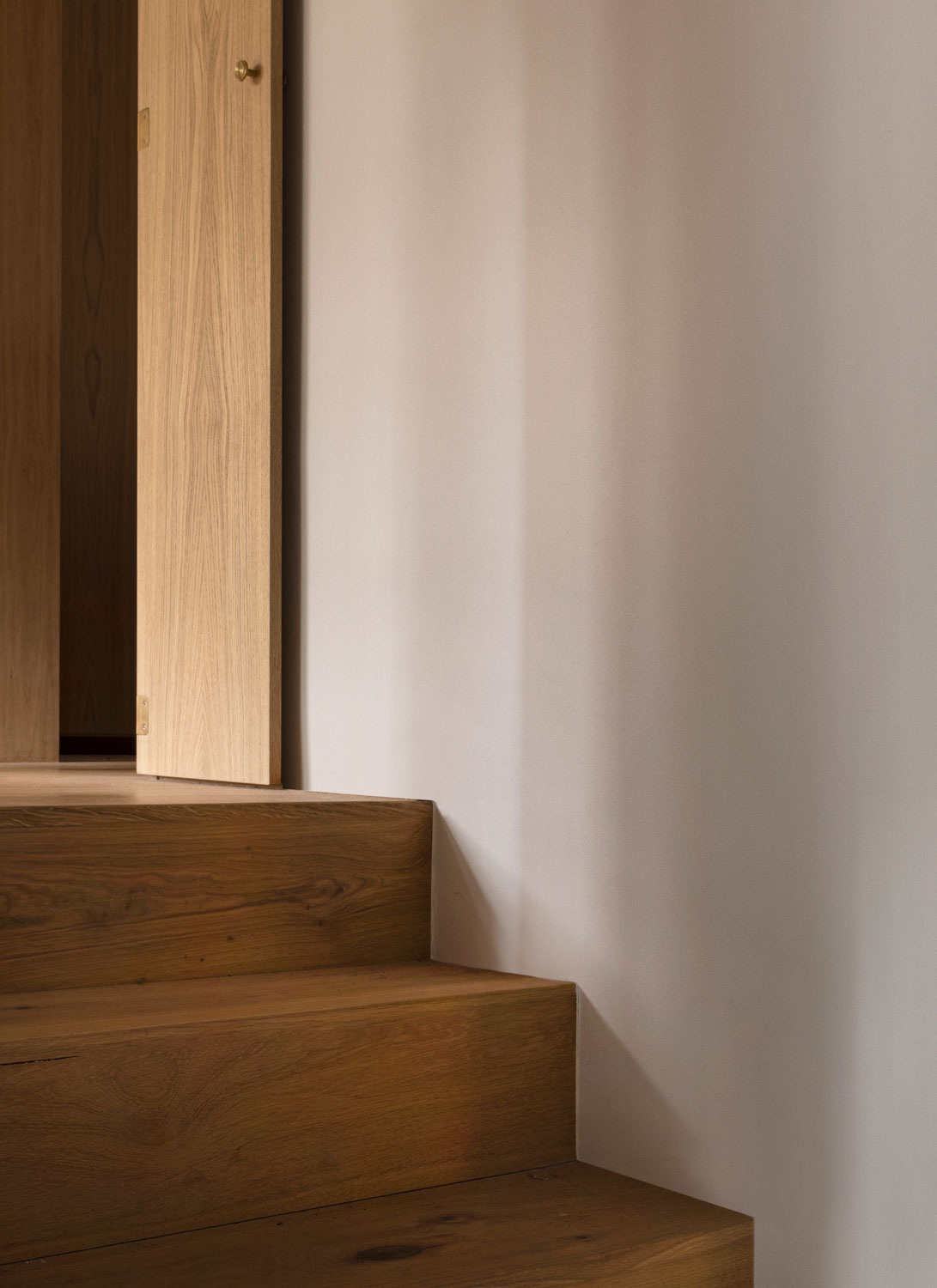
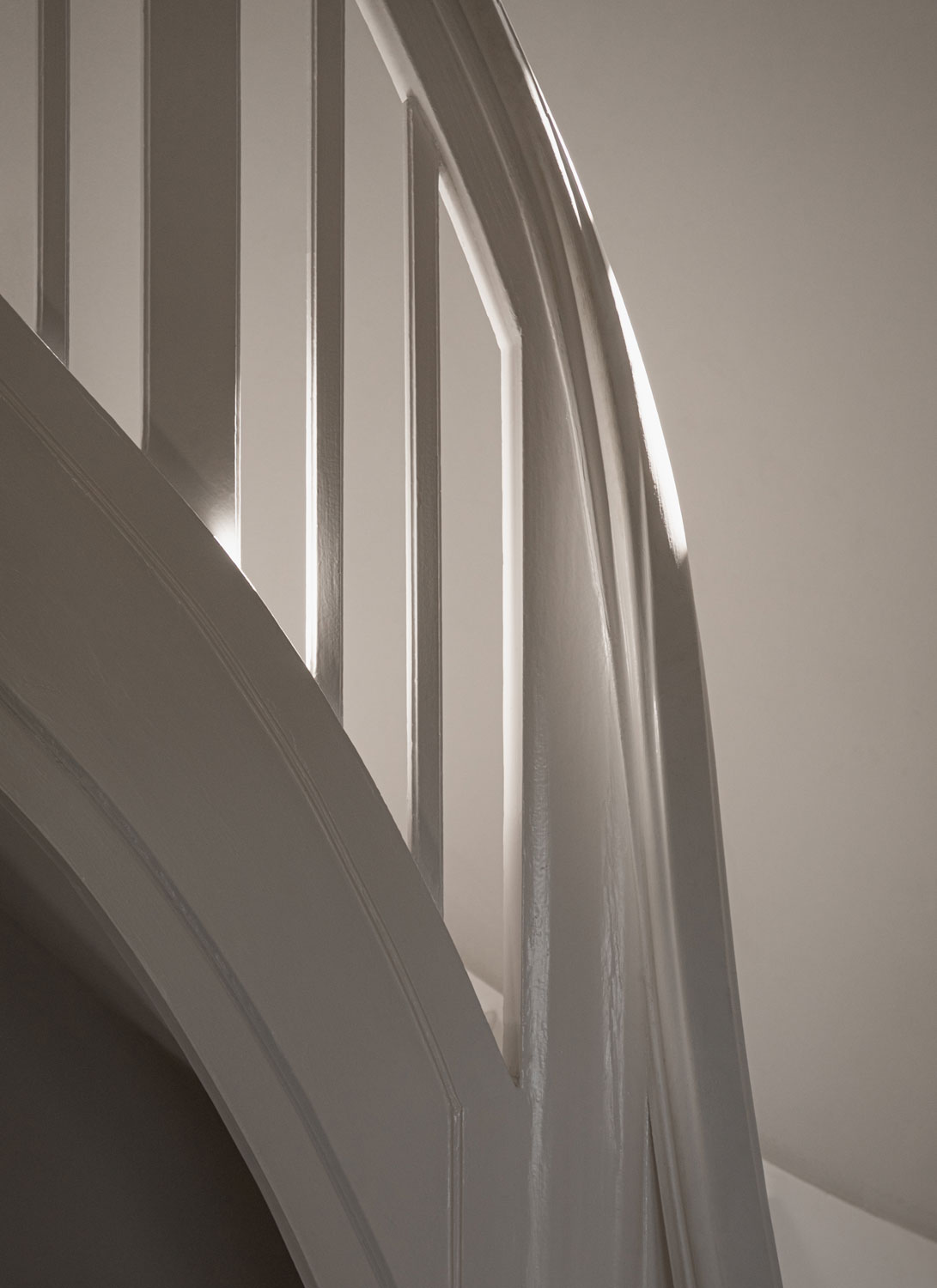
The interiors are shaped by contrasts that quietly complement one another. The Jura Grau fireplace, with its cool solidity, becomes a counterpoint to visually softer elements like the sculptural sweep of the original staircase. Together, they create a layered atmosphere and a dialogue between past and present.
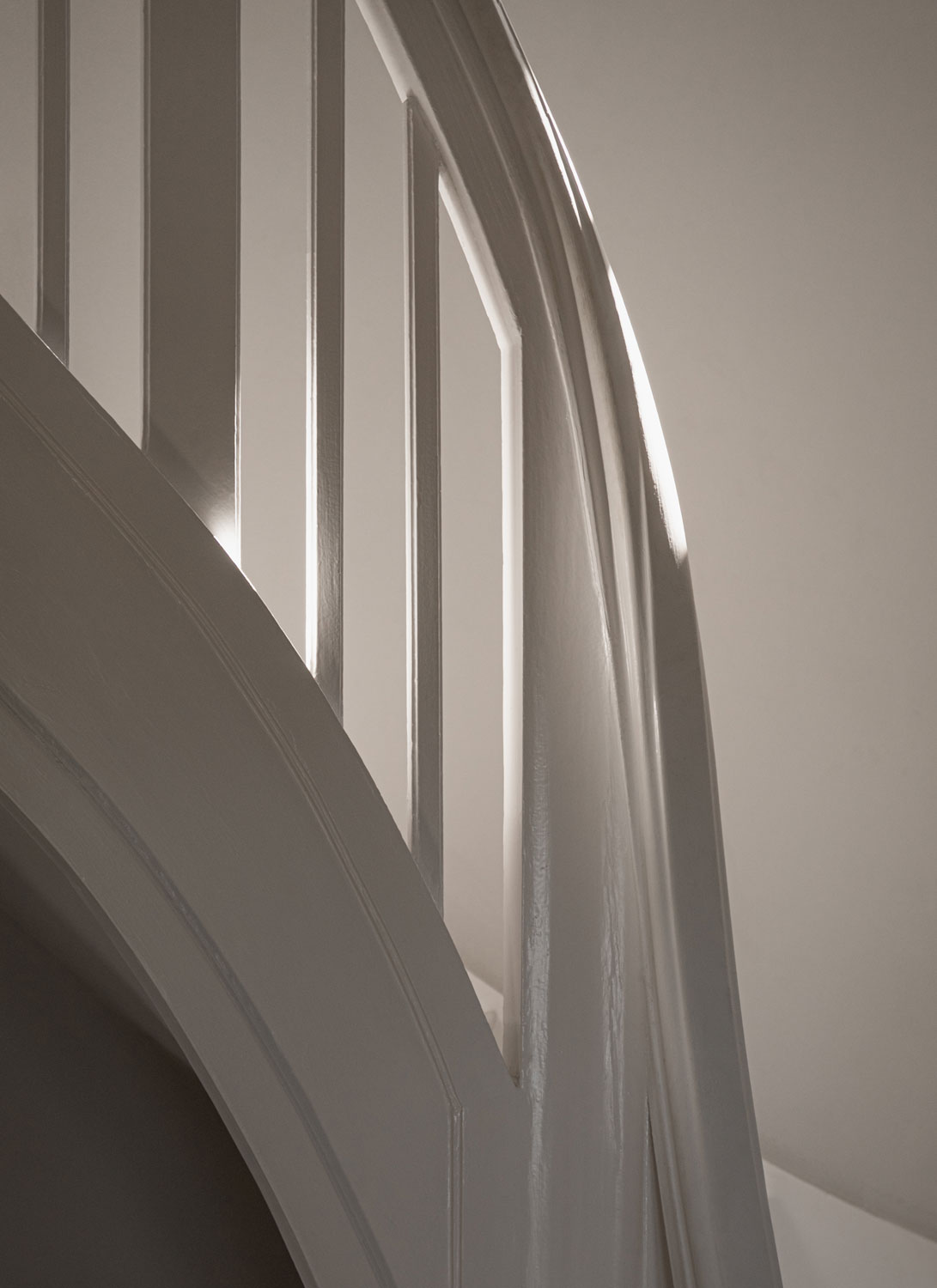
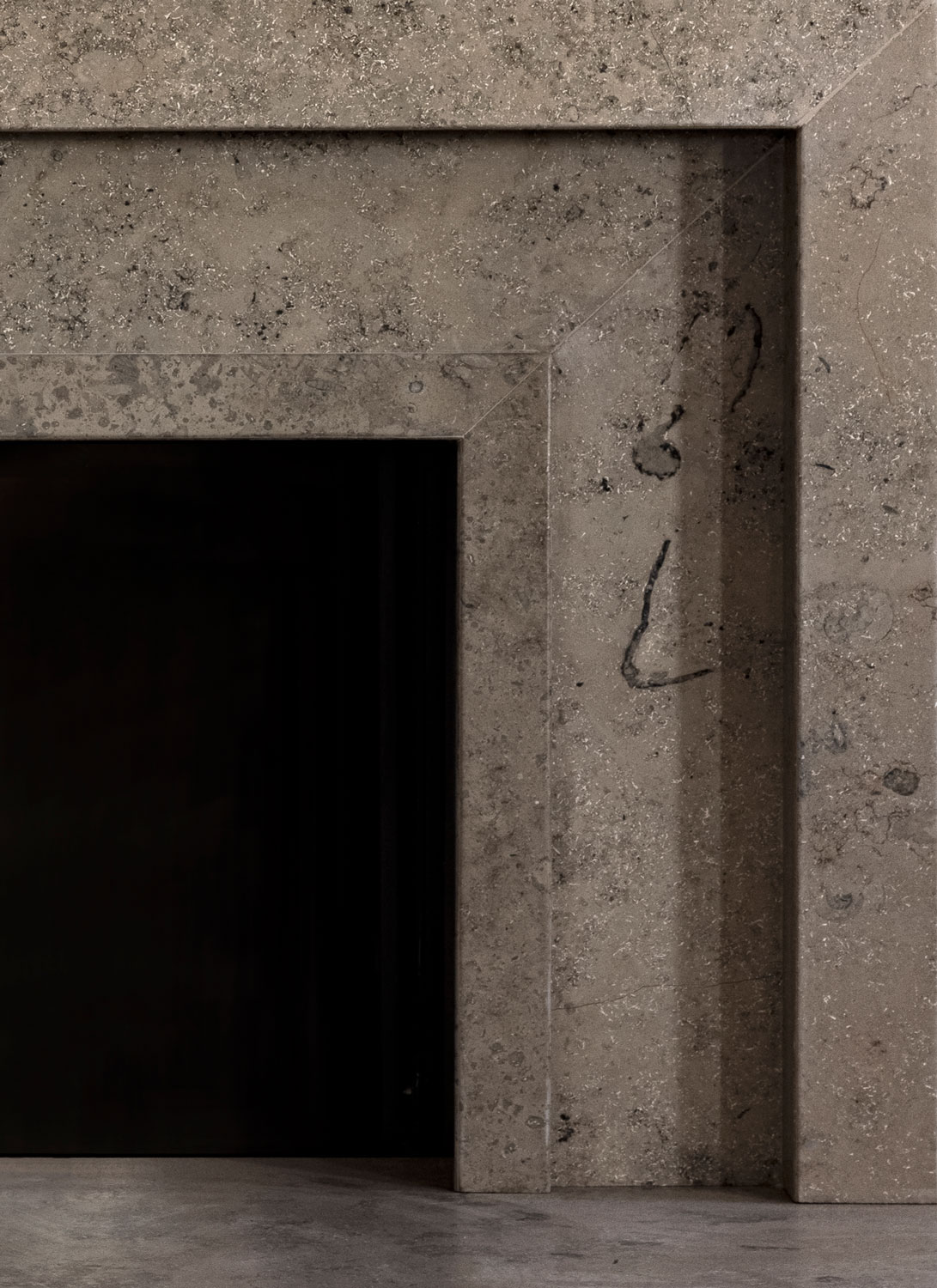
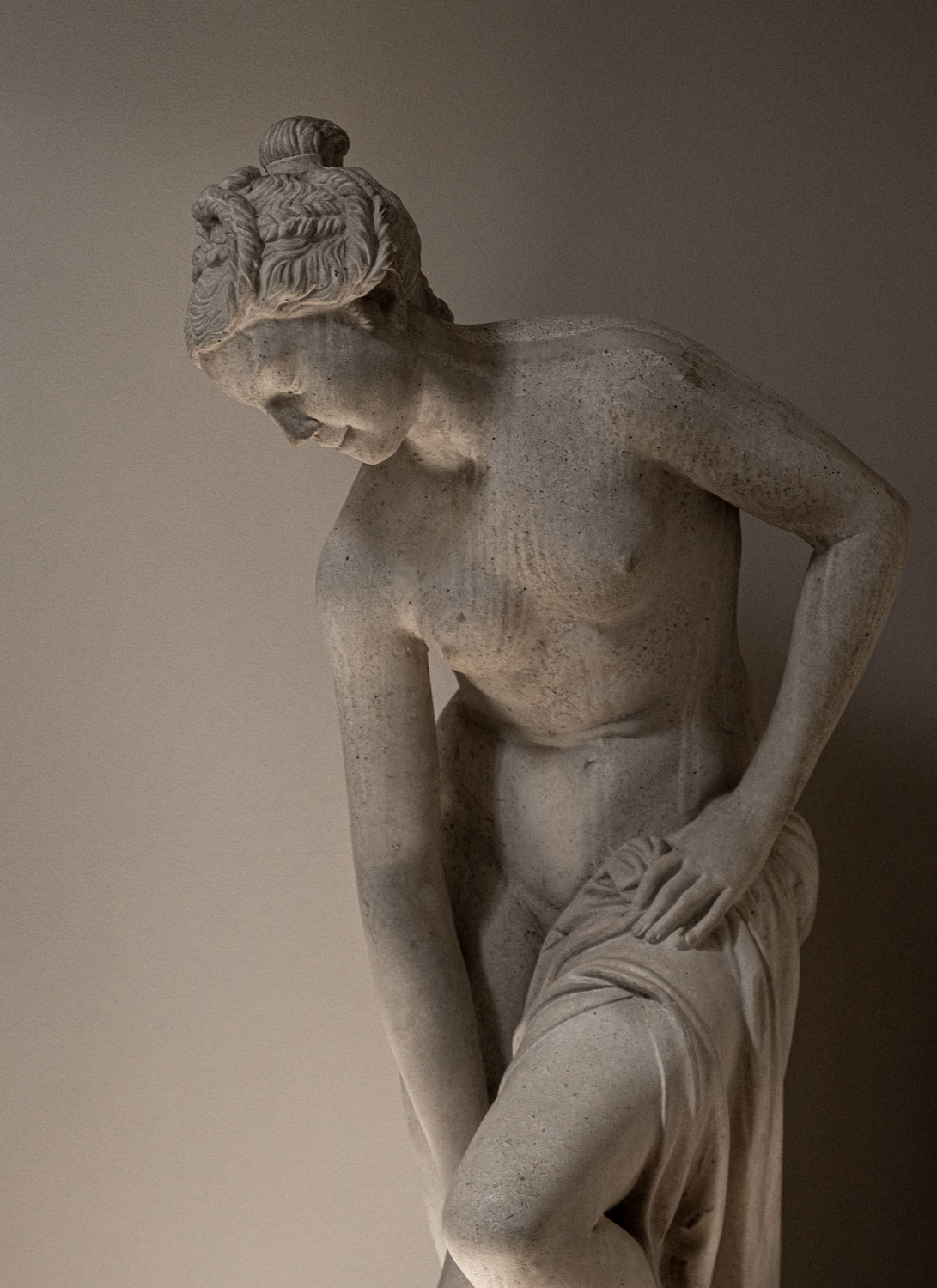
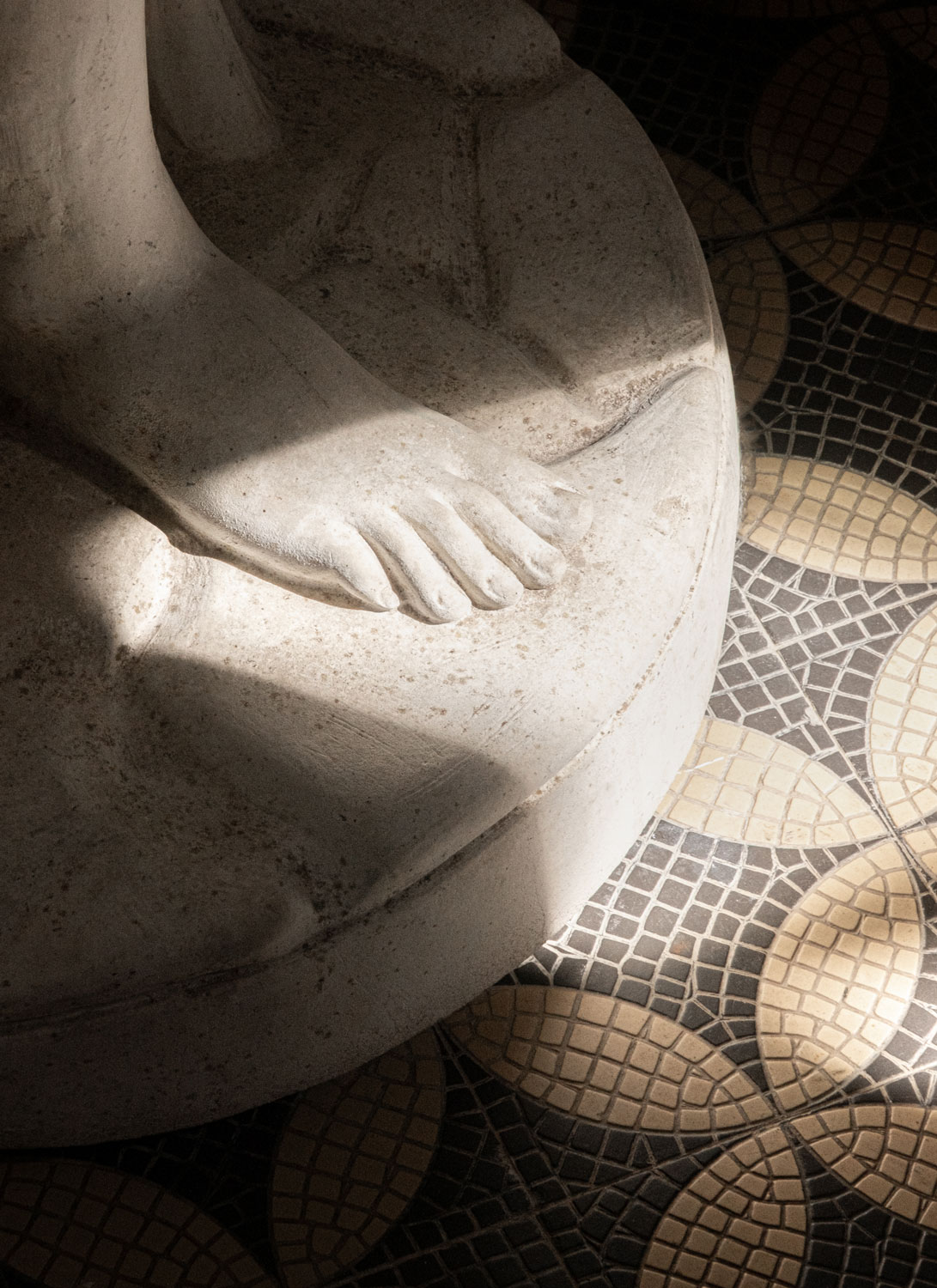
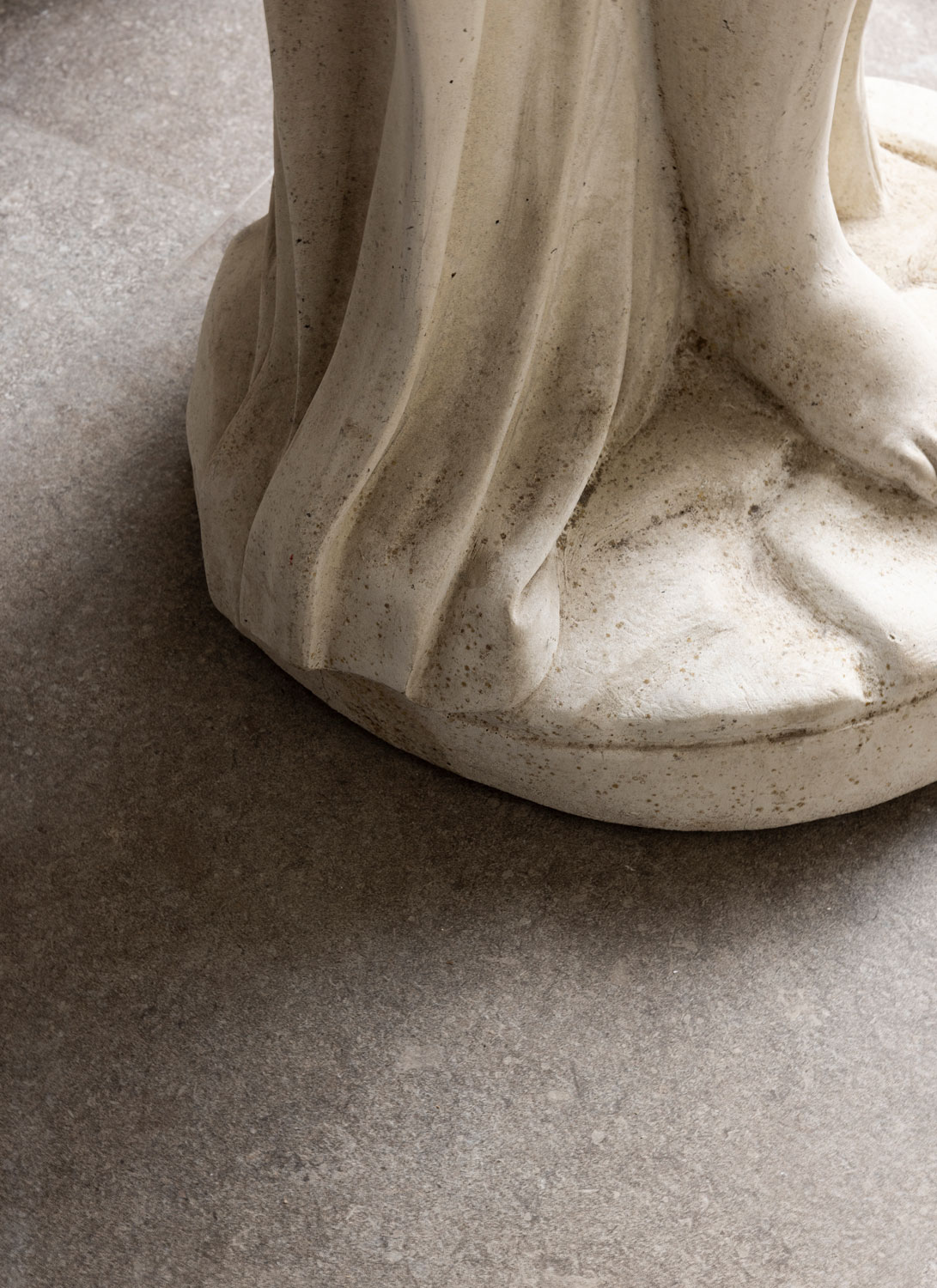
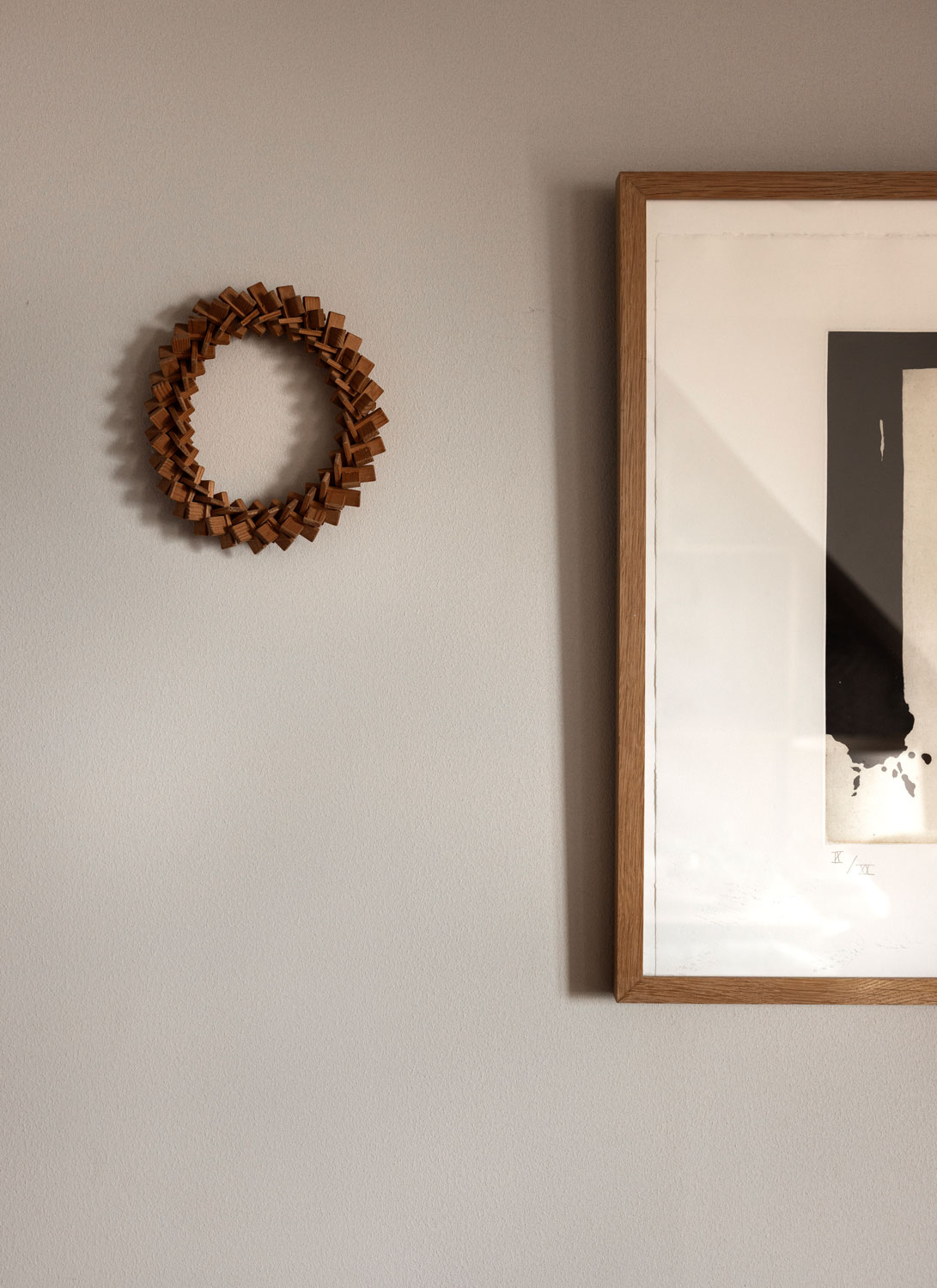
Contrasts of time and texture define the interiors, where the solidity of stone, the patina of historic details, and the tactility of contemporary objects come together in quiet harmony – creating a home where history and modern life seamlessly coexist.
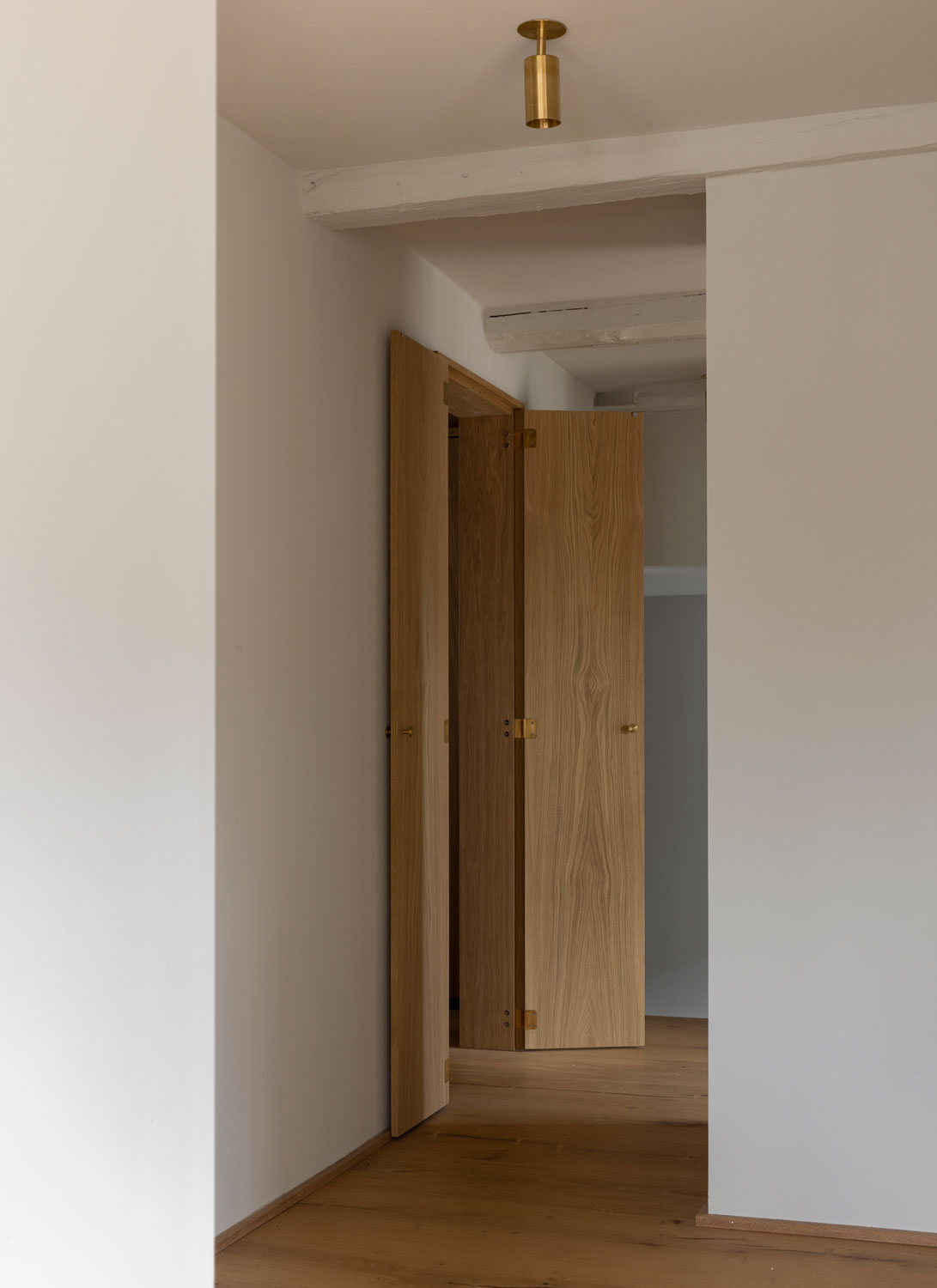
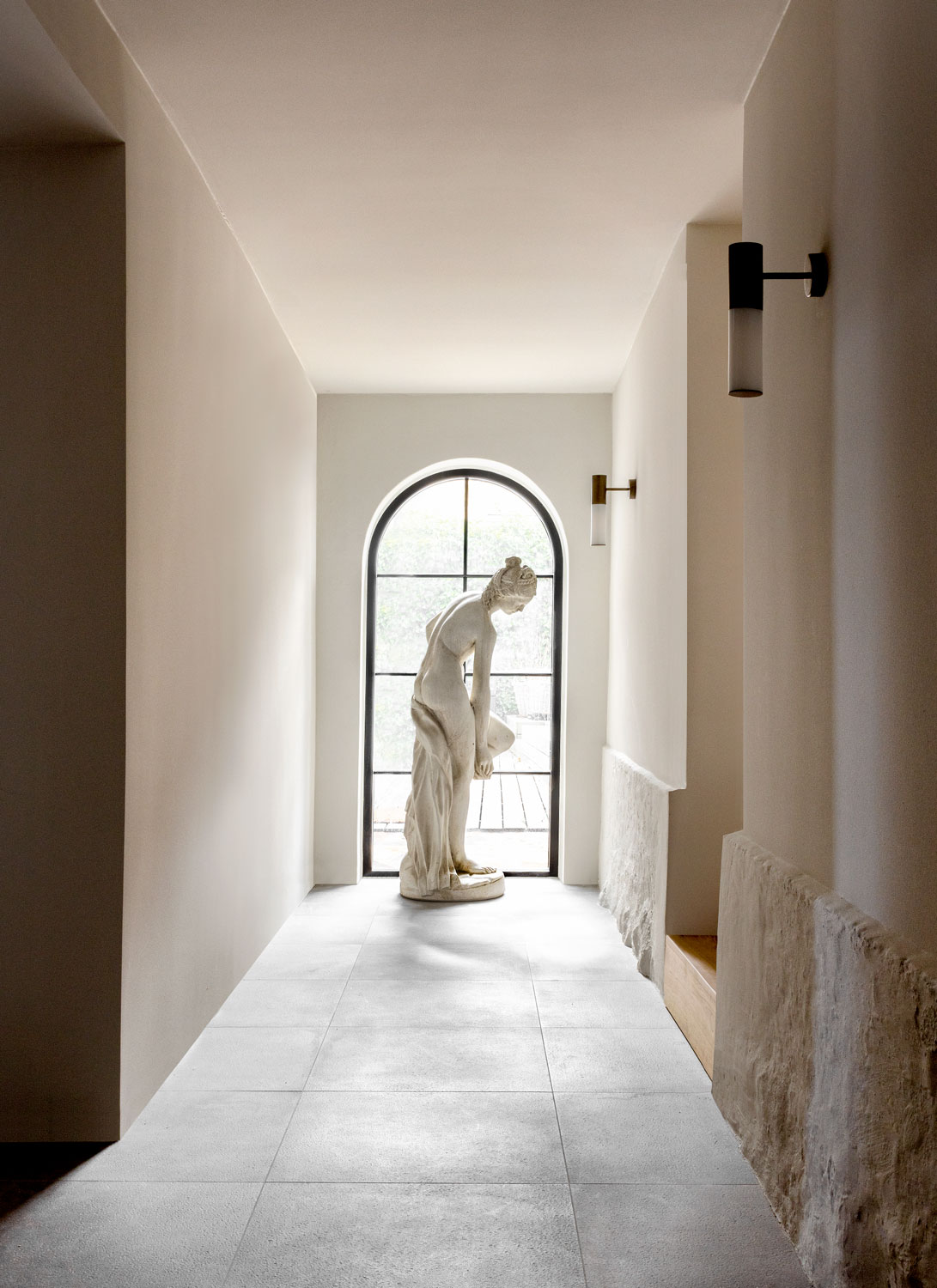
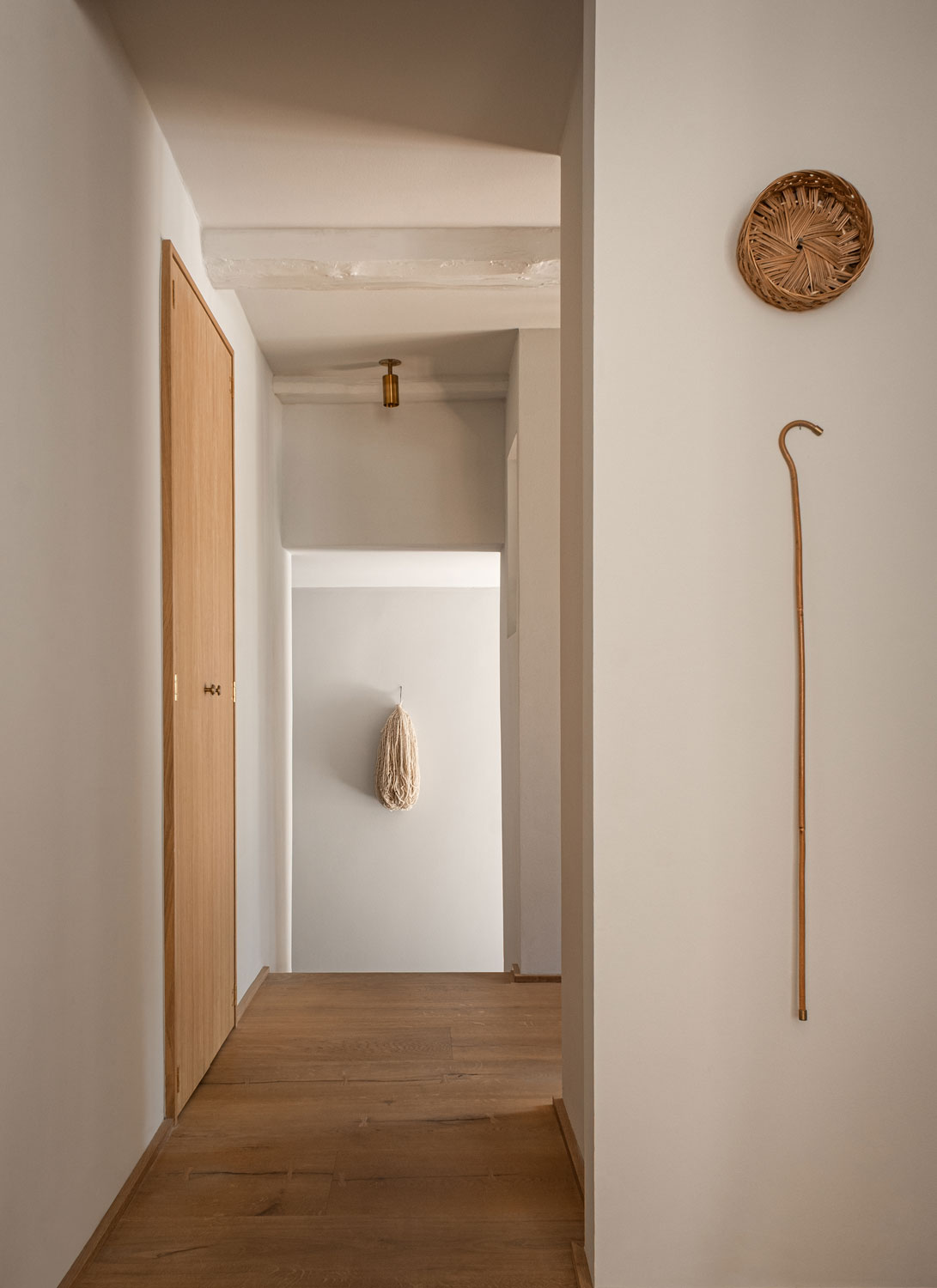
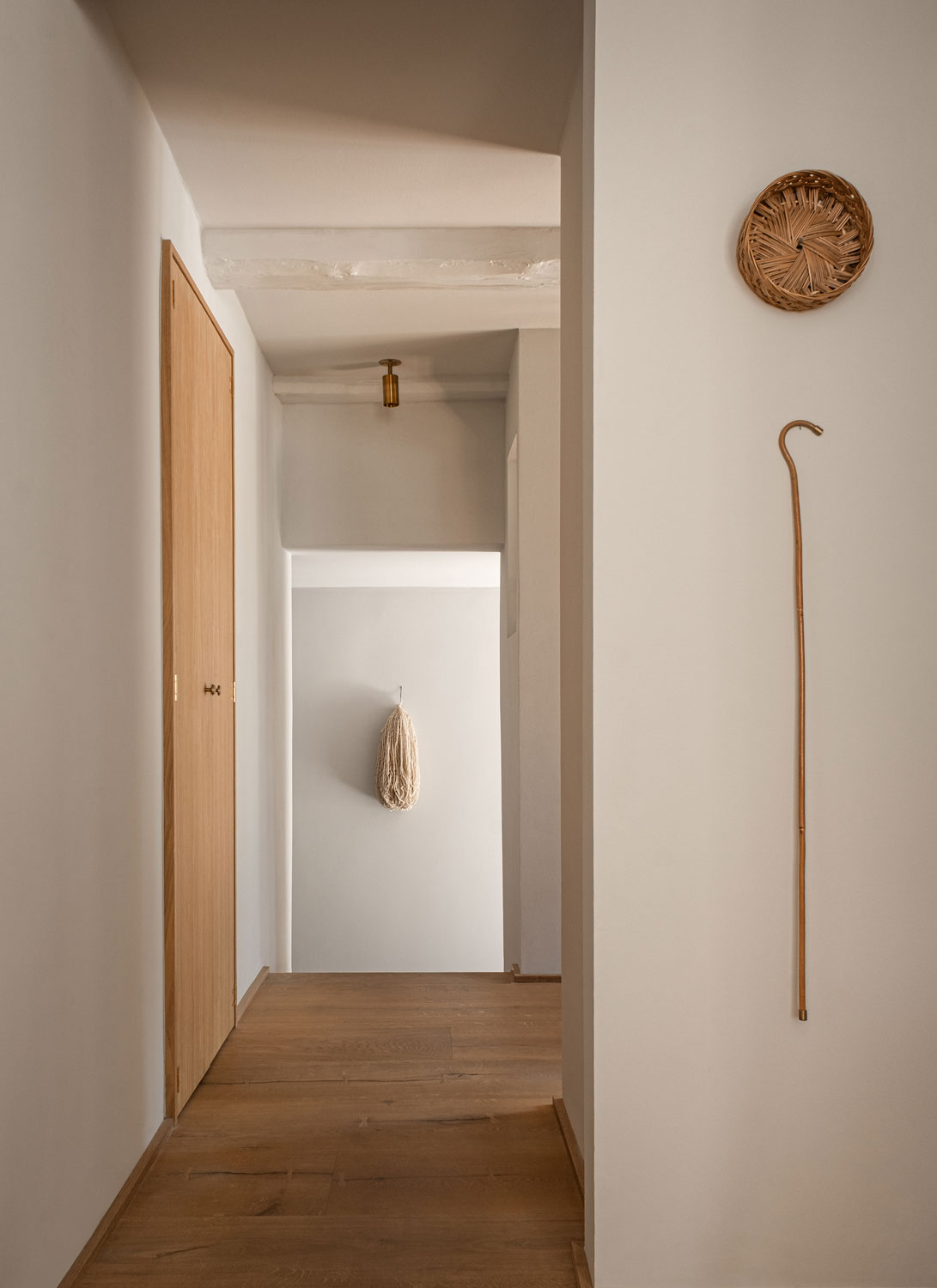
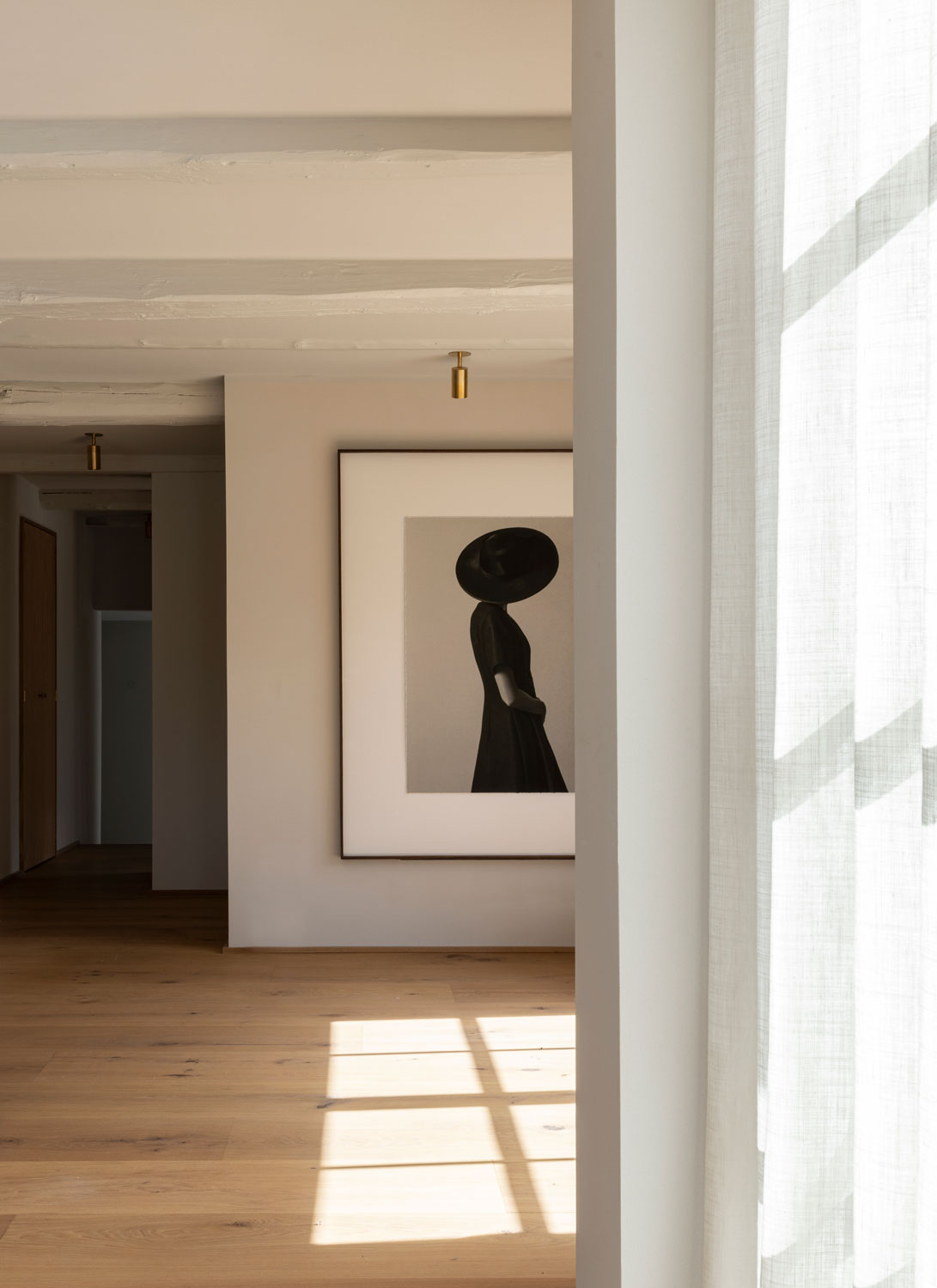
One of the most significant architectural interventions in the home is the unification of the two original houses into a single cohesive home. Rather than imposing a stark new addition, the connection was conceived as a contemporary gesture rooted in respect for the property’s history. The hallway becomes both a literal and symbolic passage, carrying the patina of the past into the clarity of the present.
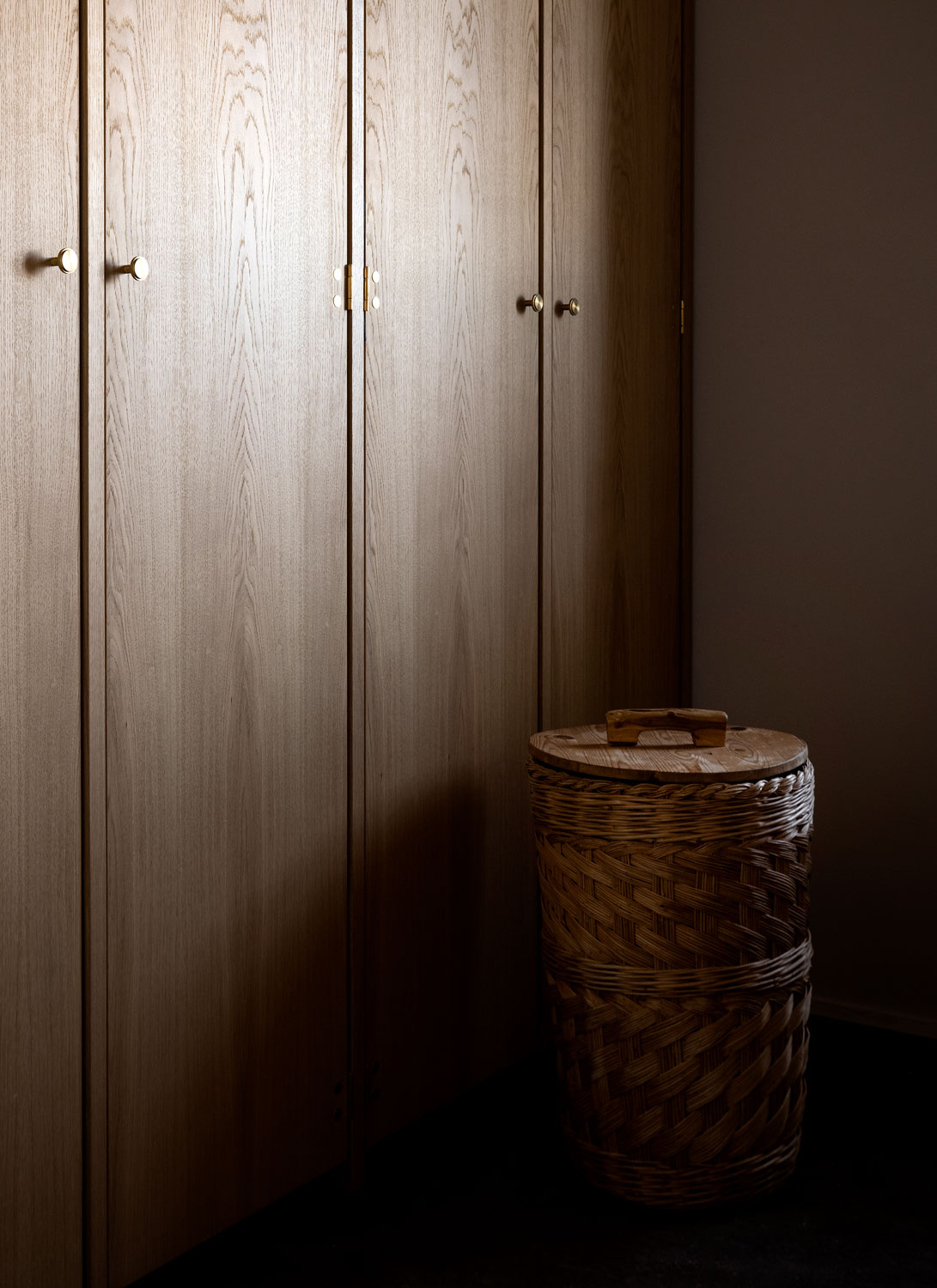
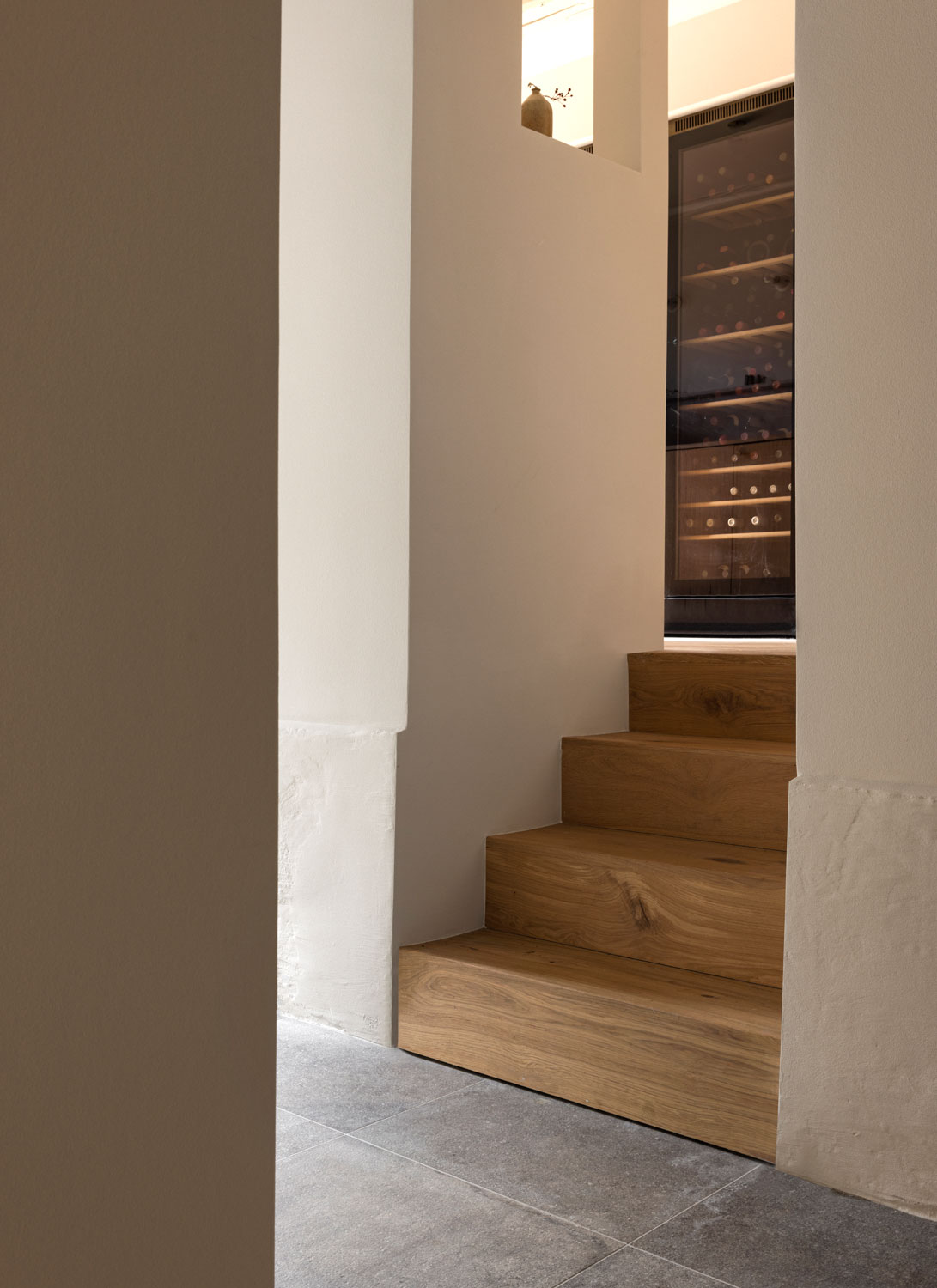
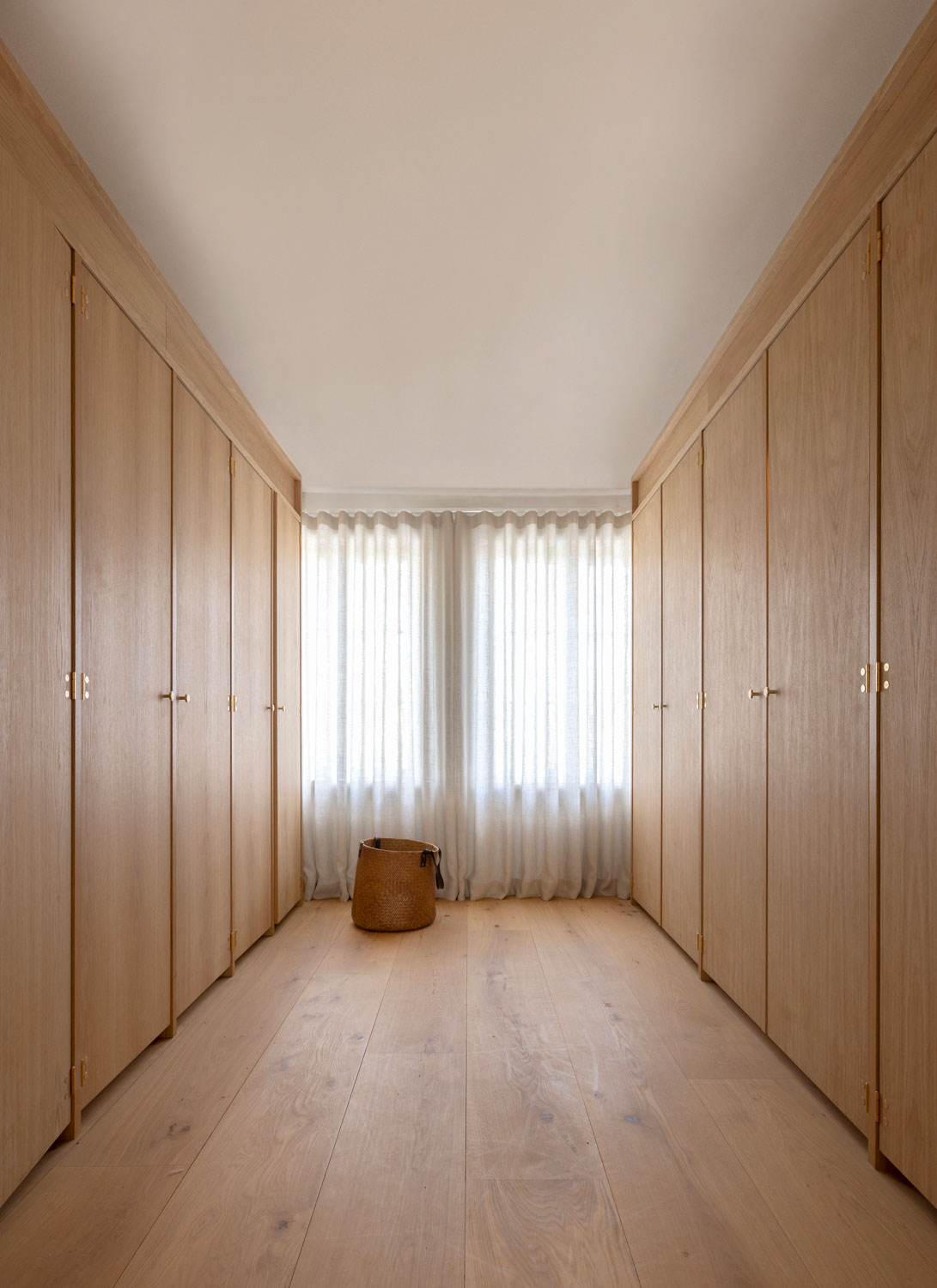
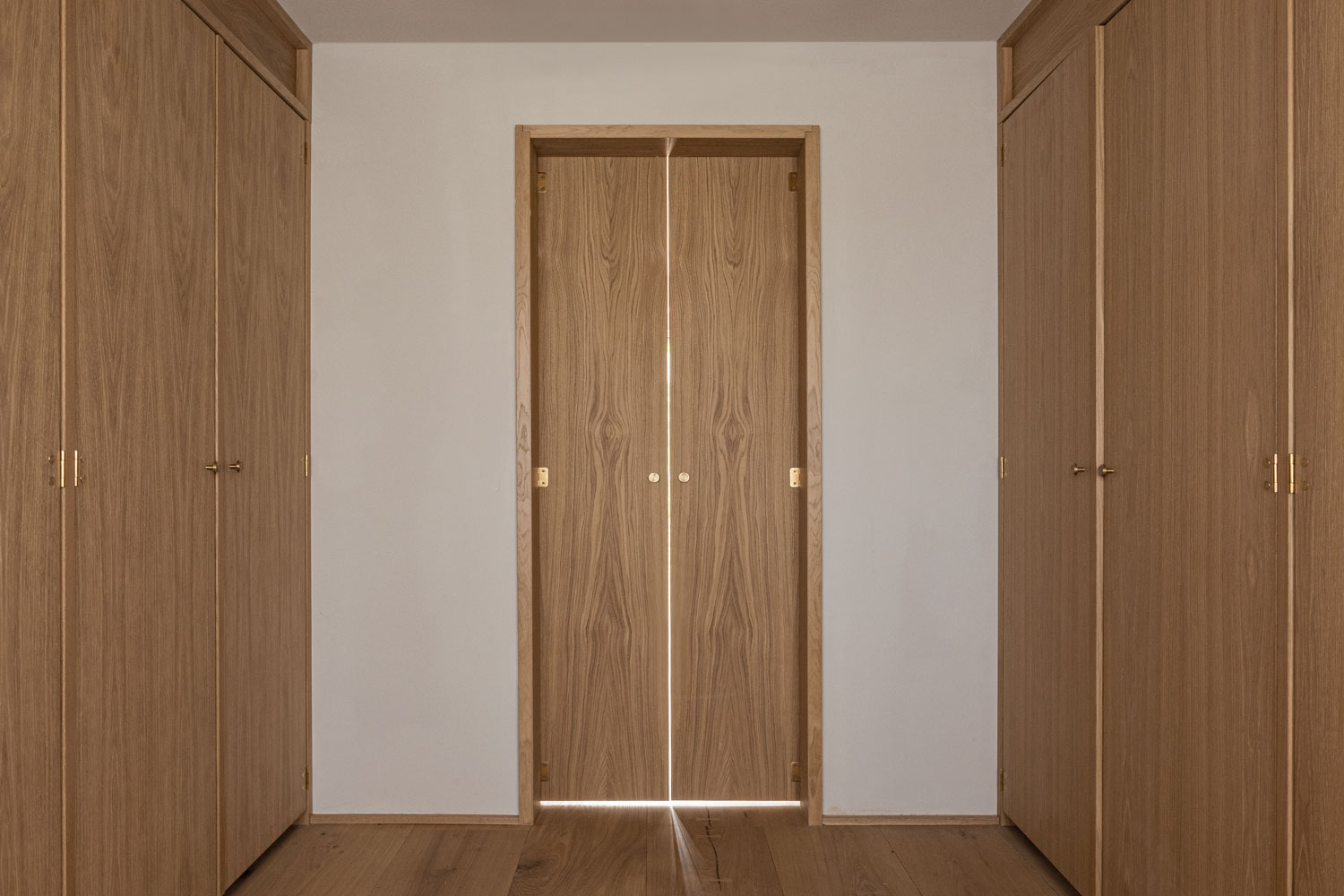
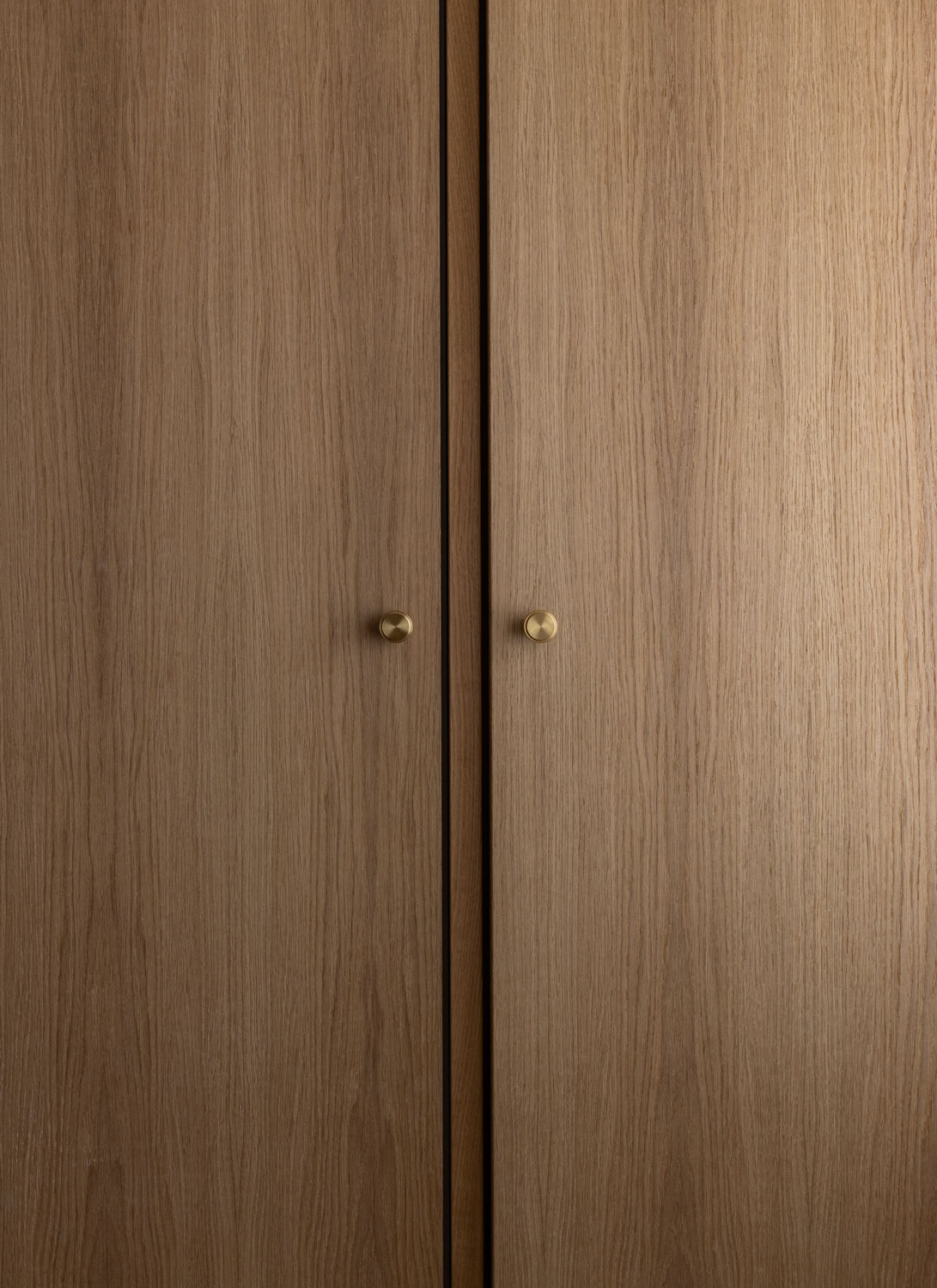
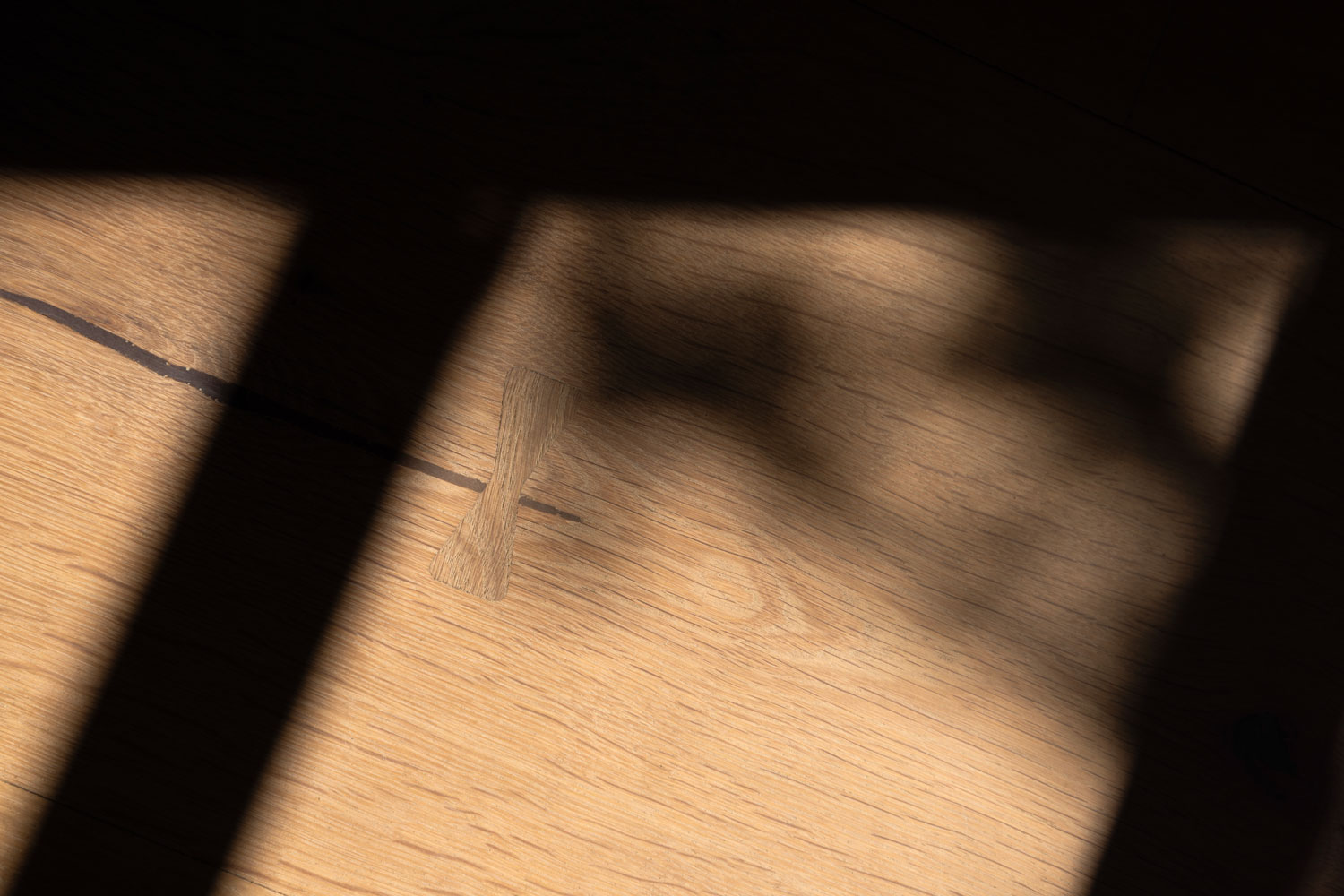
Here, restored elements such as original beams and tiled floors coexist with pared-back surfaces in oak, brass, and plaster, balancing authenticity with refinement. Cabinet-like doors line the space with quiet discretion, leading on one side into a dedicated wine kitchen and on the other into a generous walk-in closet for the family. The result is a space that feels undeniably modern yet deeply tied to its heritage. Every detail – from the subtle transitions between rooms to the tactile materials underfoot – underscores the notion that continuity does not come from replication but from dialogue.
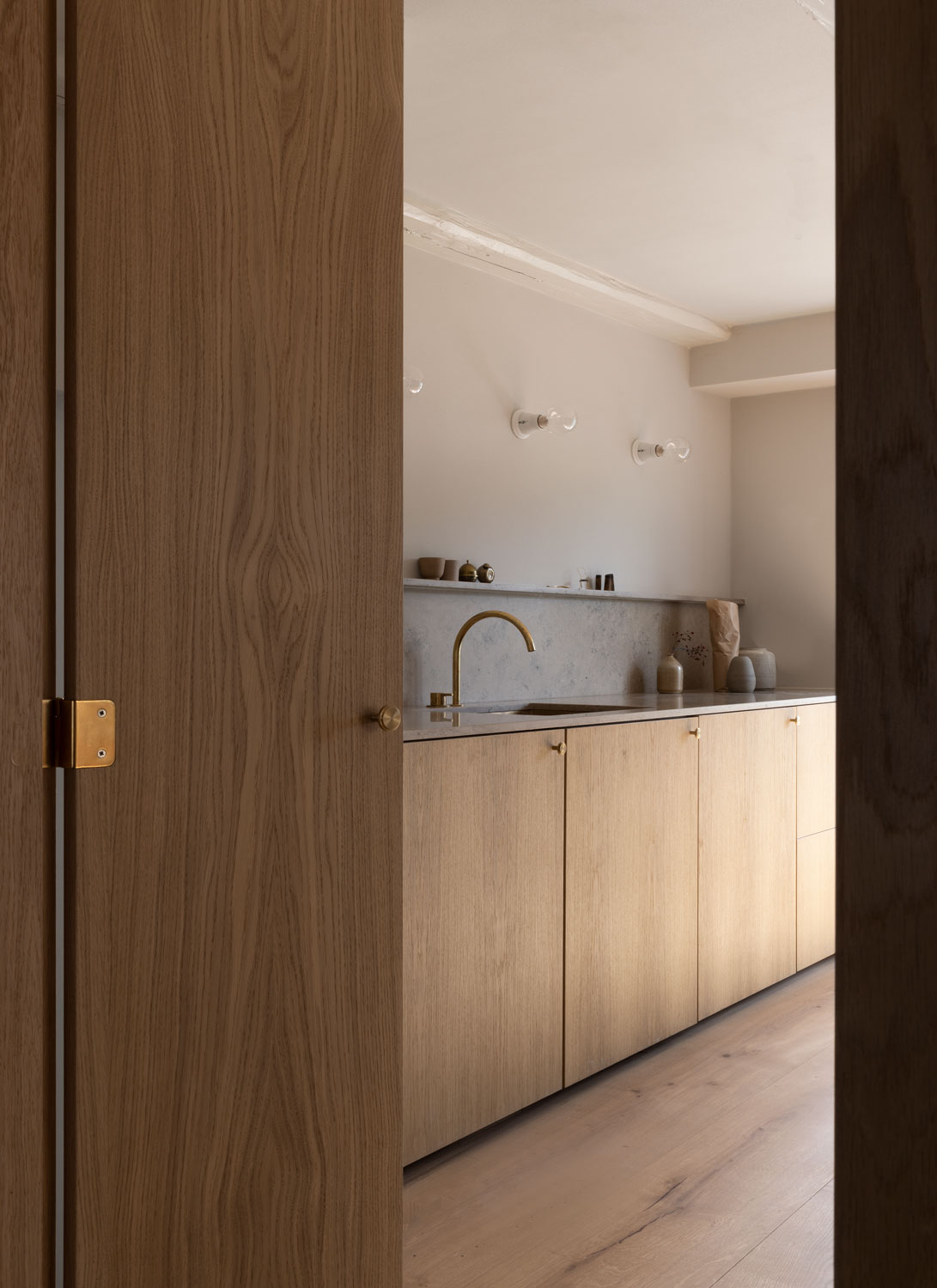
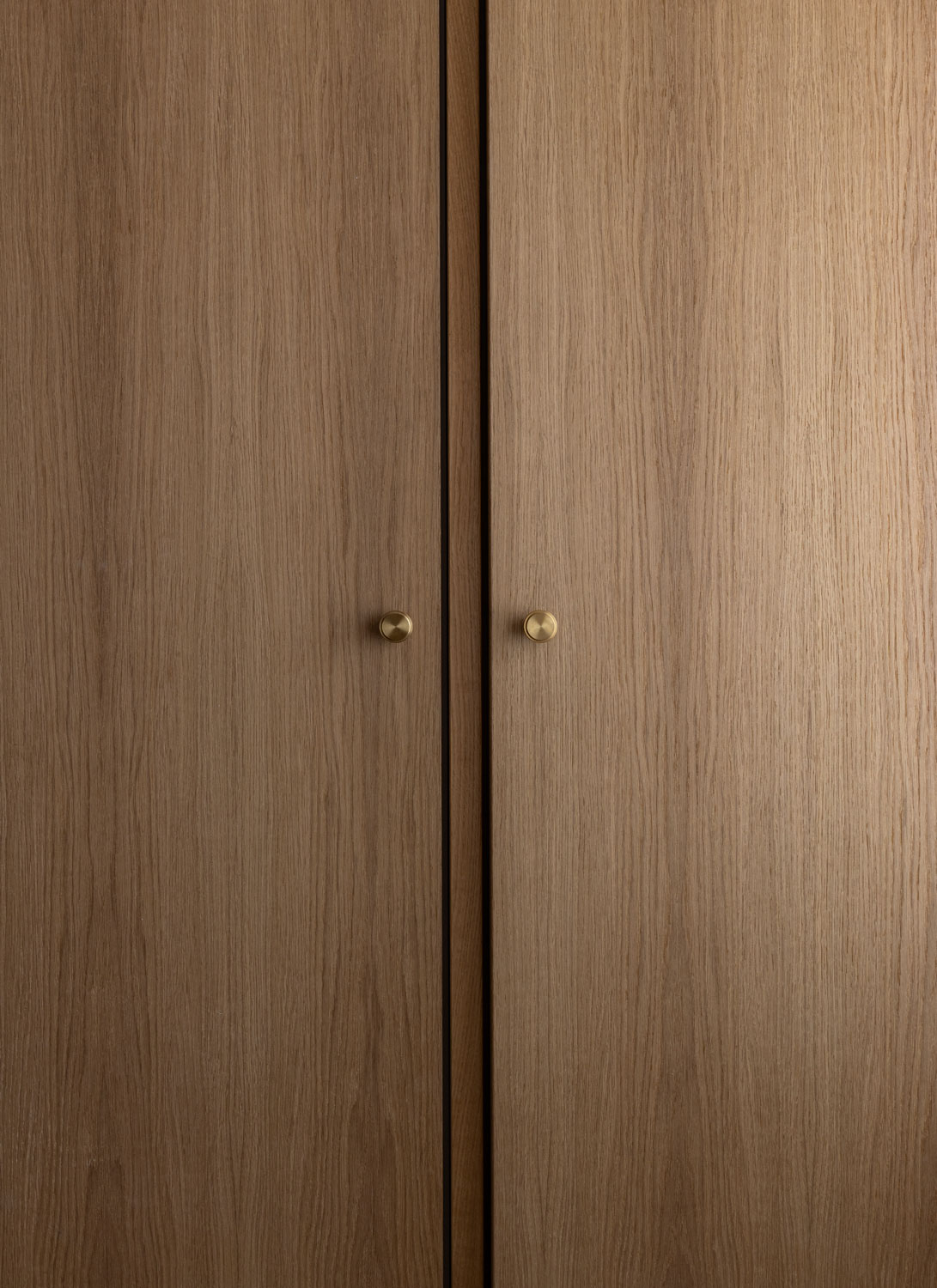
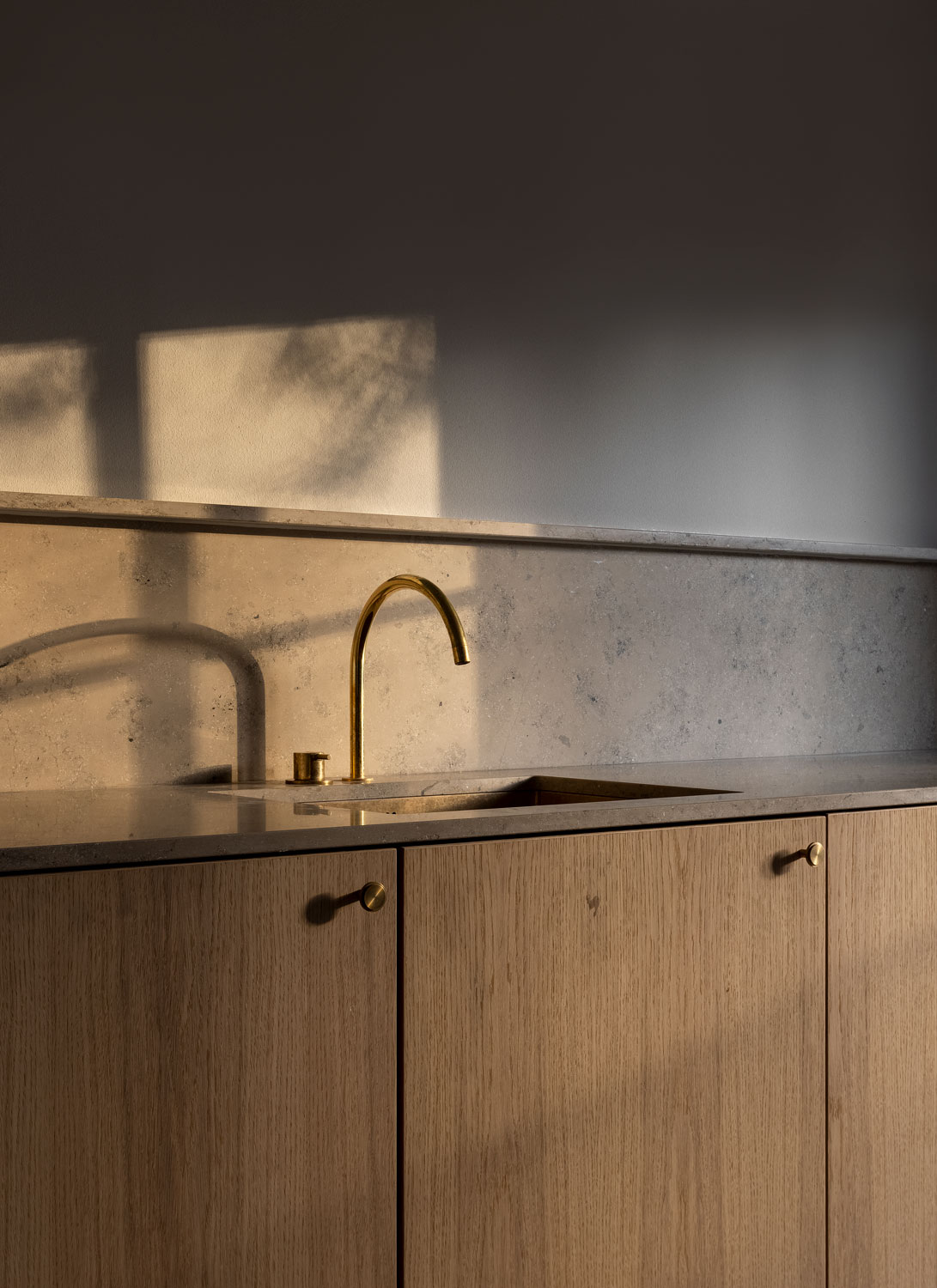
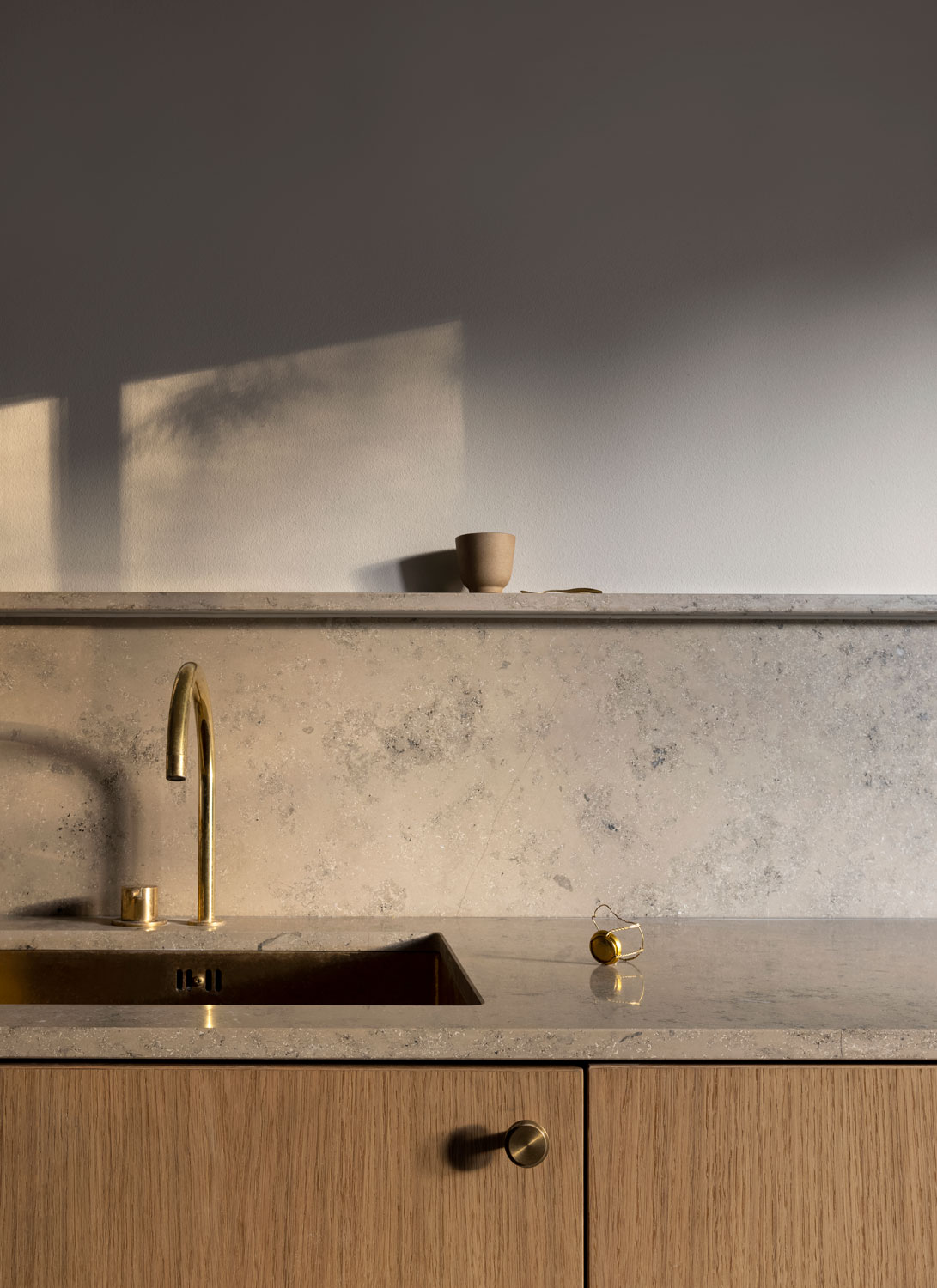
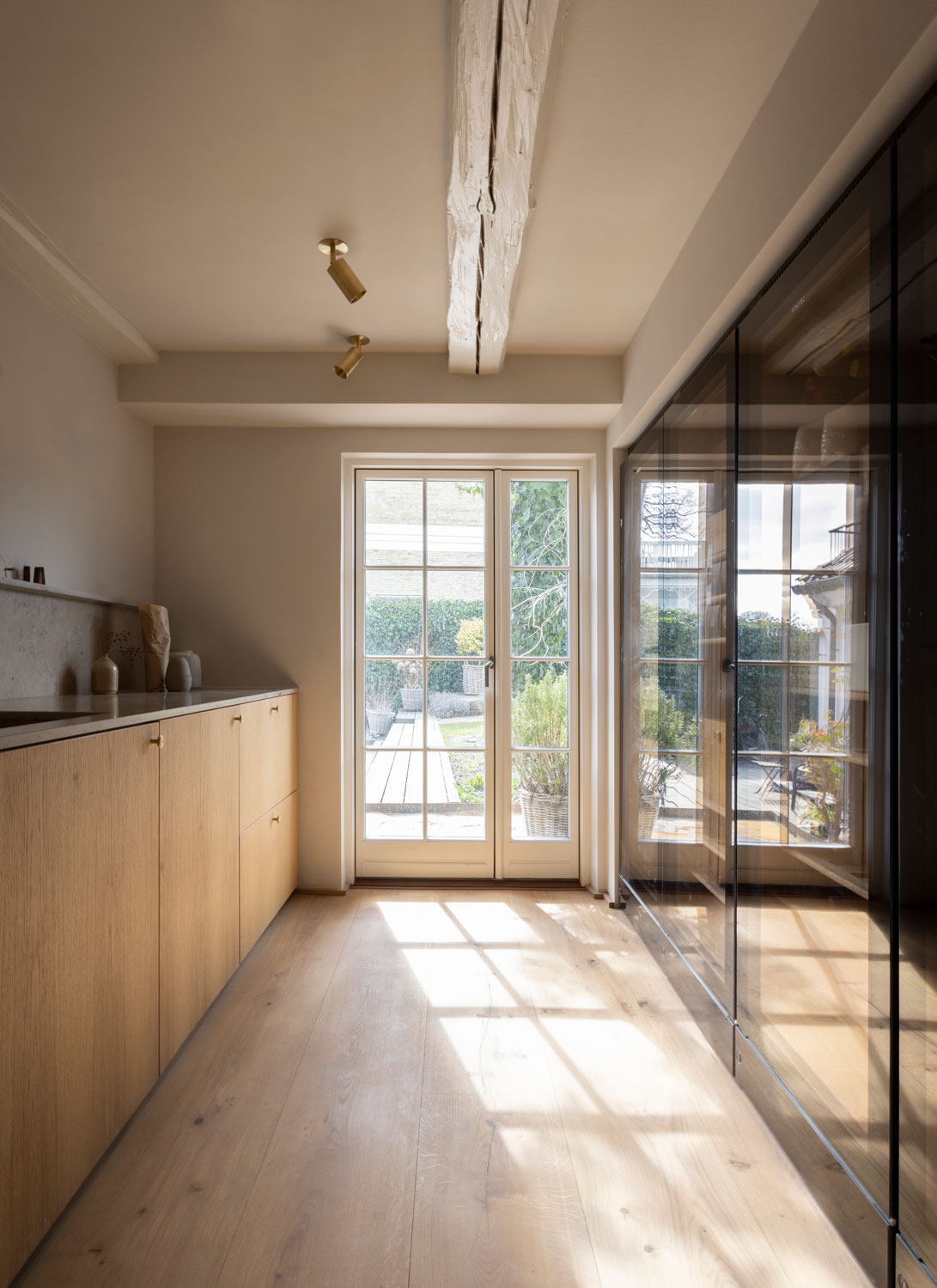
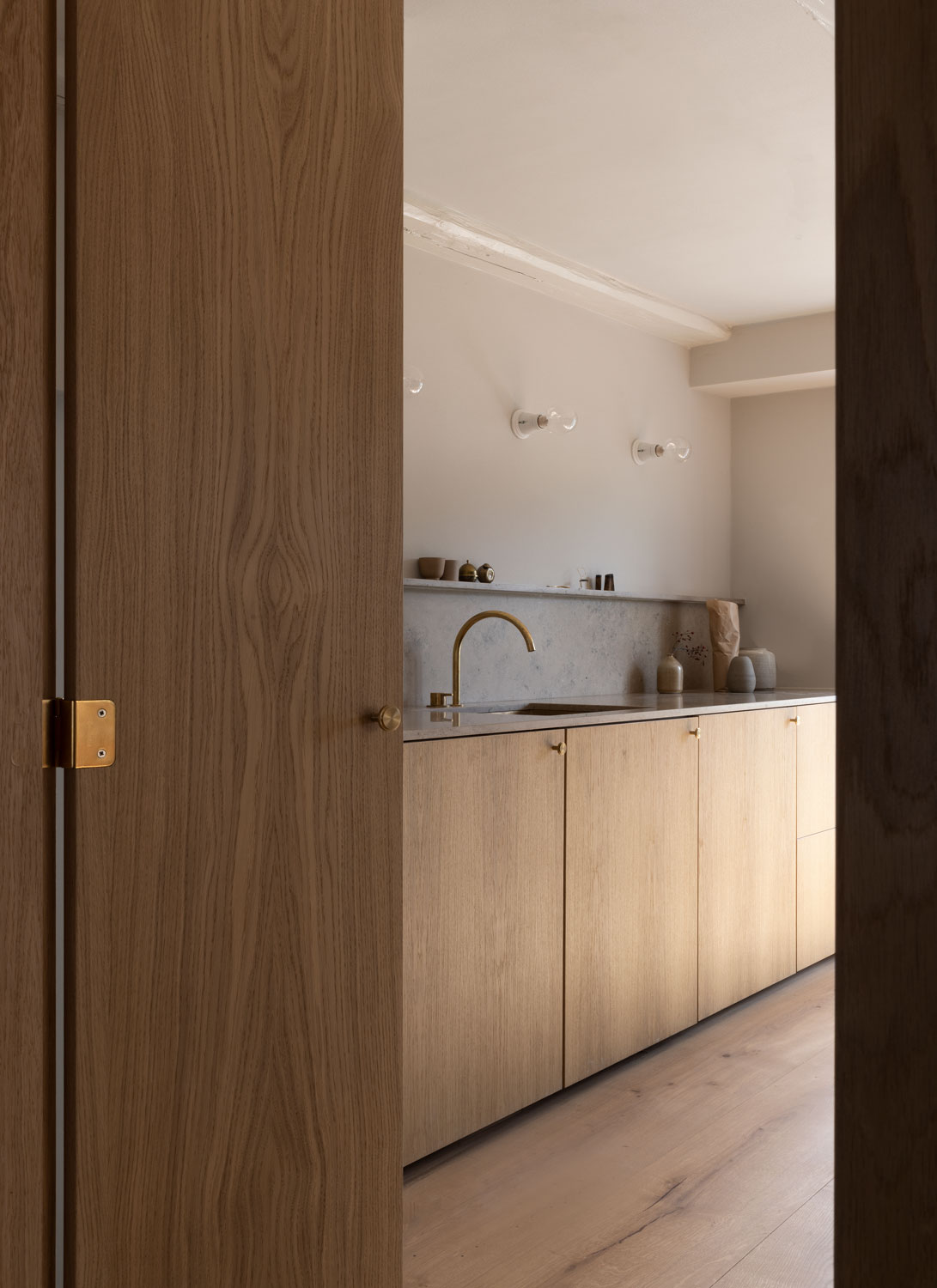
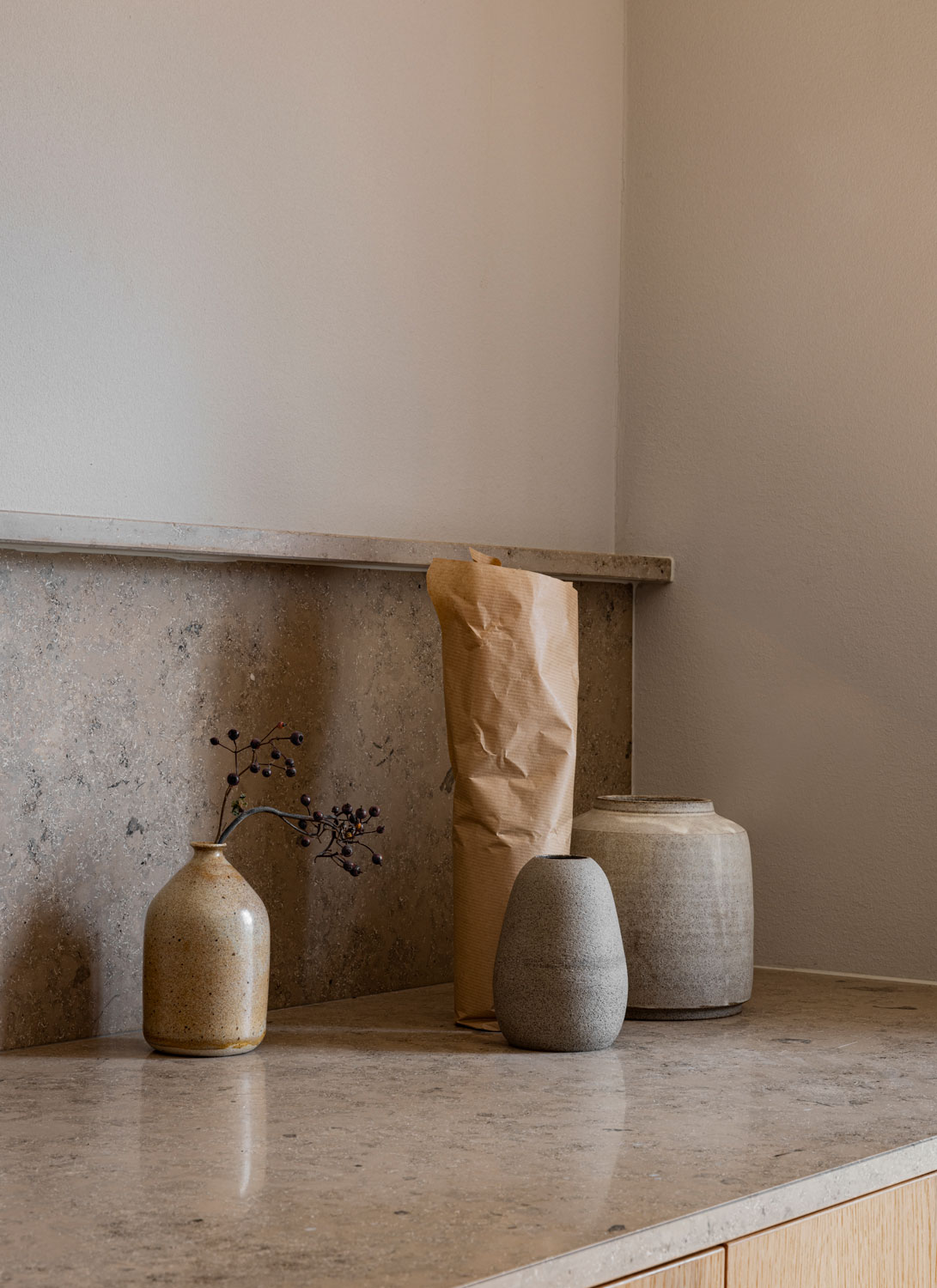
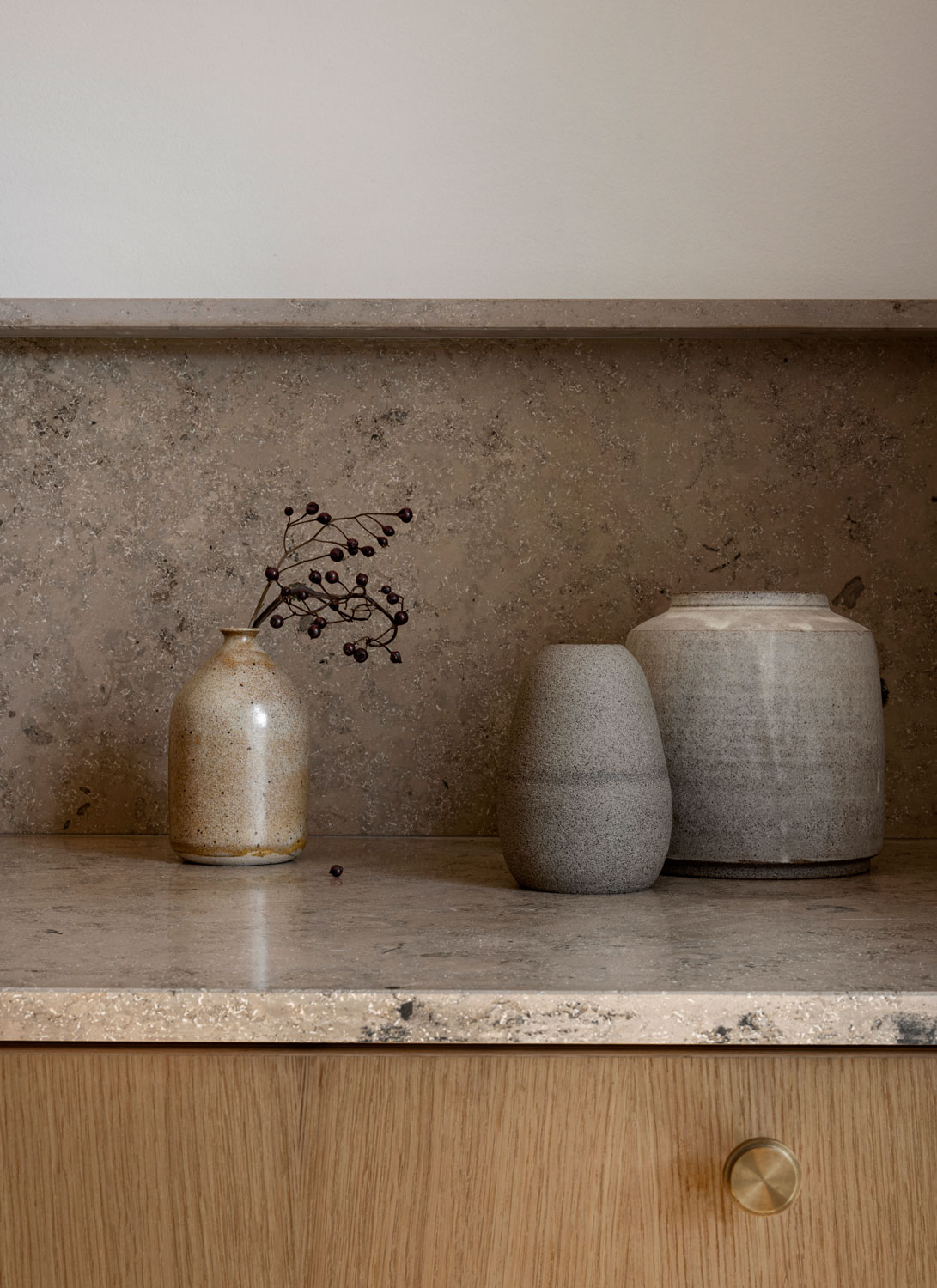
The dedicated wine kitchen is crafted from honest, tactile materials — oak cabinetry, a stone countertop, and brass details that will age gracefully over time. Its pared-back expression creates a calm backdrop for daily use, while opposite the counter, a full wall of wine coolers provides generous storage and display. This balance of craftsmanship and functionality makes the space both practical and quietly refined.
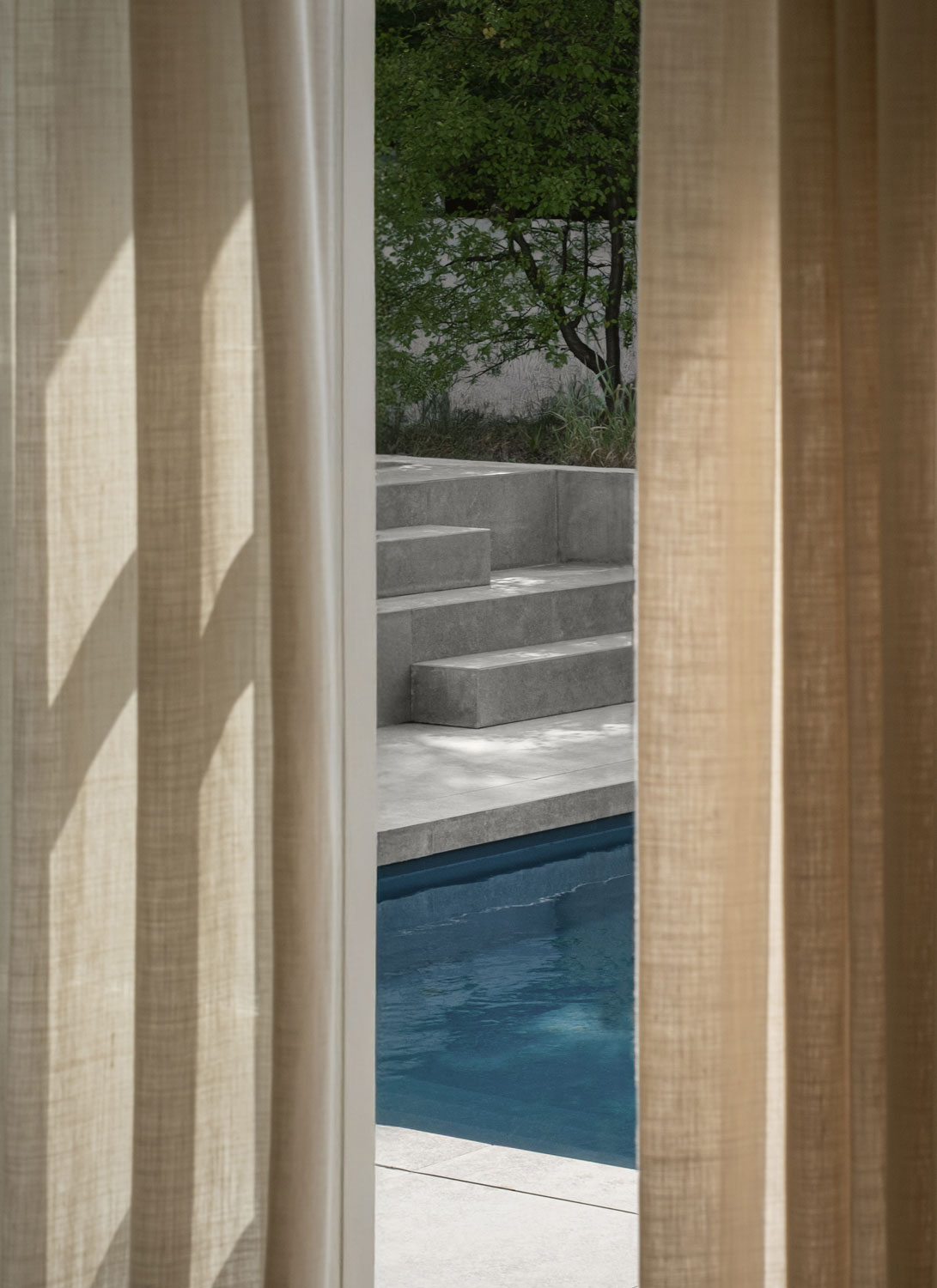
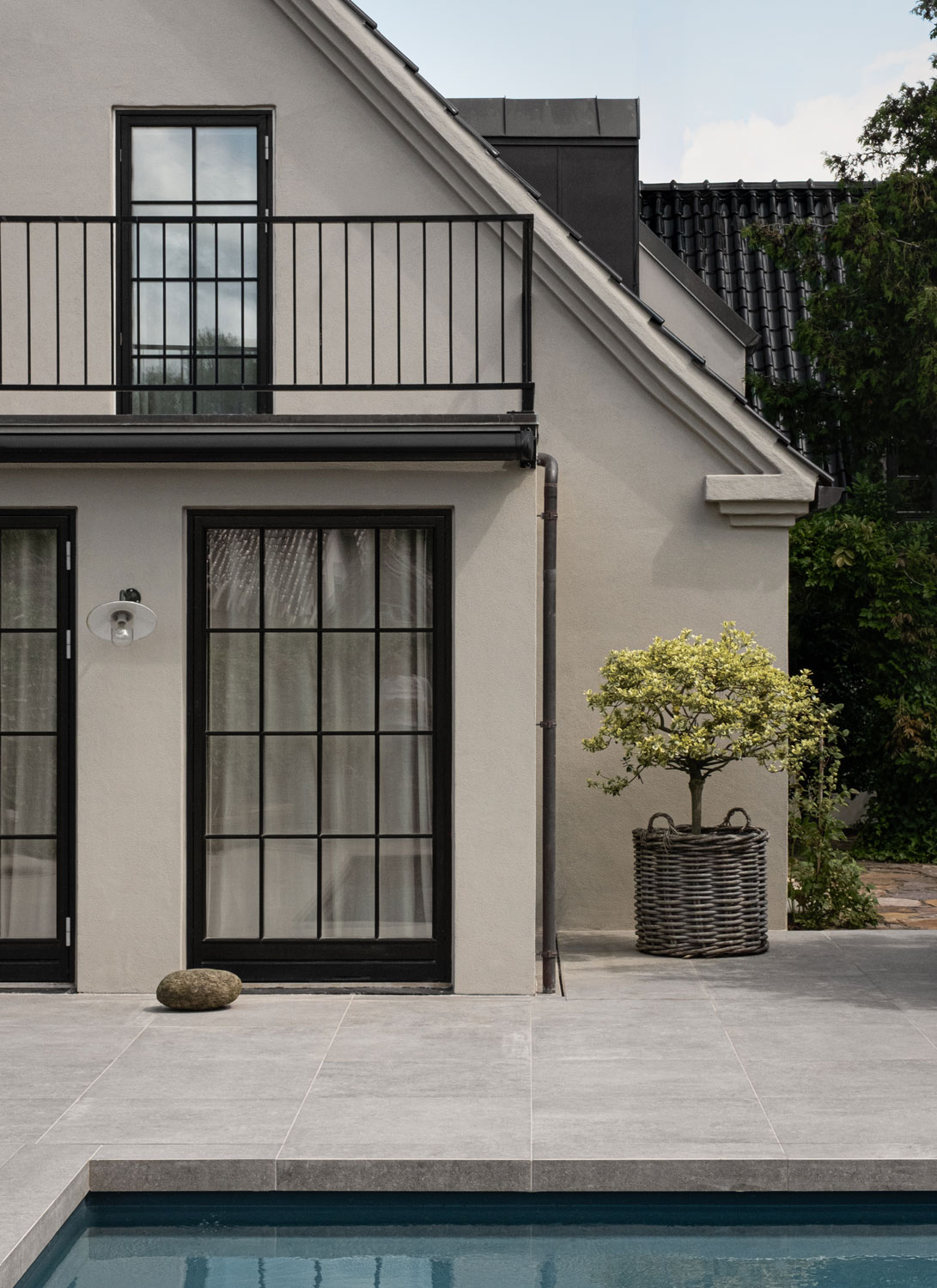
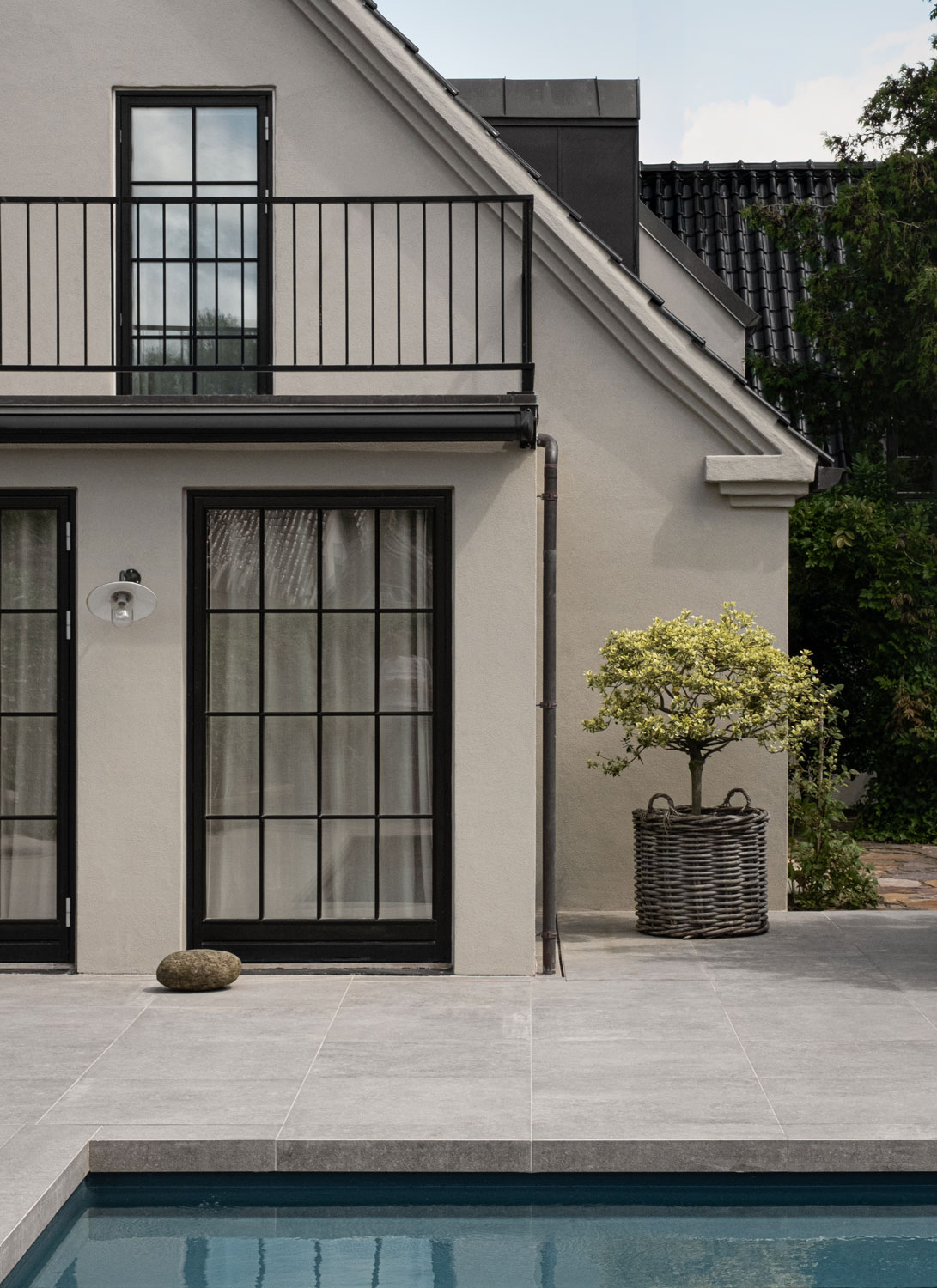
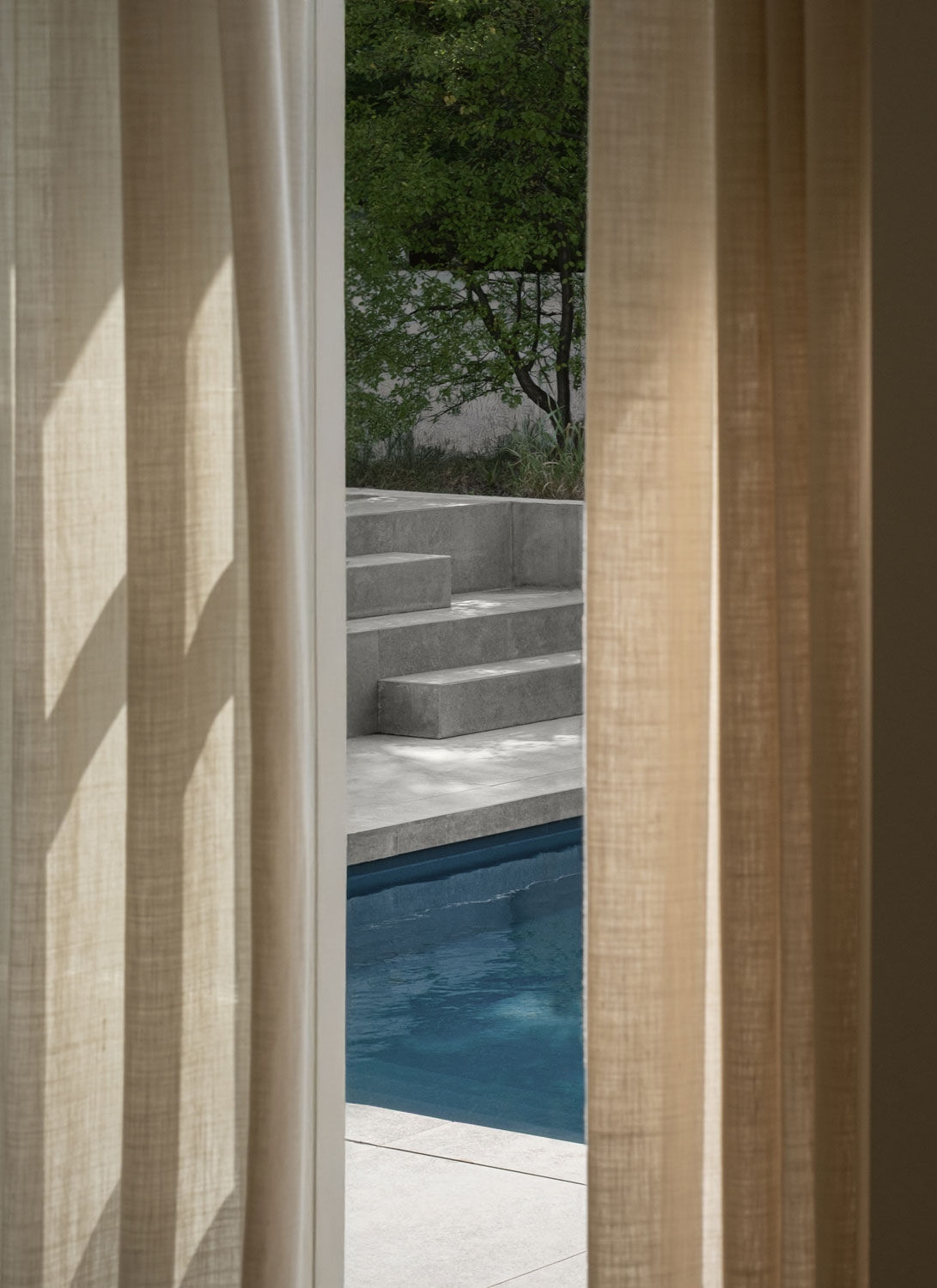
The pool house unfolds as a contemporary extension to one of the estate’s original structures, designed with the same sense of restraint and material honesty that defines the rest of the home. Generous windows draw in daylight and open the interior toward the surroundings, allowing the presence of the outside pool and garden to shape the atmosphere inside.
Bathed in soft light and natural tones, the pool house becomes a gentle retreat – contemporary in spirit, yet as warm and welcoming as the rest of the home, serving almost like a modern conservatory and extra living room.
It is inside our homes that we wake, begin the day, and carry out our rituals. Here we nourish our bodies, find intimacy, restore, and allow ourselves to relax – and it is for this reason we should create the best possible framework for a life of comfort to unfold.
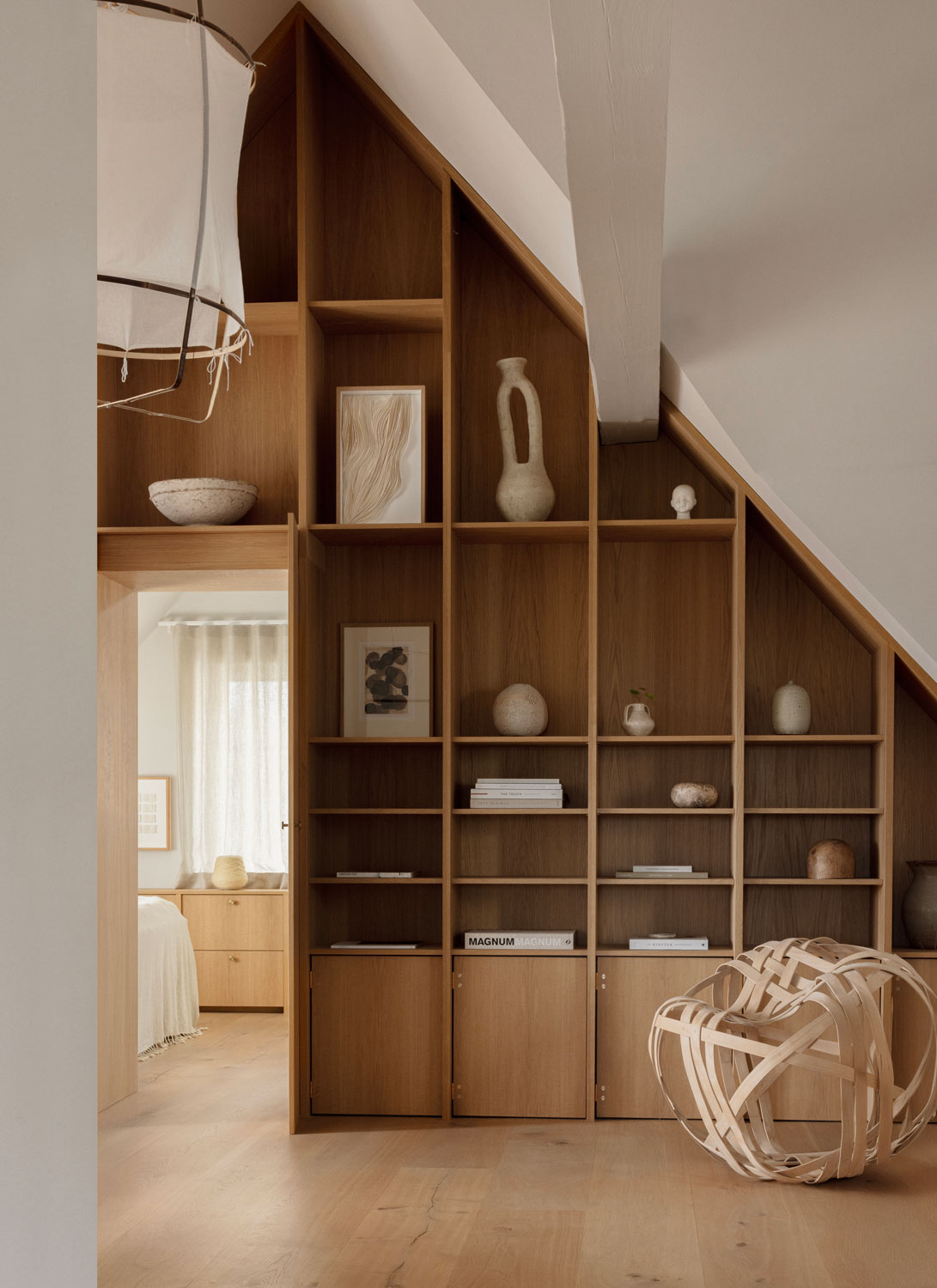
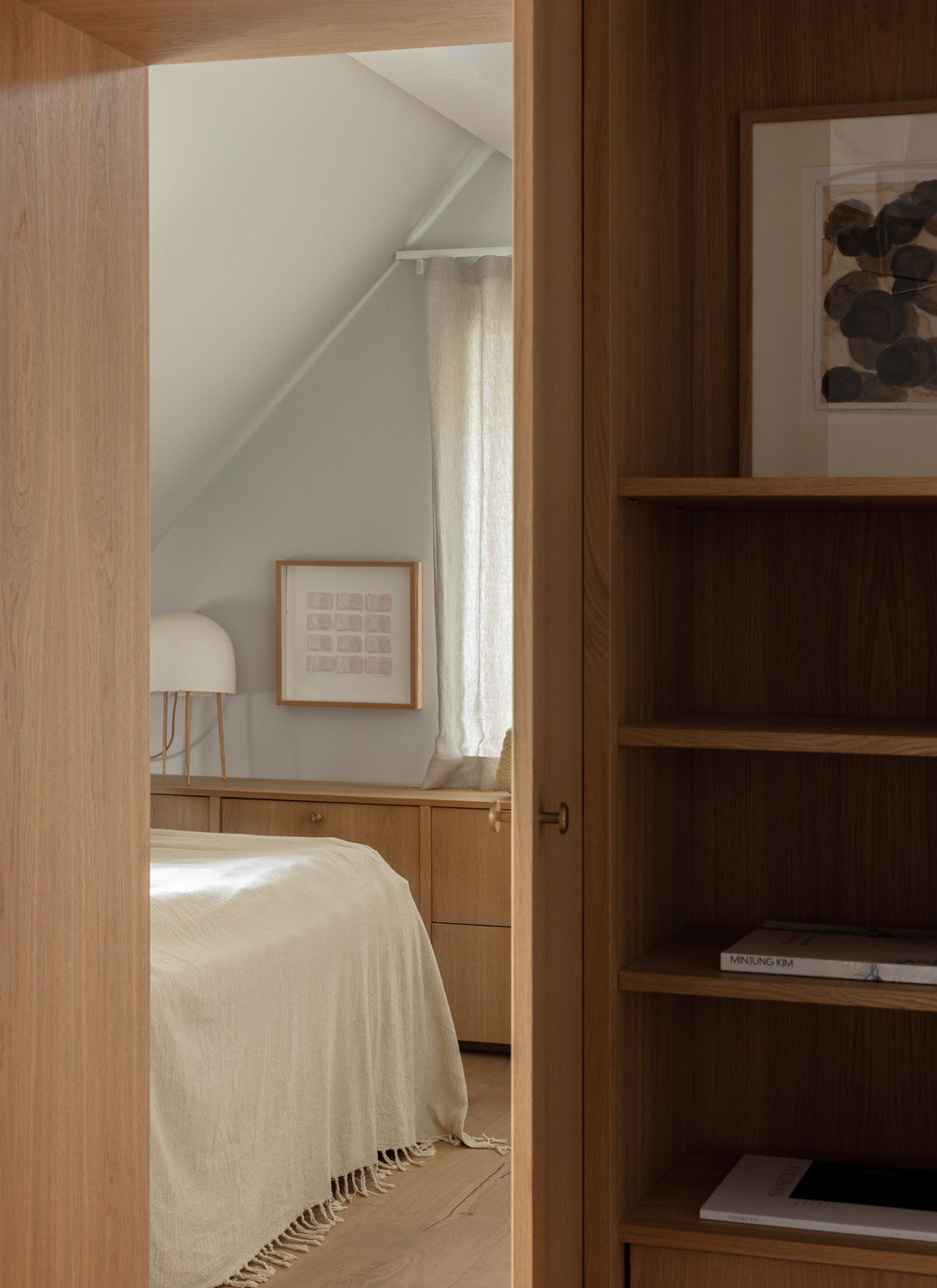
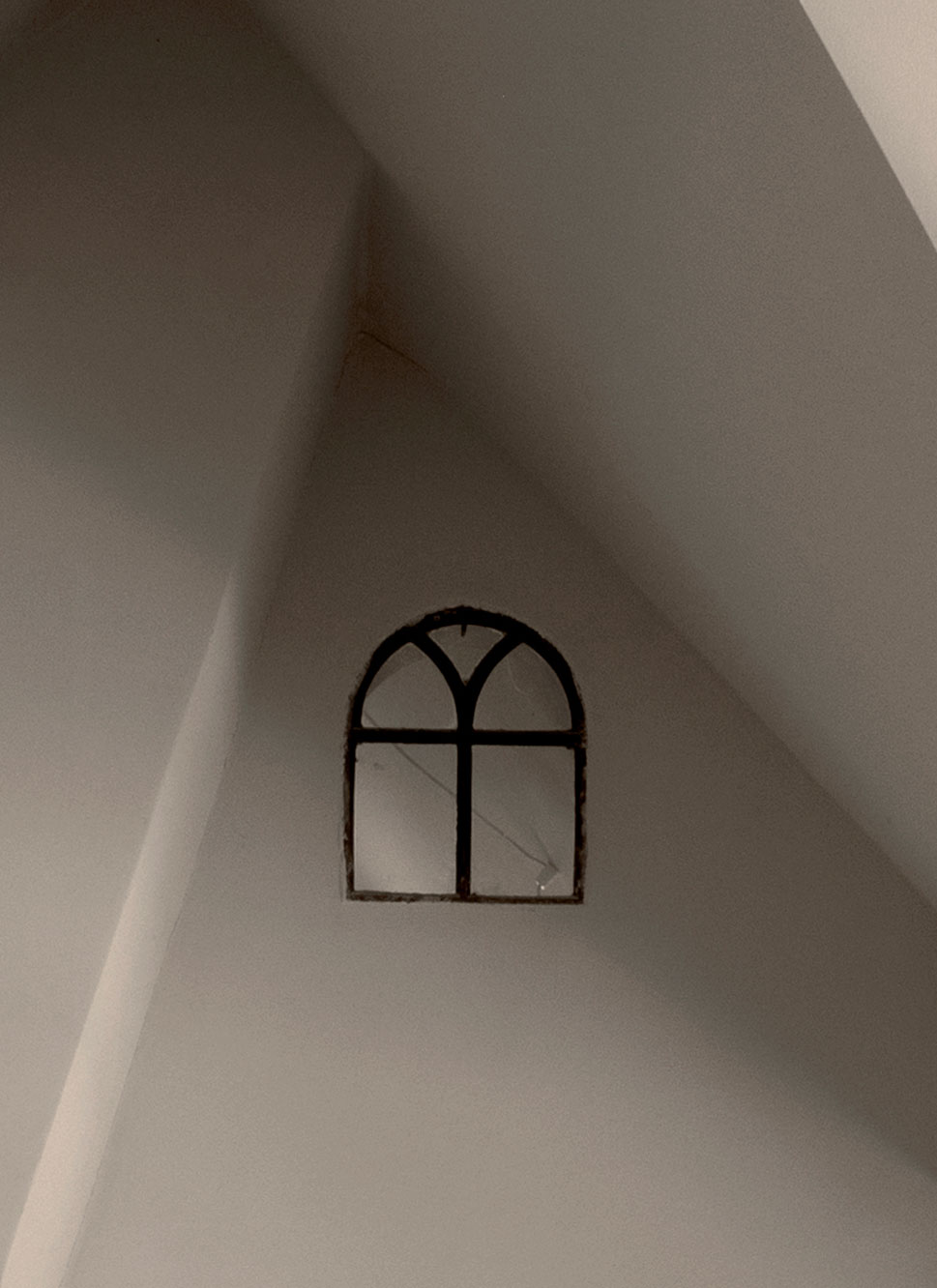
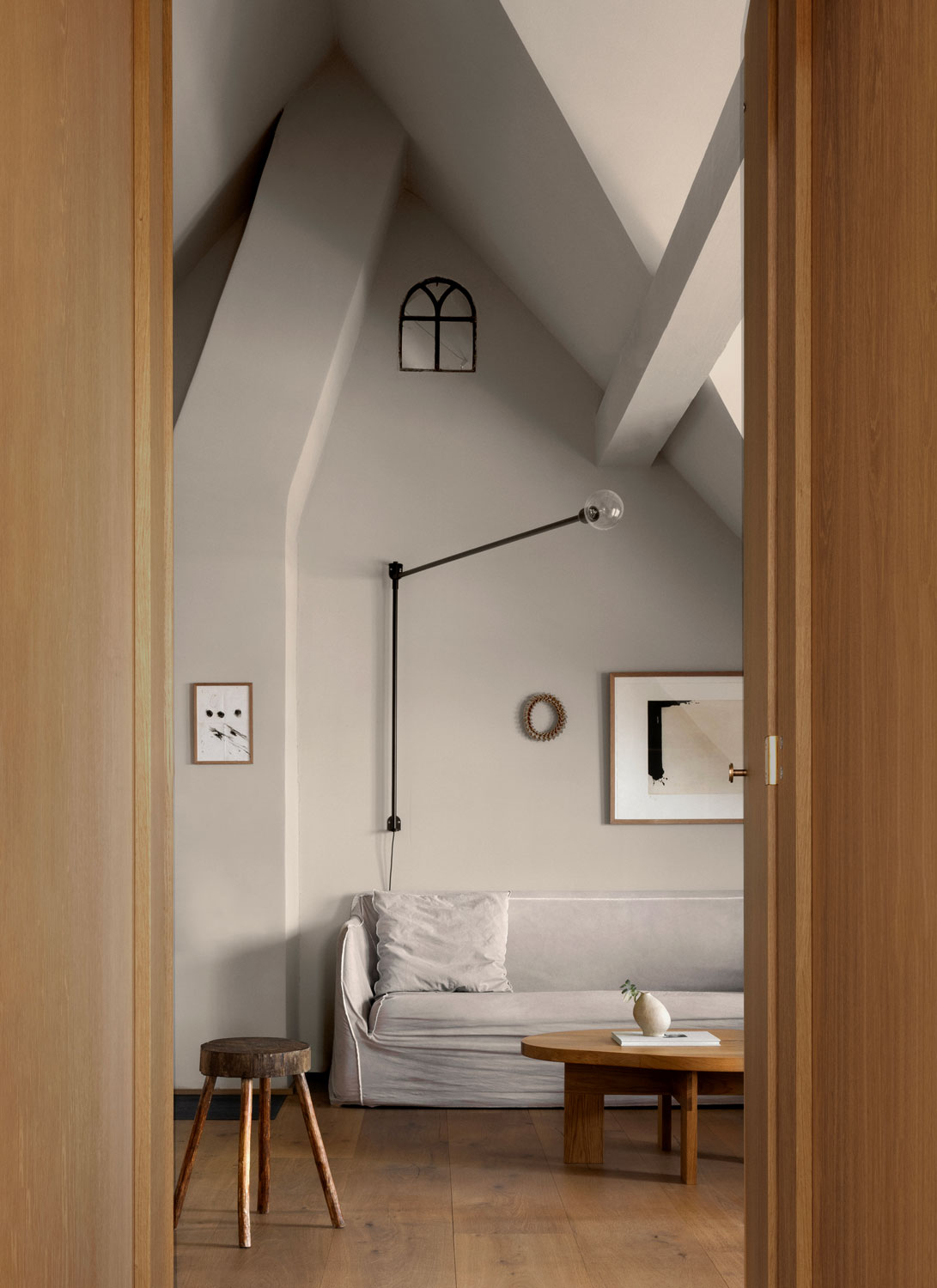
On the upper floor, the architecture reveals a more intimate side of the home. The master bedroom and its connected bathroom occupy one wing, while a smaller living room with a balcony and a children’s room are situated opposite. The exposed ceiling structure lends a sculptural quality to the spaces, framing moments of light and shadow that shift throughout the day. In this part of the house, the architecture creates a place where family life, quiet retreat, and thoughtful details coexist in balance.
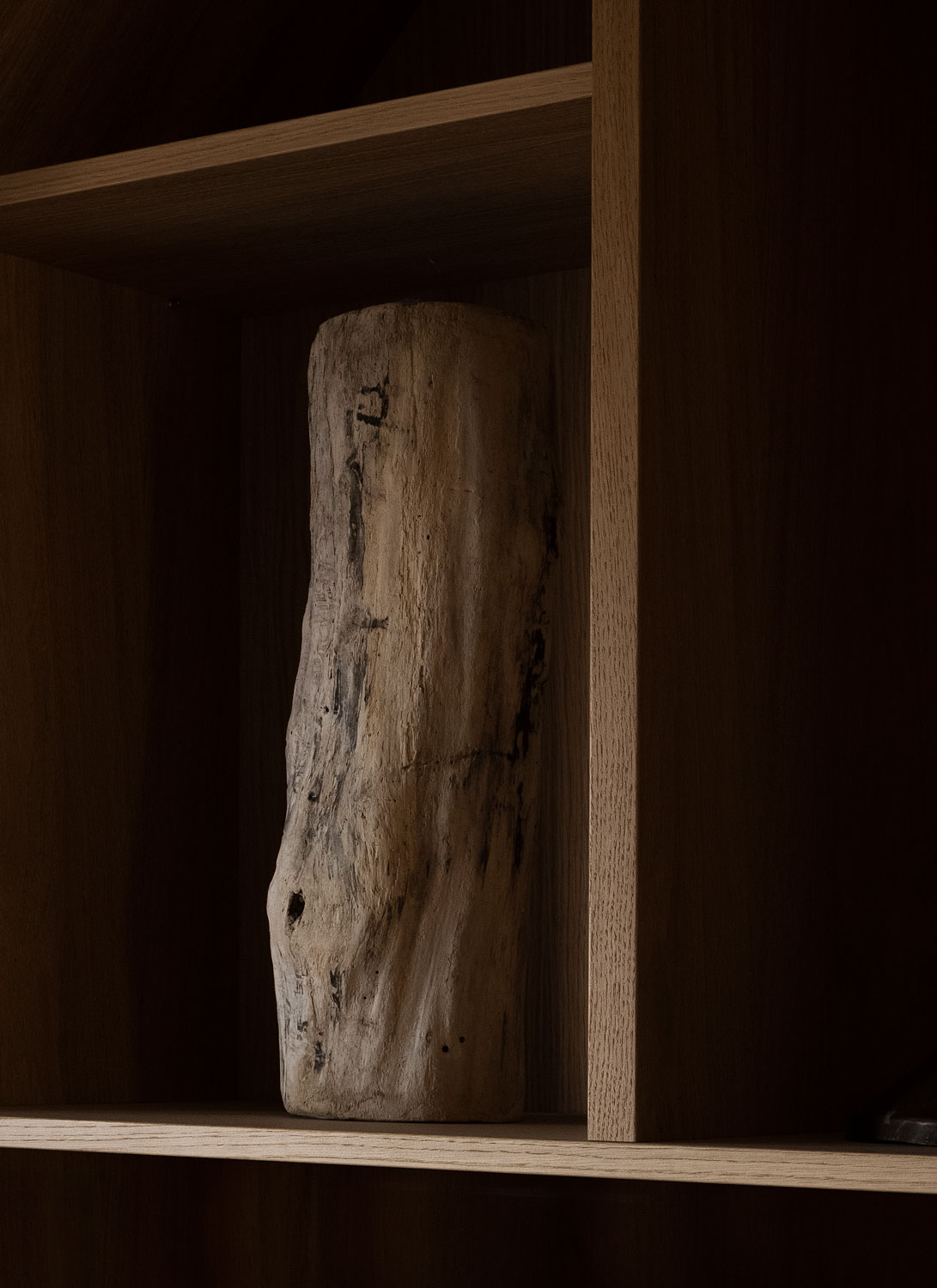
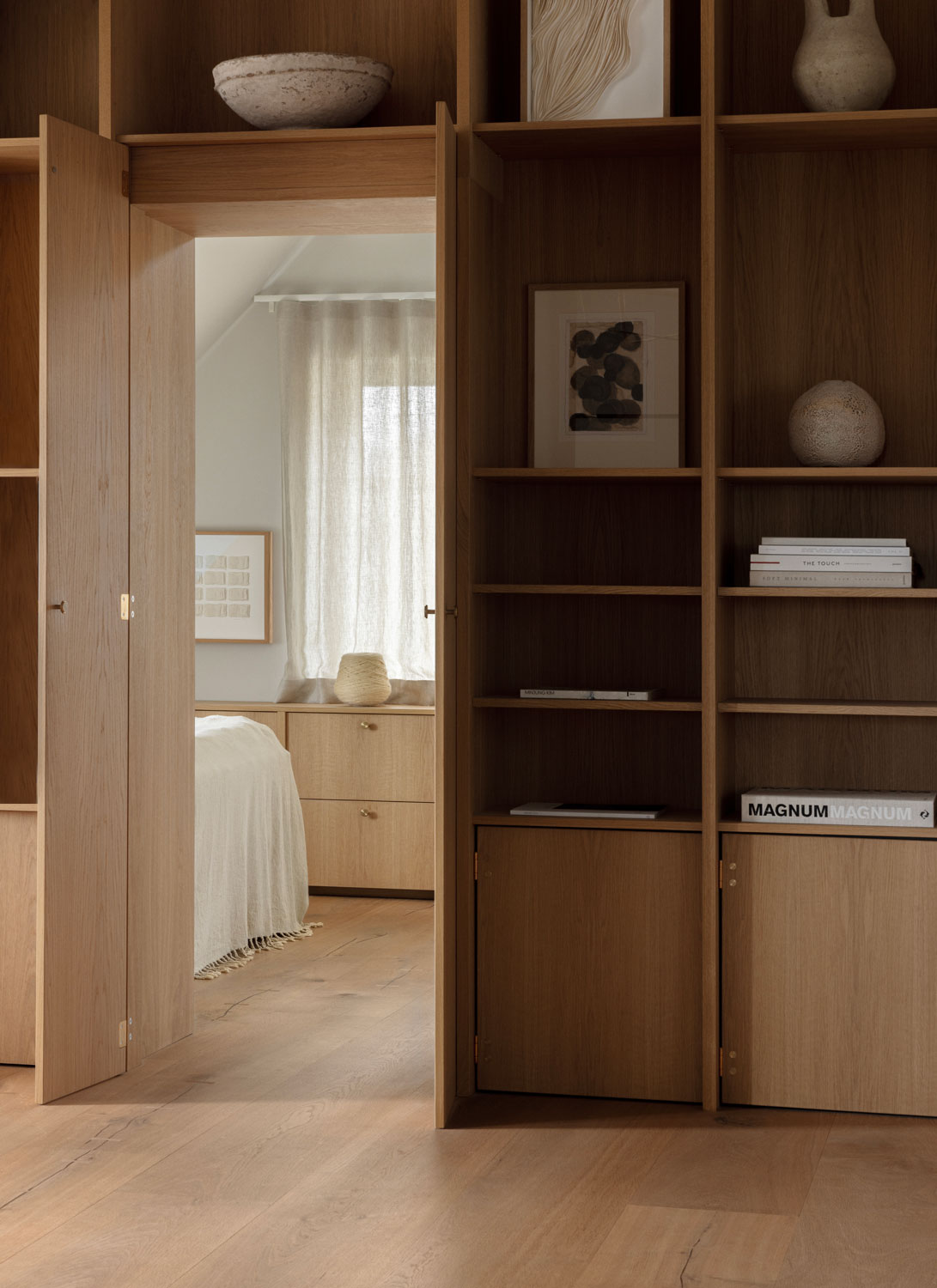
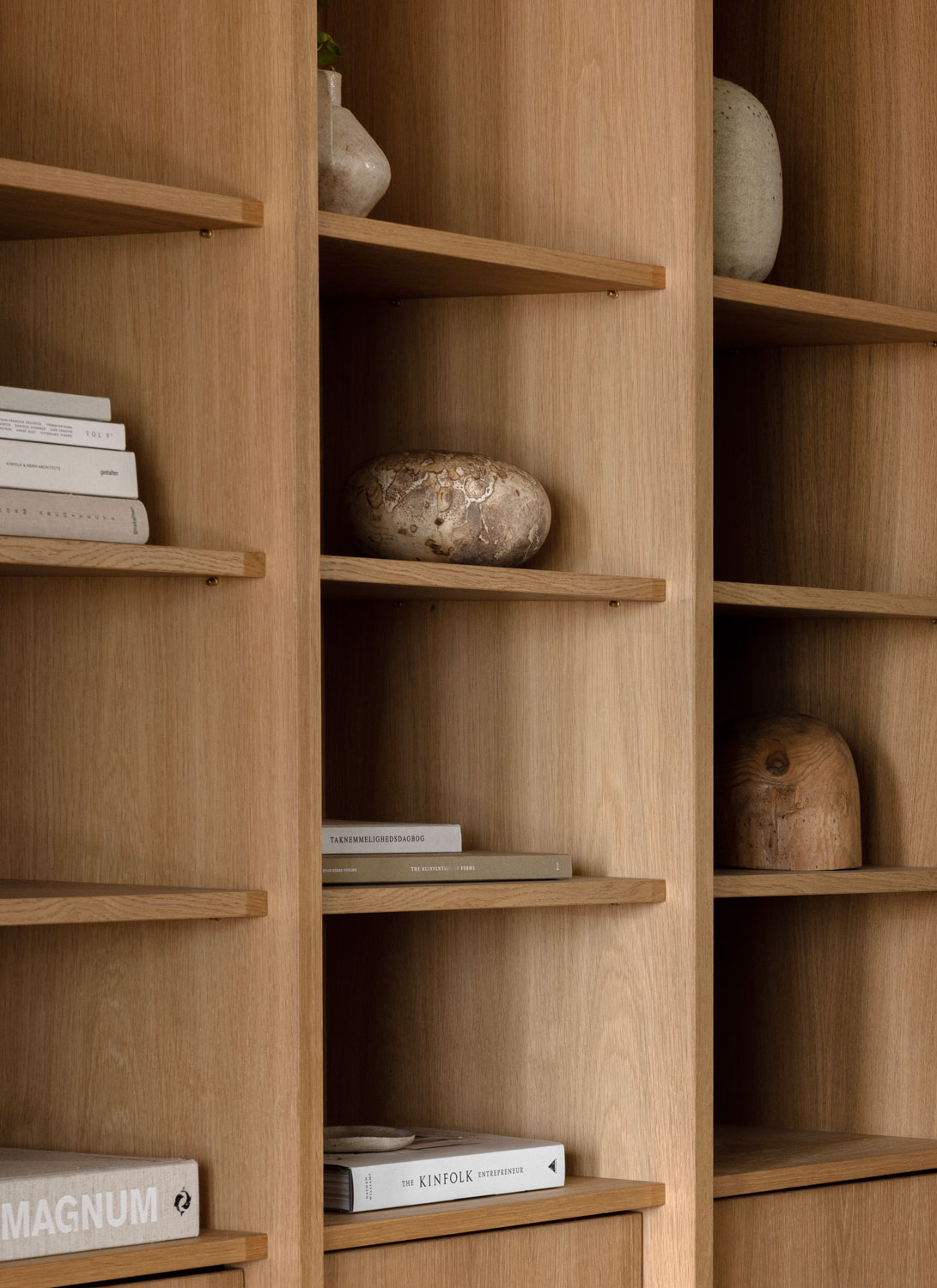
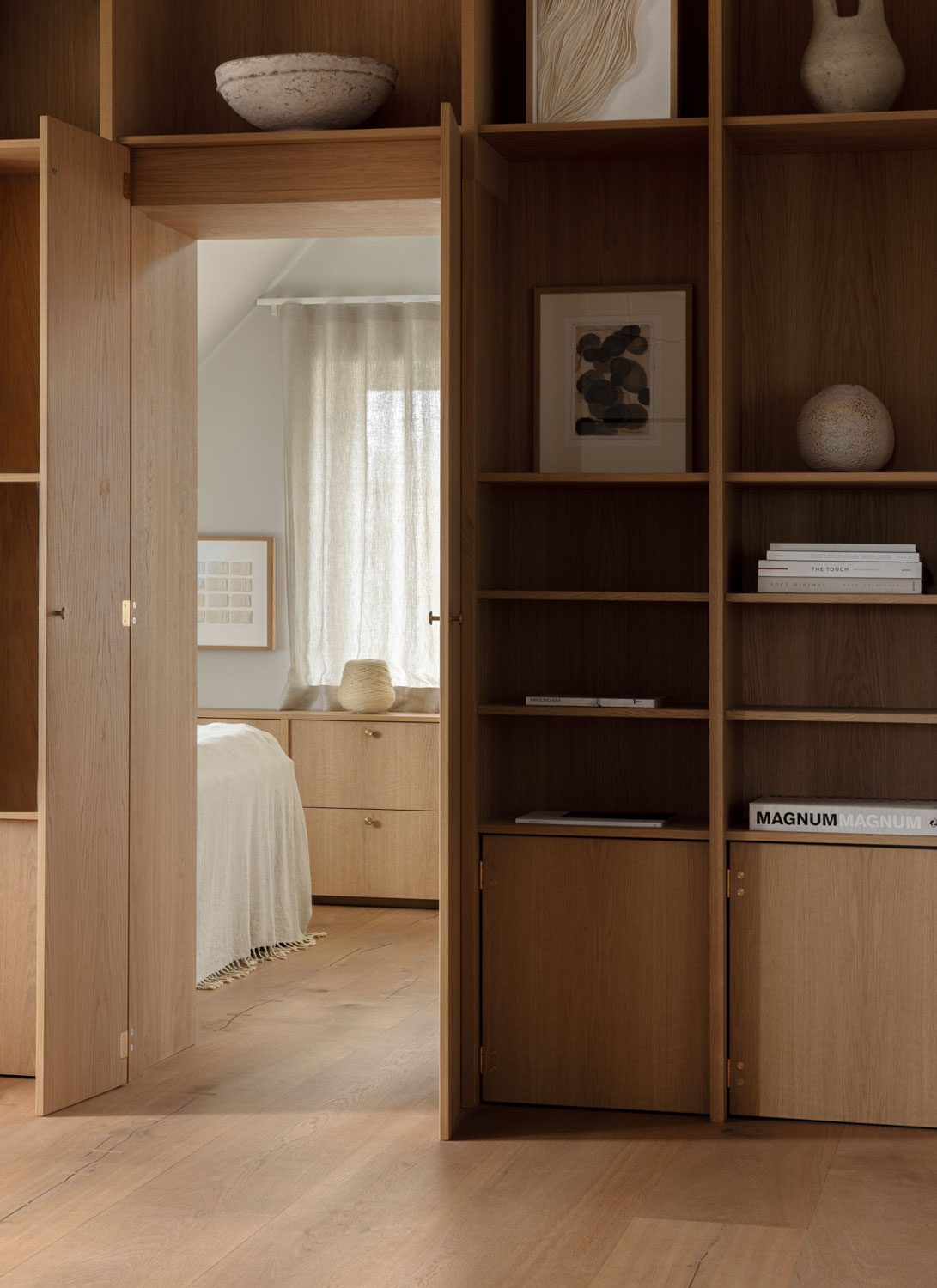
At the centre stands a full-height library wall, carefully crafted with an inbuilt door that conceals the passage between the master suite and the living area. From here, sightlines unfold through bookshelves and doorways, connecting spaces while preserving a sense of privacy.
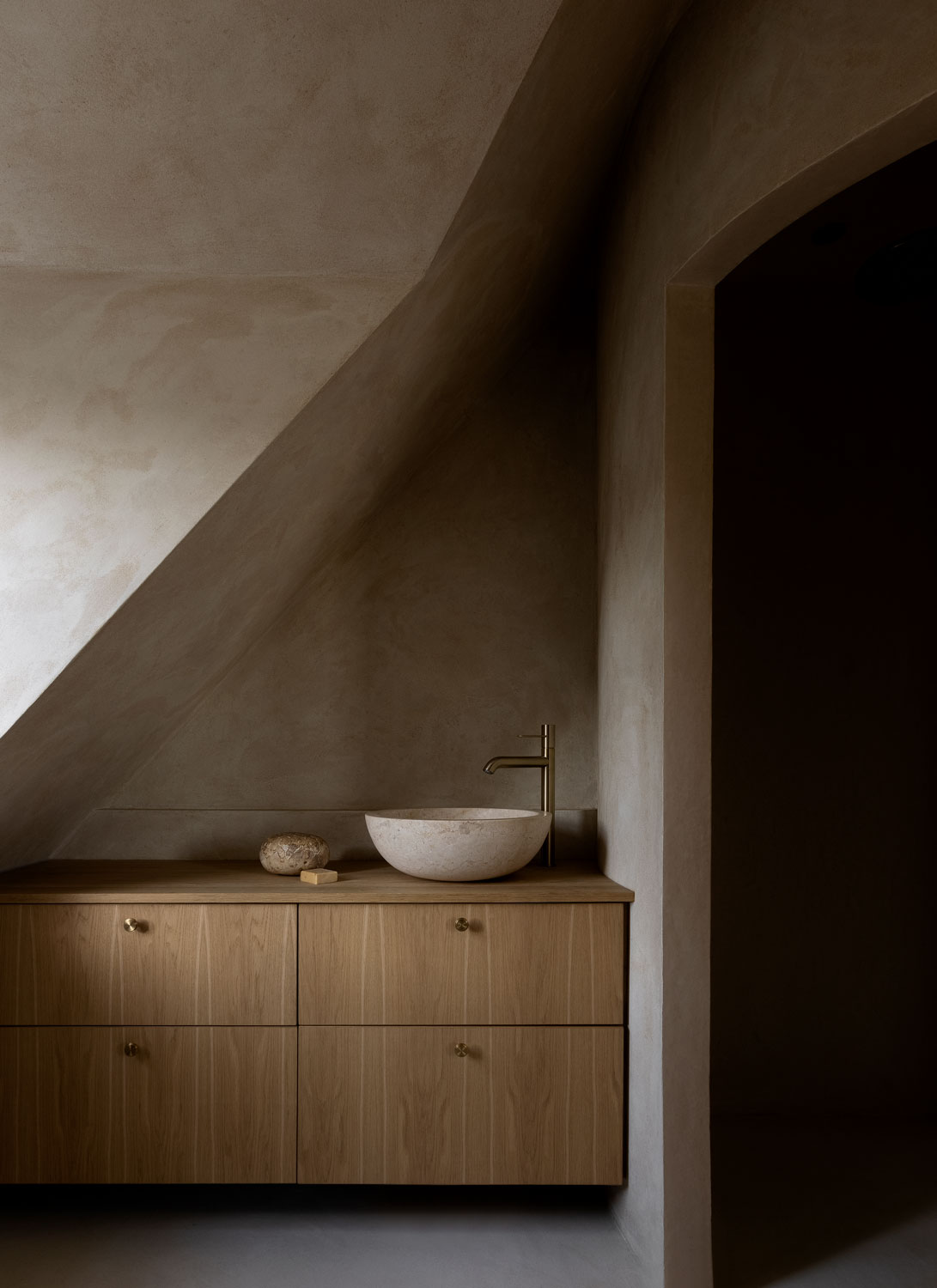
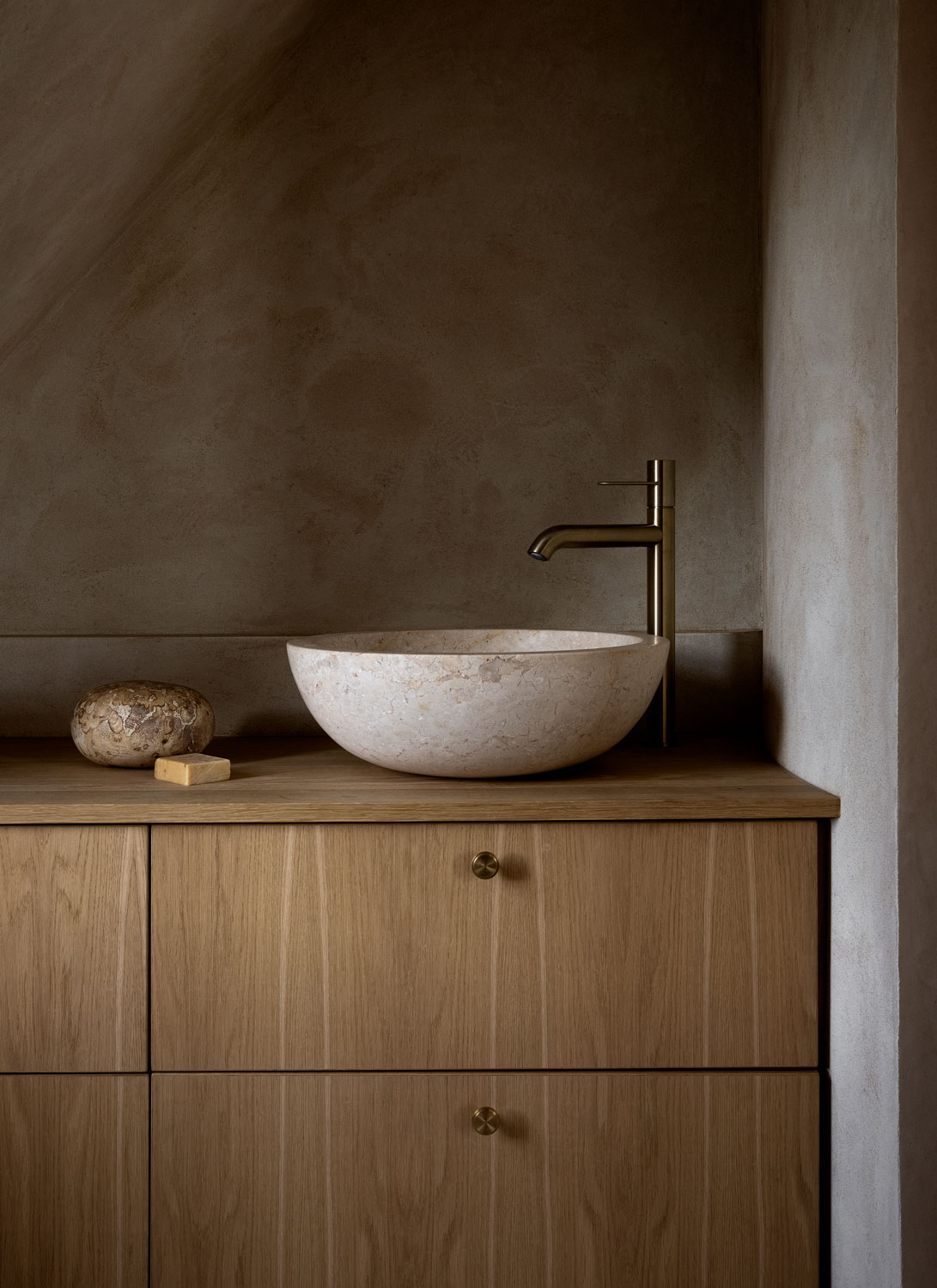
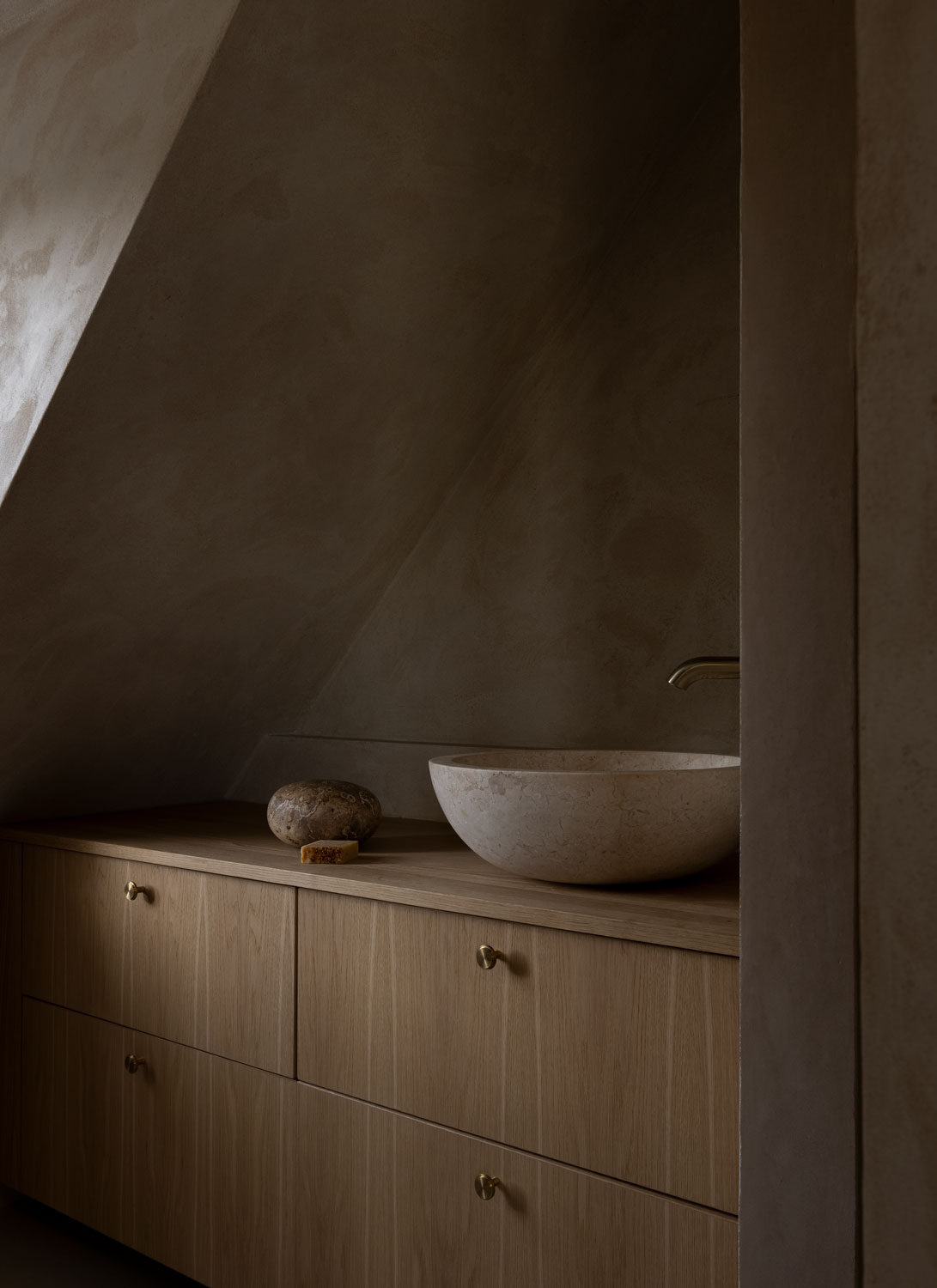
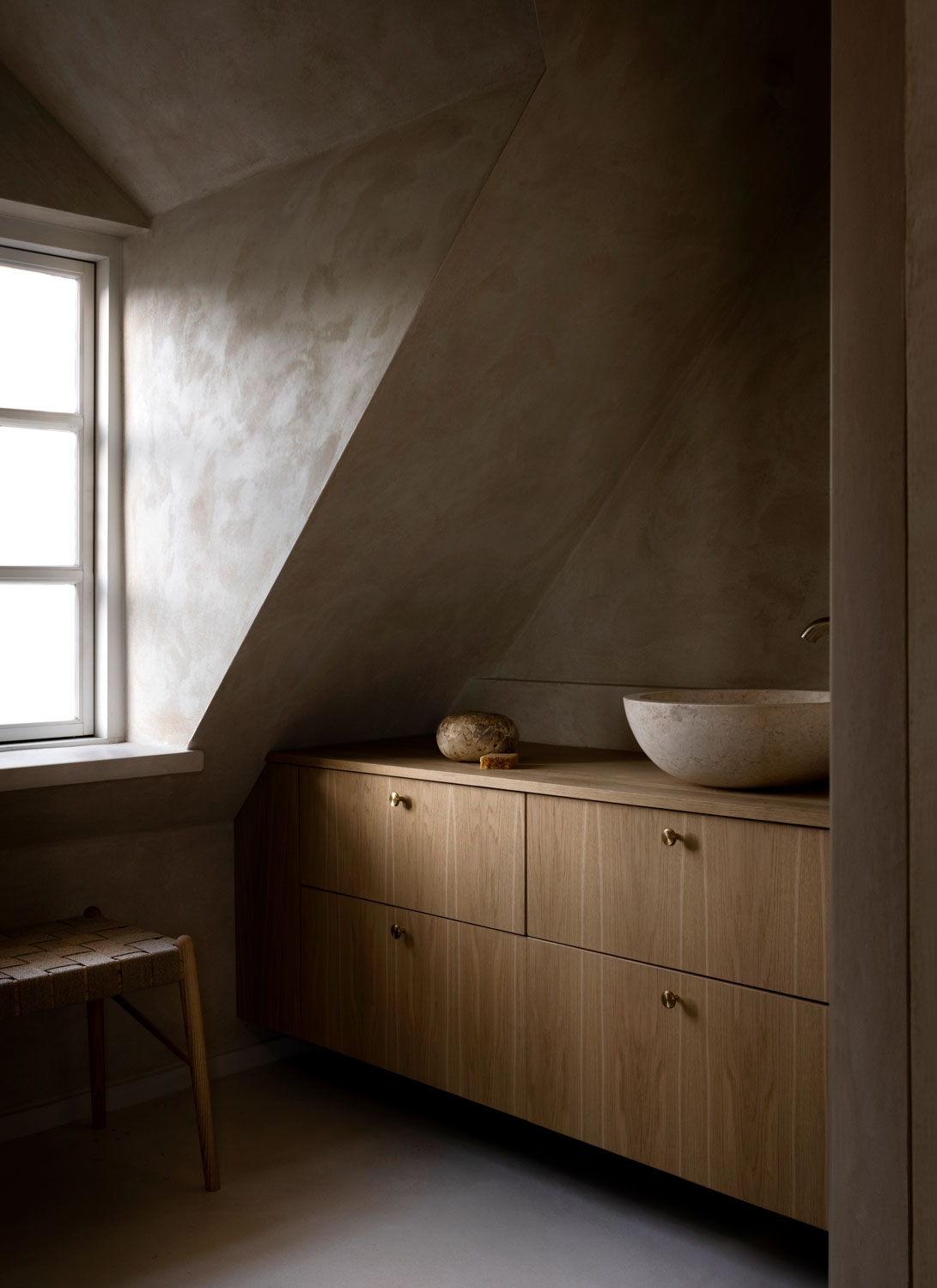
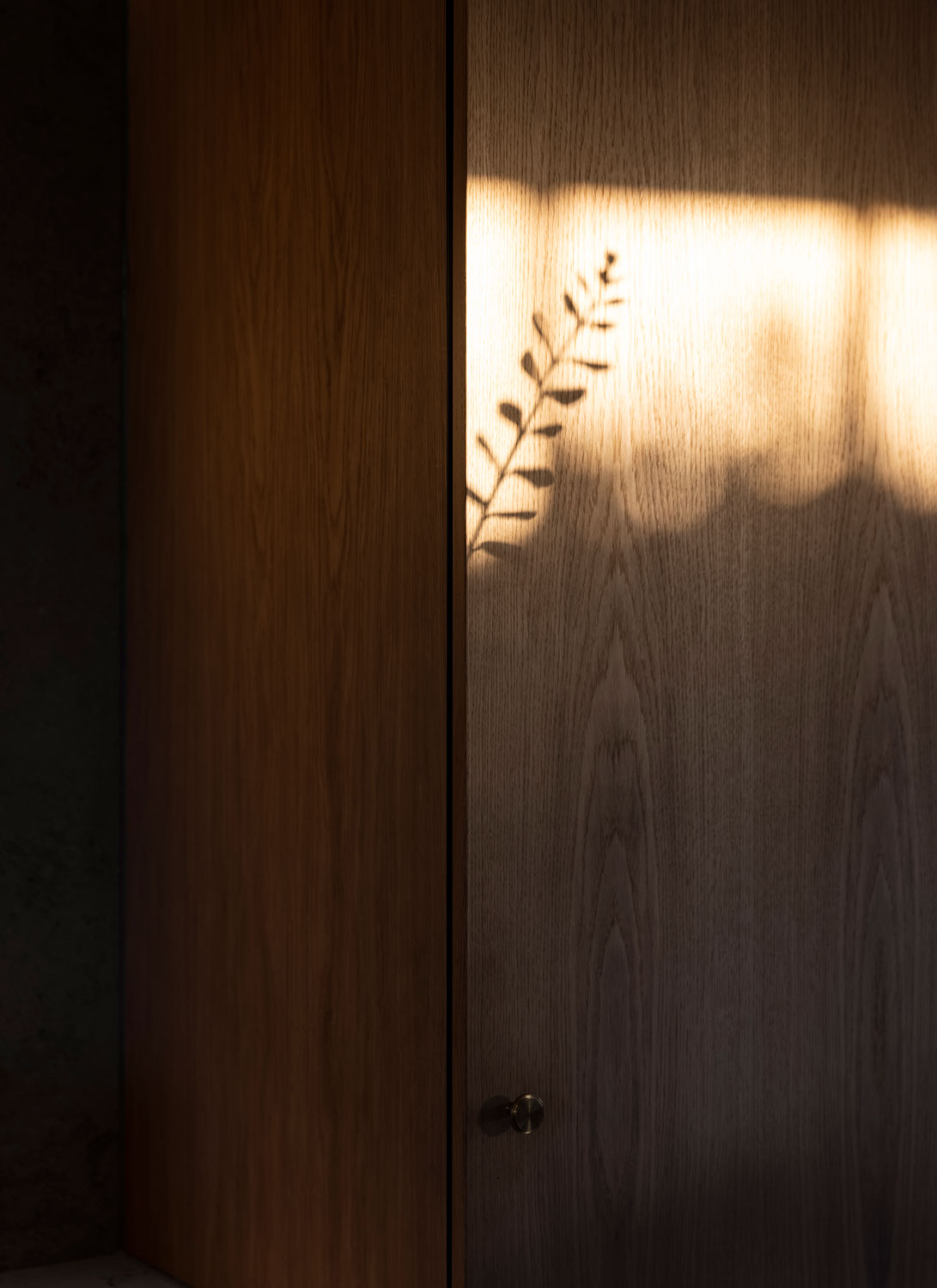
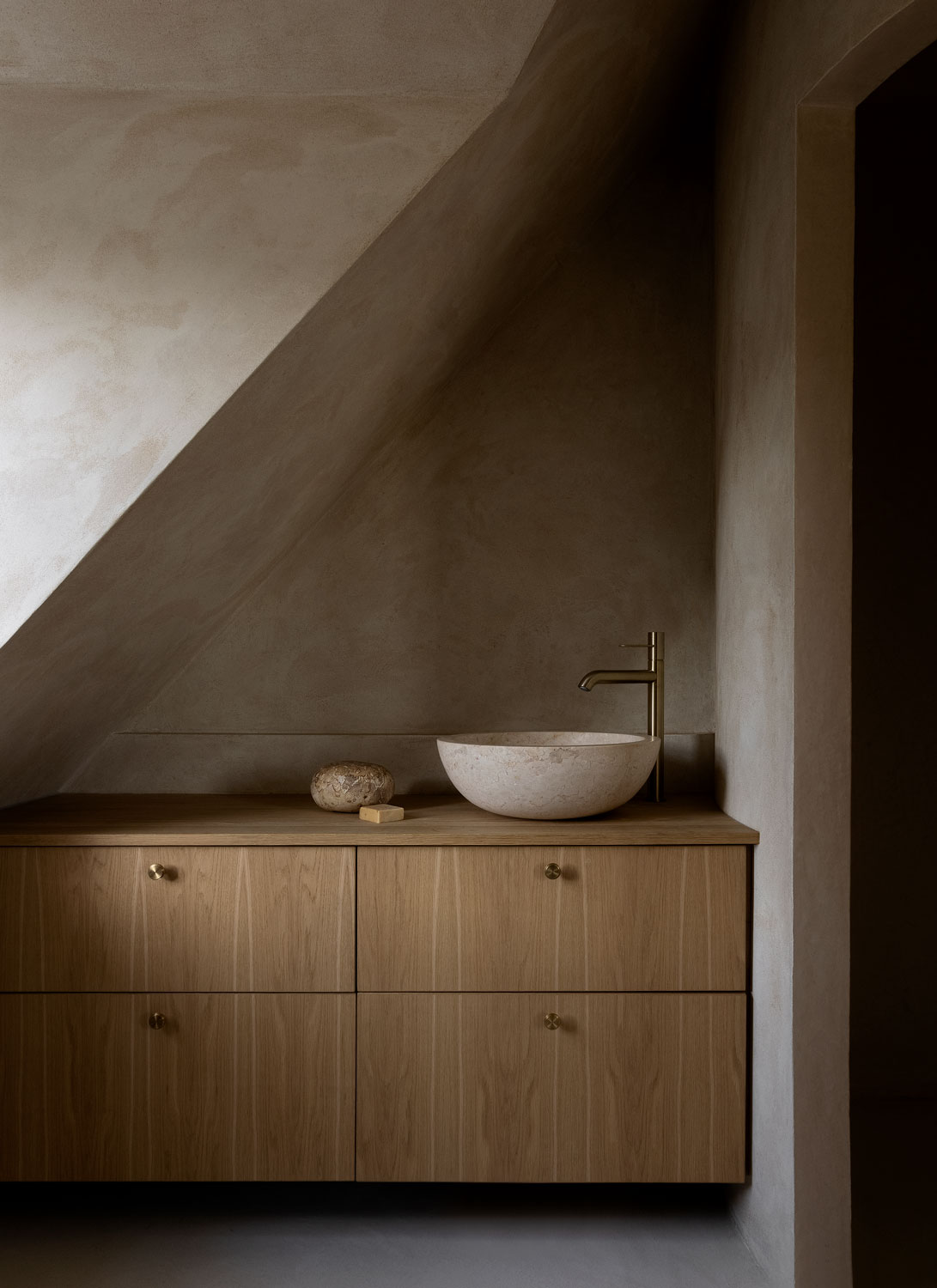
The small bathroom connected to the master bedroom is enveloped in clayworks, its textured surfaces creating a warm and tactile cocoon. Here, natural light softens against the walls, while oak cabinetry and stone details provide a calm backdrop for daily rituals. Stripped of unnecessary clutter, the space feels intimate and restorative
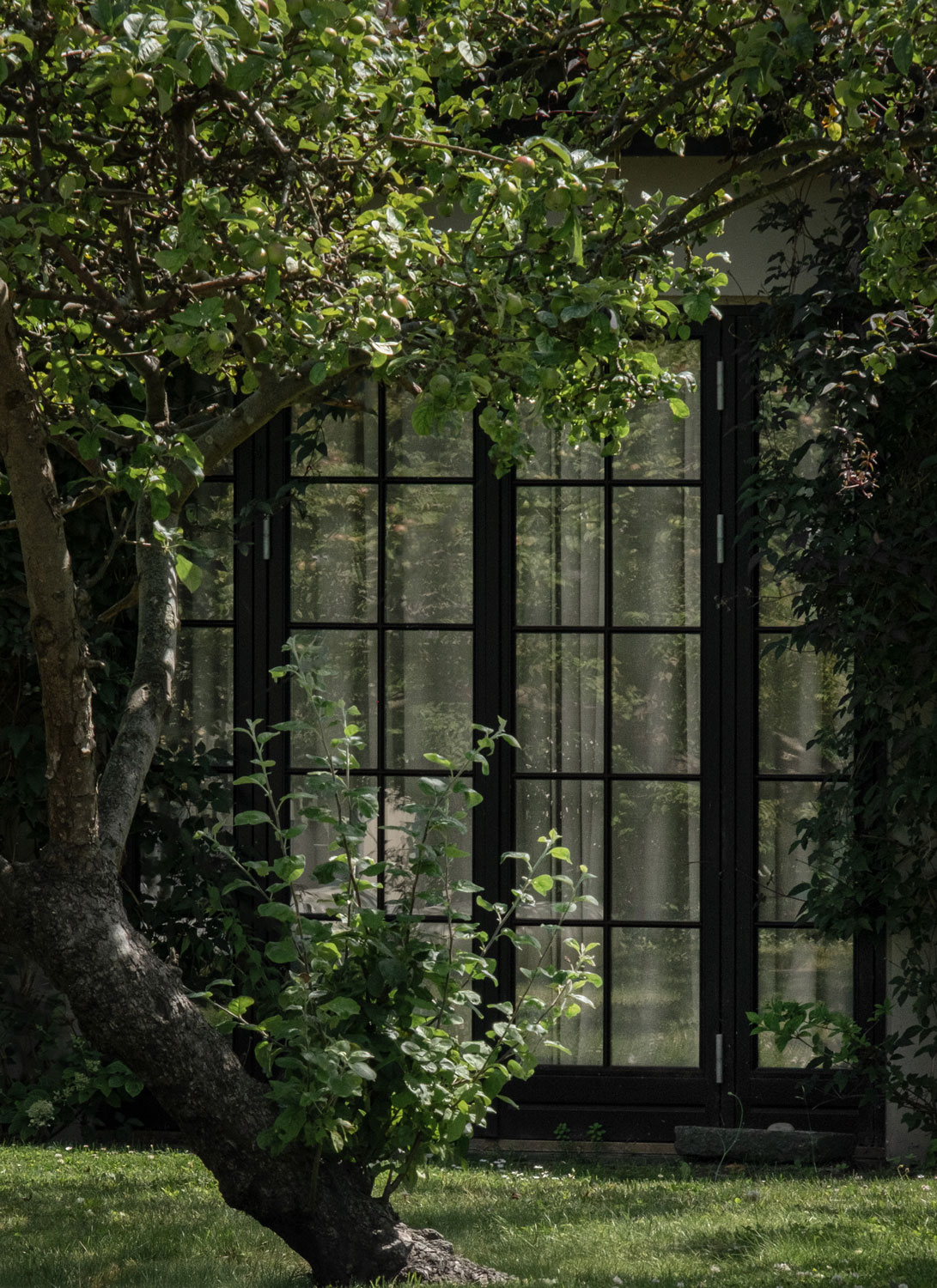
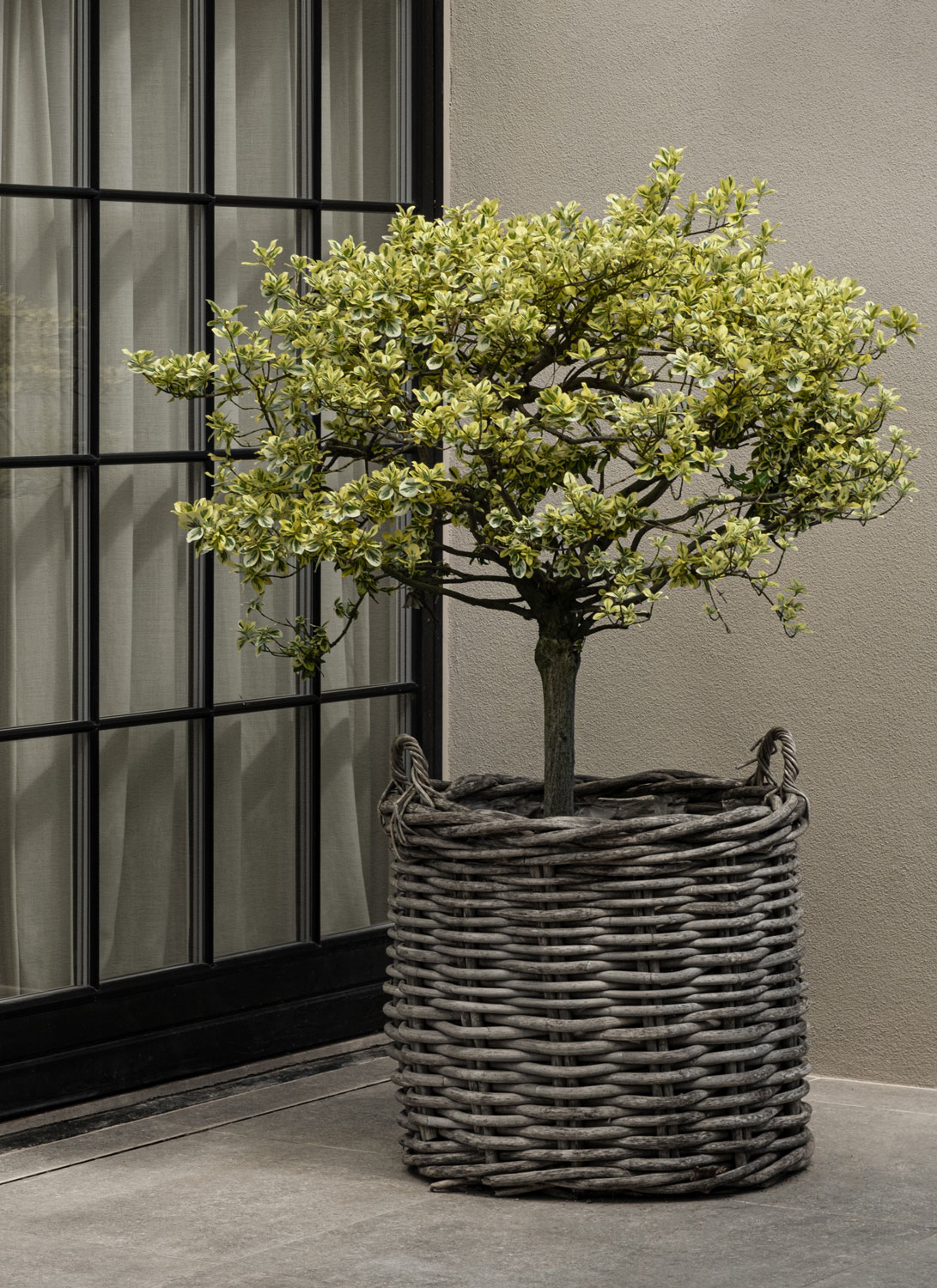
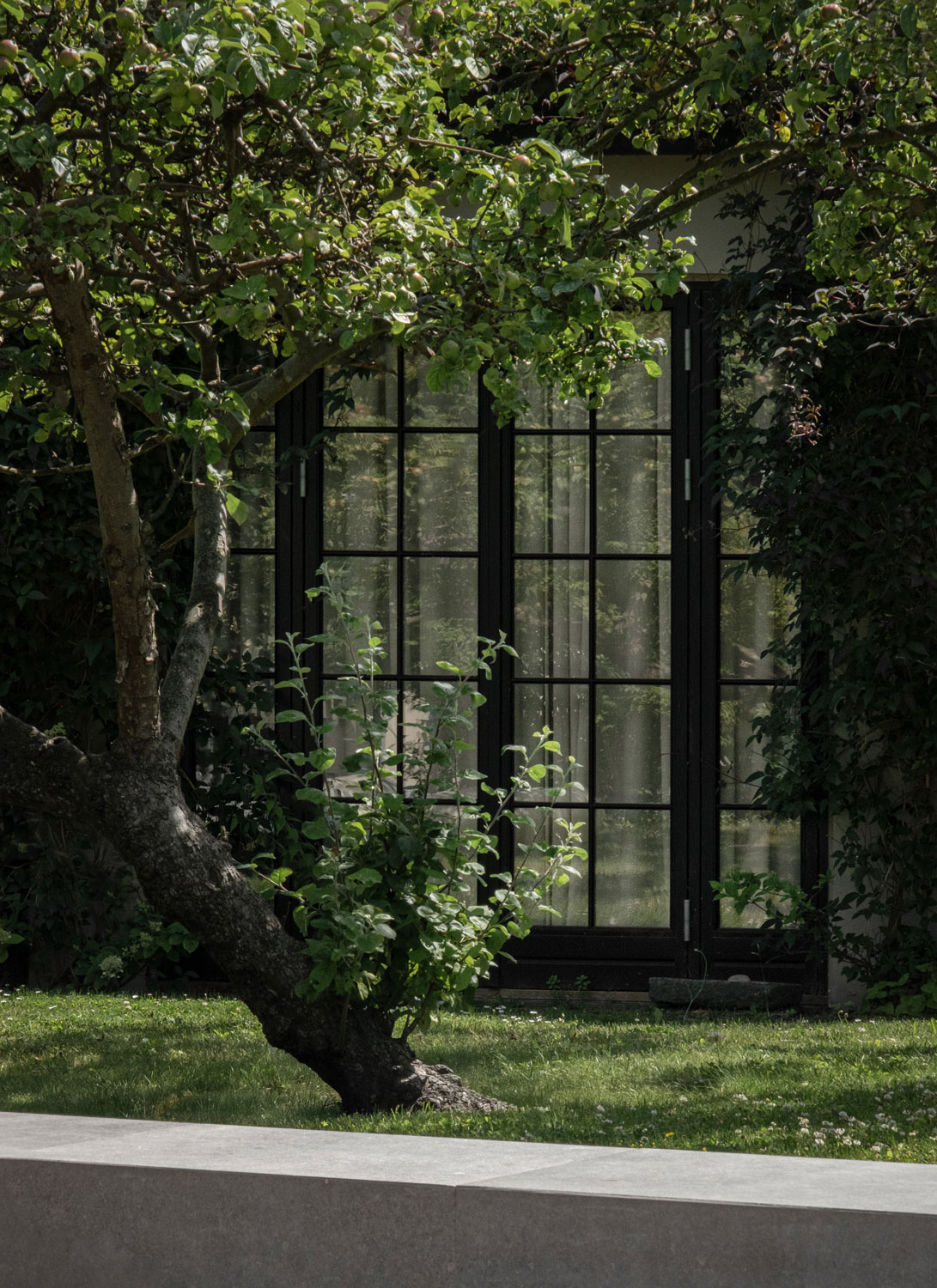
The garden carries traces of time in its older trees, a quiet reminder of the property’s long history. Alongside these, new elements introduce a fresh sense of life: a pool that brings a touch of Southern Europe, and an outdoor kitchen connected to the guest annex, extending daily rituals and gatherings into the open air.
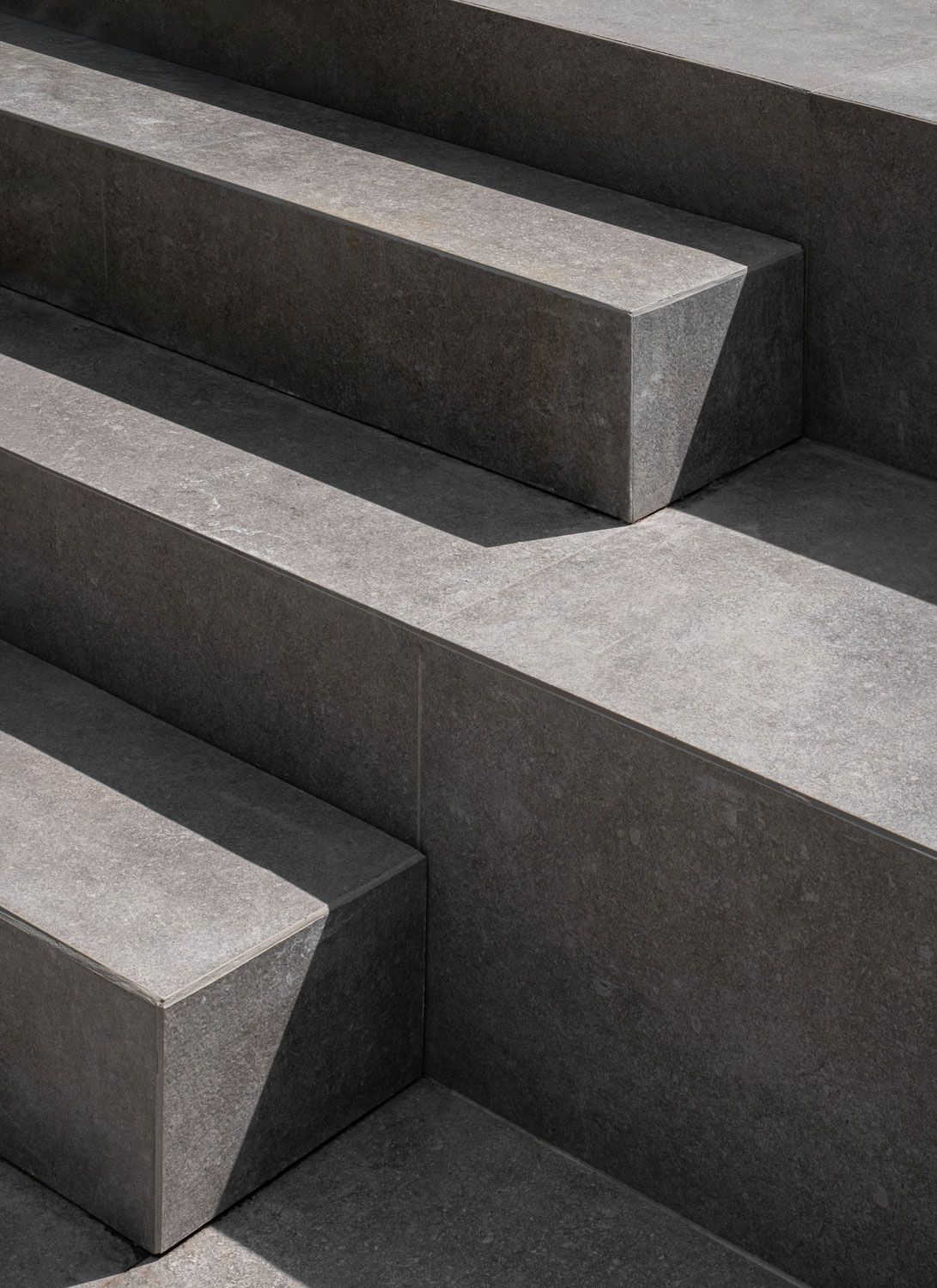
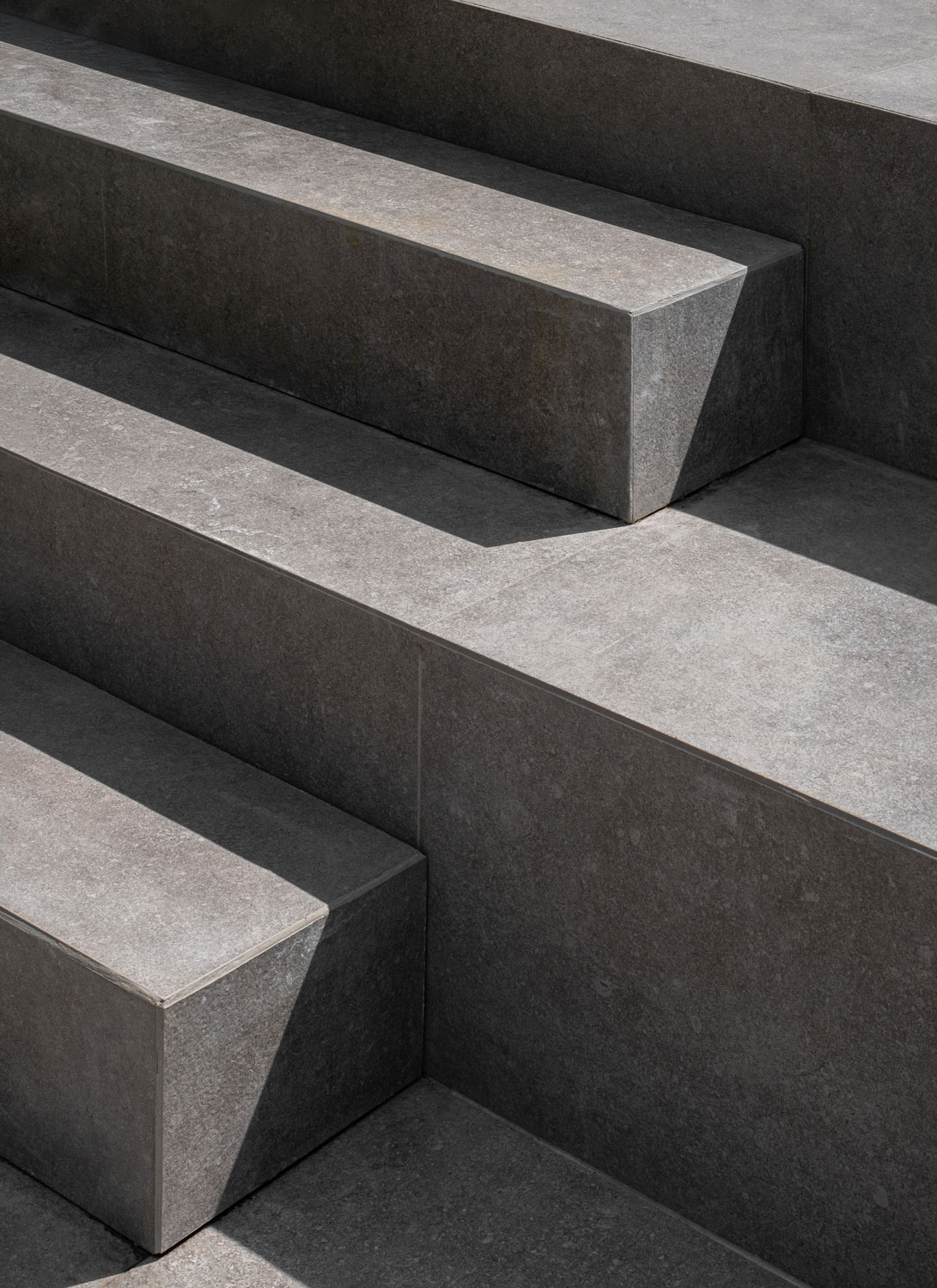
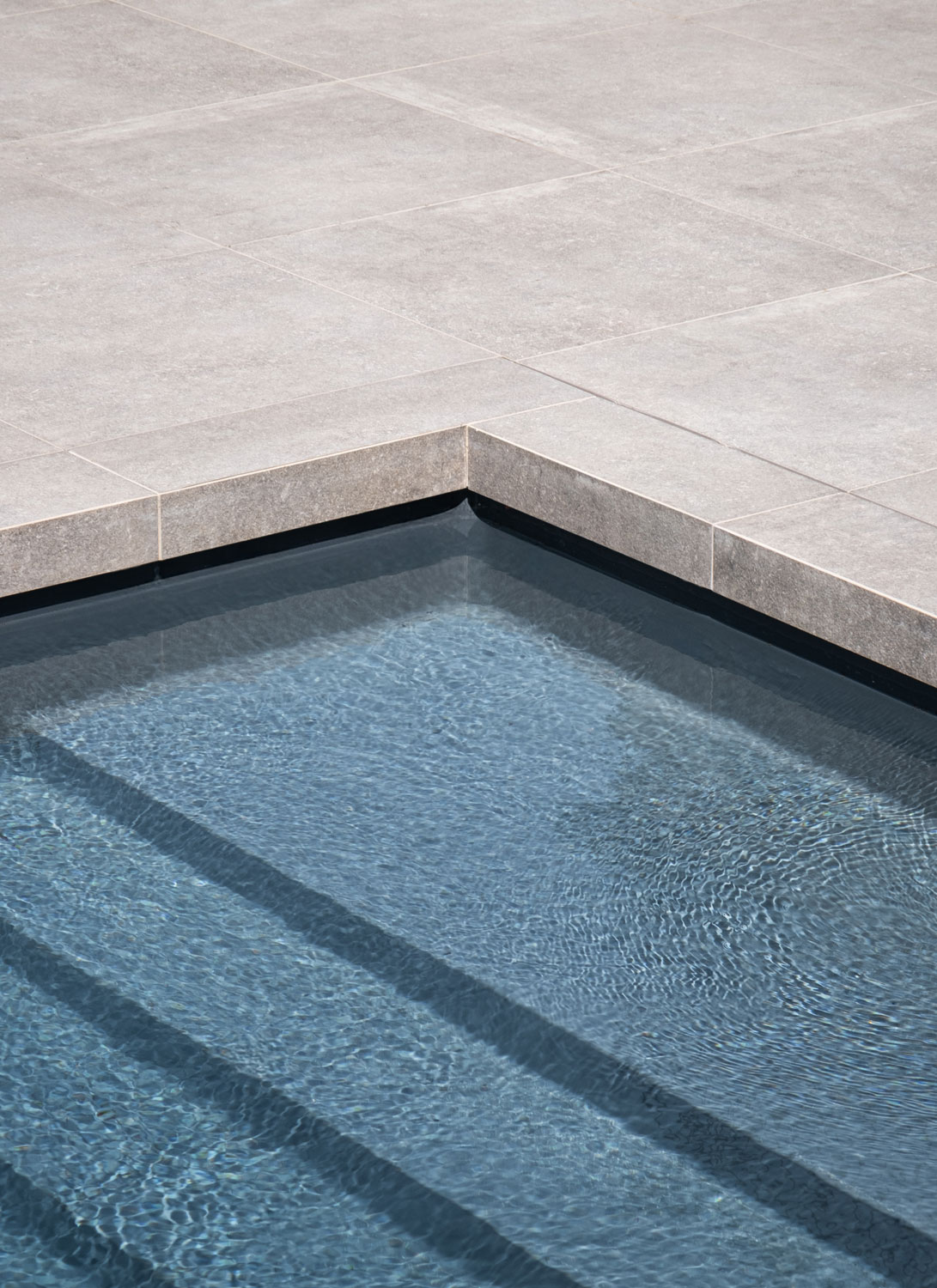
Throughout Strandgården, architecture is shaped by juxtapo- sitions – between past and present, inside and out, soft and solid. Outside, the sharp geometry of the pool steps contrasts with the organic character of the old garden, creating a dialogue that unites heritage with modern refinement. These layers of contrast lend the home its depth, making it both timeless and alive.